
Eau Claire Obituary Records
Eau Claire Obituary research starts with the City of Eau Claire official site and the city clerk public records request page, then shifts to the county office that issues death certificates. The city clerk handles city records and public records requests at 203 S. Farwell St., Eau Claire, WI 54701, phone 715-839-4912. That office is useful because it shows the city side of the search, but it is not the office that issues vital records. For the certificate itself, the Eau Claire County Register of Deeds at 721 Oxford Avenue, Eau Claire, WI 54703, phone 715-839-4745, is the local record office that matters. Because the city page and the county page do different jobs, the best Eau Claire Obituary search keeps those roles separate from the start.
Eau Claire Obituary Records
The City of Eau Claire is the local starting point for public records, not the final stop for a death certificate. That is the main thing to keep straight in an Eau Claire Obituary search. The city clerk page on the official site tells you how the city handles requests, but the death certificate itself comes from the county register of deeds or the Wisconsin Vital Records Office. That separation matters because a name, an address, and a death notice can all point you in the right direction without telling you which office owns the record.
The county images below show the official record side that follows after the city office has done its job.
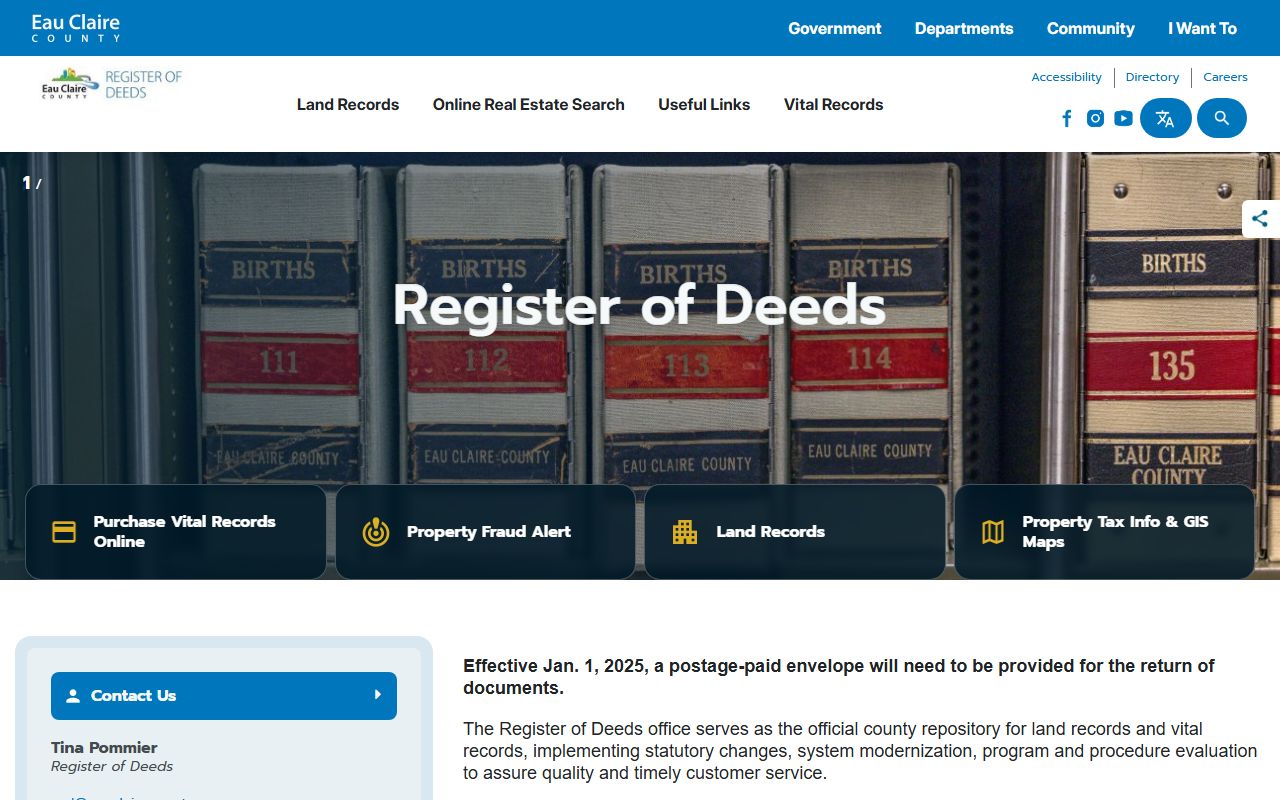
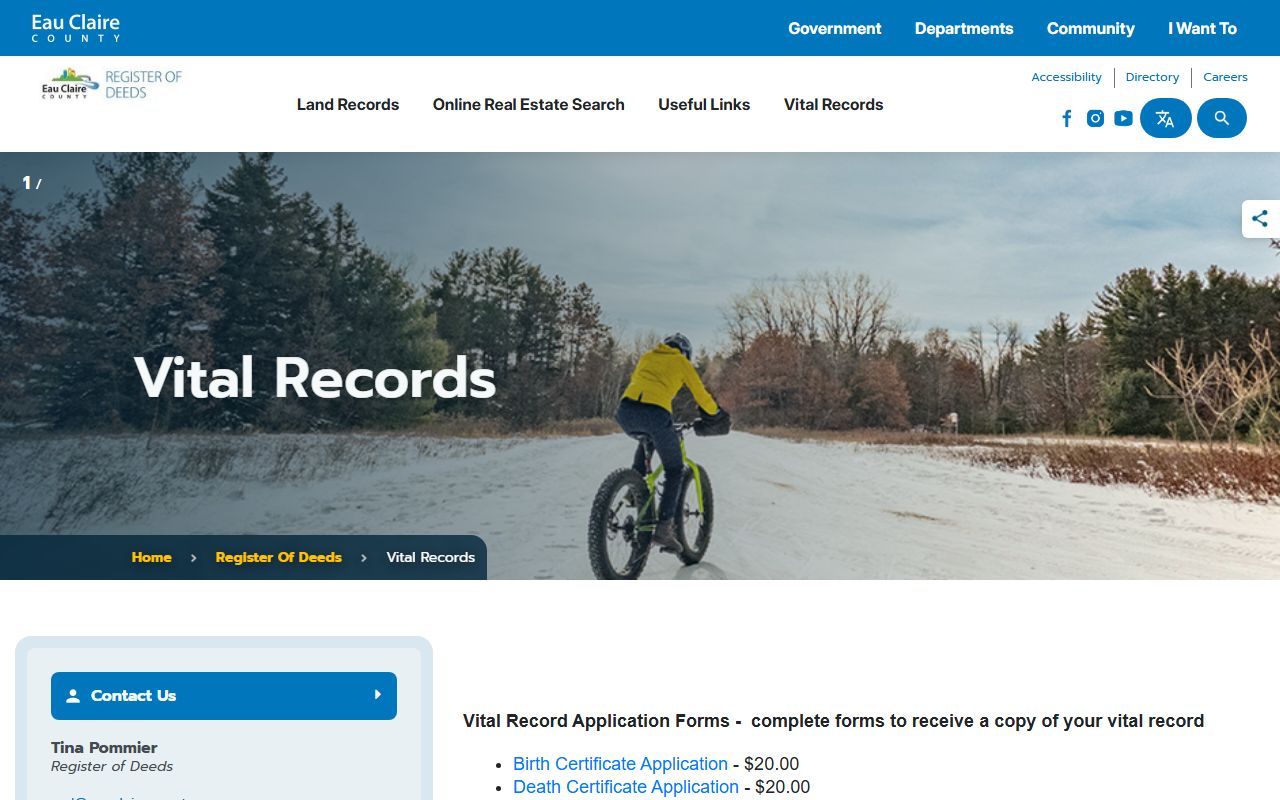
The city clerk page is especially useful when the obituary gives you a street, a neighborhood, or a city reference that you want to confirm before ordering anything. If the family lived in Eau Claire, the city side can help you anchor the place. If you need the official death record, the county side takes over. The result is a cleaner search because you are using the city office for context and the county office for certification.
That is also why a Waukesha-style city and county split is not the right model here. Eau Claire is a single city, but the office roles still differ. The city clerk keeps city records and public records requests moving. The county register of deeds issues the vital record copy. The Wisconsin Historical Society fills in older names. Once those roles are clear, the obituary search becomes practical instead of vague.
This page stays with the official city, county, state, and Wisconsin Historical Society sources. The library source failed in the manifest, so the clean path here is to keep the search grounded in offices that can actually confirm the record trail.
Note: The city clerk handles city records and public records requests. Death certificates belong with the county or the state.
Eau Claire Obituary Sources
The main county source for Eau Claire Obituary follow-up is the Eau Claire County Register of Deeds. The office at 721 Oxford Avenue, Eau Claire, WI 54703, phone 715-839-4745, is the local place to ask for a certified copy of the death record. It is the county office that turns a newspaper clue into an official document. That makes it the most important stop after the city page has confirmed the local record trail.
The county page also gives the record search structure. It is the office for vital records, so the name and date from the obituary can be matched against the official record system instead of a broad search engine result. That is important when you are trying to confirm a family story, settle a proof question, or make sure the obituary and the certificate describe the same person.
For older material, the Wisconsin Historical Society pre-1907 index is the historical backup. It reaches back before modern statewide registration and can help with spellings, older families, or death dates that appear only in a paper notice. If the obituary is old or the family name is uncertain, the historical index can save time before you place a county request. For a page like Eau Claire, that older index matters because the county and state records are not always enough by themselves.
Use the city office, county office, and historical index together:
- Use the city clerk page to confirm the city record path.
- Use the county Register of Deeds for the certified death record.
- Use the Wisconsin Historical Society pre-1907 index for older names and dates.
- Use the obituary text to tighten the year before you request a copy.
Eau Claire Obituary Search Tips
The official city page and the county register of deeds page work best when you read them as a pair. The city side tells you where the city manages public records. The county side tells you where the death certificate lives. If you keep that distinction in mind, an Eau Claire Obituary search becomes easier to trust because you are not asking one office to do two jobs.
That matters most when the obituary is short. A short notice may give you only a name, a date, and a place. If that place is Eau Claire, the city clerk helps confirm the local context. If you need the actual certificate, the county office is the right route. If the death is older, the Wisconsin Historical Society pre-1907 index can help you bridge the gap between the name in print and the record in the archive. The index is especially useful when a surname has several spellings or when the obituary is a clipped line from a newspaper.
The search also gets easier when you stay practical about the details. Use the spelling that appears in the obituary first. Keep the year close. Add the city if the notice gives it. Then move to the county office once the match feels likely. That order keeps you from overreaching too early and saves time when the record is in the official file, not in the first search result.
For Eau Claire Obituary work, the cleanest path is local first, county second, historical third. That order matches the way the offices actually work.
Eau Claire Obituary Copies
When a search turns into a request for a certified copy, the Eau Claire County Register of Deeds is the local office to contact. That office can issue the death record once you have enough detail to identify the right person. For an Eau Claire Obituary request, the most useful information is the full name, the approximate death date, and any family or residence clue from the notice. A tight request is usually faster than a broad one.
The statewide backup is the Wisconsin Department of Health Services Vital Records page. DHS confirms that Wisconsin vital records can be handled statewide, which is useful if you are out of town or if you need a backup route beyond the county counter. The fee schedule is the standard Wisconsin one: $20 for the first copy and $3 for each additional copy. That is the part to remember if you need more than one copy for family files or legal paperwork. The state route does not change the record type. It just gives you another official place to ask for it.
Because the city clerk does not issue death certificates, the city page should be treated as a guide, not the final certificate stop. The county office fills that role. Once the county certificate is confirmed, the obituary becomes a record trail instead of a vague reference. That is the point of keeping the city and county pages separate in the first place.
Tip: Use the city page to orient the search, then use the county or state office for the certified copy.
Eau Claire Obituary History
The Wisconsin Historical Society pre-1907 index is the older-record tool that gives Eau Claire Obituary research real depth. It helps when the death predates modern registration or when a newspaper notice is all you have to start with. Older family lines often show up first in a historical index, then in a county record request, and only later in a neat online summary. The index is useful because it helps you avoid guessing when the modern record is not obvious.
For an Eau Claire Obituary search, the historical index is best used with a tight set of clues. A surname, a likely year, and a city name can be enough to narrow the search. If the person used a nickname, a married name, or a different spelling in print, the historical index can surface the older version before you order a copy. That saves time and makes the county request more accurate.
This approach works especially well when you do not have a library obituary index to lean on. Since the library source failed in the manifest, the safest path is to stay with official city and county records, the Wisconsin DHS backup, and the Wisconsin Historical Society pre-1907 index. Those sources do not try to do the same job. They support each other, which is why the search stays reliable.
Used together, those sources keep an Eau Claire Obituary search local, documented, and specific. That is the cleanest way to move from a death notice to the right official record.