
La Crosse Obituary Records
La Crosse Obituary research starts with the city clerk for city records, but the certified death record usually comes from La Crosse County. The city clerk handles city records and public records requests, the county Register of Deeds handles vital records, Wisconsin DHS provides the statewide fallback, and the Wisconsin Historical Society pre-1907 index covers older county history. That split matters because the obituary clue tells you where to start, but it does not always tell you which office owns the record. Keep the city and county roles separate and the search stays much more efficient.
La Crosse Obituary Overview
La Crosse City Records
The City of La Crosse Clerk's office is the right place when the obituary clue points to a city record instead of a certified death certificate. The city clerk processes public records requests and keeps city records tied to municipal business. That can include meeting material, city notices, and other local documents that help confirm a person, place, or family connection before you move to the county level. For La Crosse Obituary research, the city office is the first place to separate a city record from a county vital record.
City records matter because a funeral notice or obituary can mention a neighborhood, city building, church, or residence that is not in the certificate itself. The city clerk helps you follow that trail. If the family wants a copy of a municipal record, or if you need a city document to support a later request, start there before moving outward. That keeps the search organized and avoids treating every local office as if it owns the same file.
The city role is narrower than the county role, but it still matters in a La Crosse Obituary search. A city clerk record may show when a request was made, where a notice was posted, or how the city described the place connected to the death. Those clues can narrow the county search fast, especially when the obituary uses a common surname or gives only a rough date.
When you are not sure whether the item is a city record or a vital record, start with the city clerk, then move to the county Register of Deeds if the request turns into a certificate order. That simple split is what keeps the rest of the search accurate.
La Crosse Obituary Records at the County Level
The county vital-records page is the main certified-copy source for a La Crosse Obituary search. The La Crosse County Register of Deeds vital records information page explains the county request path and the timing rules. The research notes place that office at 400 4th Street North in La Crosse, with phone 608-785-9635. They also say death records before September 1, 2013 are obtained there, while newer deaths can be obtained at any Wisconsin Register of Deeds office. That makes the county office the correct place when you want the actual certificate rather than just the obituary notice.
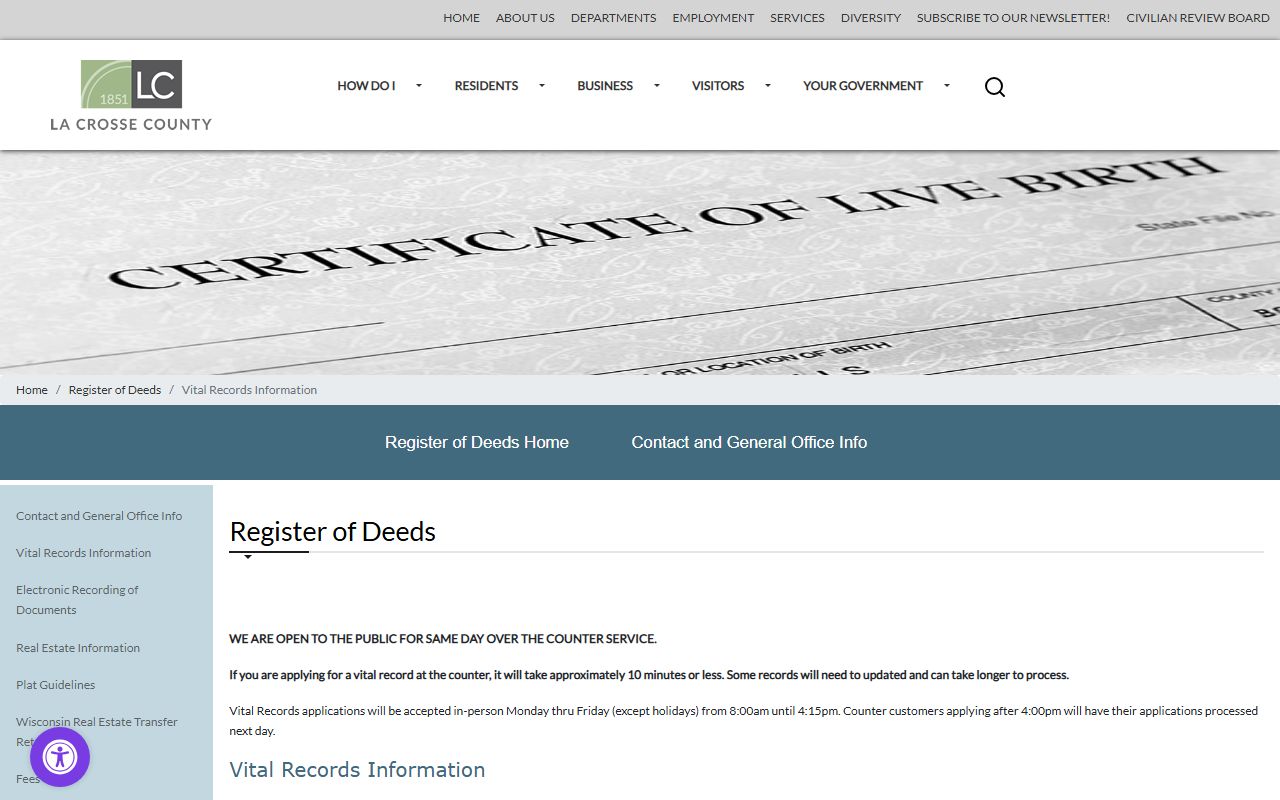
The county office is the point where a death notice becomes a certified record request. That matters for estates, benefit claims, family files, and any follow-up that needs a copy with the county seal. The La Crosse County office also helps keep the search local when the obituary points to a person who lived, died, or was buried in the county. A county record request should use the full name from the obituary, the approximate date of death, and the place if you know it.
If the obituary says the death happened in La Crosse, the county office is still the place to confirm the certificate. If the family only knows the cemetery, church, or newspaper notice, the county office can still take the search because the county level is where the formal death record lives. That is the heart of La Crosse Obituary work: the city clue may start the search, but the county certificate often ends it.
The county path also helps you avoid false matches. A newspaper notice may name a La Crosse residence while the actual death record was filed under a different address or a different family surname. The county office gives the record structure that the obituary cannot provide on its own.
Wisconsin DHS and Pre-1907 History
The Wisconsin Department of Health Services Vital Records page is the statewide backup when the city or county trail needs another office. Wisconsin DHS handles the state-level certificate path for Wisconsin vital records, which makes it useful when a La Crosse Obituary search needs a broader net. If the local office cannot answer the request cleanly, the state office is the next official step.
That state route matters because obituary research often begins with a newspaper clue and ends with a copy request. If the family moved, if the death happened outside the city limits, or if the county office needs a state-level follow-up, DHS keeps the search moving. The key is to use it as a backup, not as a replacement for the county office that actually owns the certificate when the record is clearly local.
The Wisconsin Historical Society pre-1907 vital records index covers La Crosse County and gives older family history a clear entry point. That index is especially useful when the obituary points to a person who died before modern statewide registration or when the family line stretches into the county's older record books. A surname, an approximate year, and a county clue can be enough to tell you whether the death trail belongs in the historical index before you order anything.
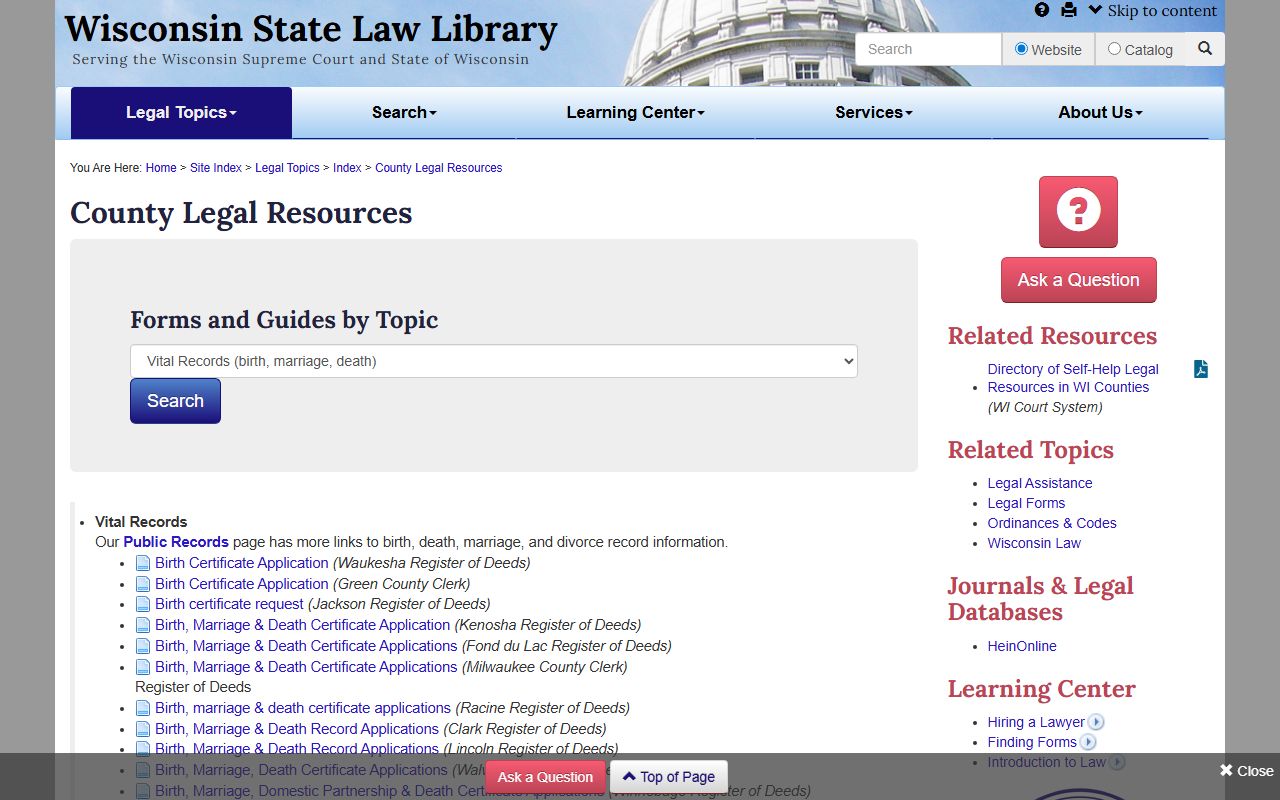
The Wisconsin State Law Library vital records topics page is another useful fallback because it keeps the county forms and office references together in one official directory. For La Crosse Obituary research, that directory helps when you need the proper form, the right office name, or a clean route from a local notice to a county request. It is not a court file, and that is exactly why it works here. The page stays focused on the vital-record path instead of mixing in unrelated records.
La Crosse Obituary Research Tips
A good La Crosse Obituary search uses the right office in the right order. If you need a city record, start with the city clerk. If you need a certified death record, use the county Register of Deeds. If the local office path is incomplete, use Wisconsin DHS as the state backup. If the death is older than the statewide cutover or the surname is part of a longer family line, check the Wisconsin Historical Society pre-1907 index before you place a request. That sequence keeps the record trail precise.
The most common mistake is blending city records with county vital records. They are related, but they are not the same. A city clerk record may help explain the local context around a death, while the county certificate provides the official copy. In a La Crosse Obituary search, the two together are stronger than either one alone, but they serve different purposes.
- Use the full name from the obituary or death notice.
- Write down the approximate date and the place name exactly as it appears.
- Separate city record requests from county vital record requests.
- Use Wisconsin DHS when the local office path needs a statewide backup.
- Use the pre-1907 index when the family story reaches into older La Crosse County history.
La Crosse Obituary work is strongest when you treat the city, county, state, and historical sources as different tools. The city clerk helps with local records. The county Register of Deeds handles the certificate. DHS covers the state fallback. The historical index fills the older gap. Once that map is clear, the request itself becomes much simpler.