
Madison Obituary Records
Madison Obituary searches work a little differently from city records in places that also issue vital records. The City of Madison Clerk does not maintain birth or death certificates, so the search has to move to Dane County or the Wisconsin Vital Records Office when you need the certificate itself. That is the key split to keep in mind. The city page helps you confirm the public records path, while the county and state offices hold the vital record side. For older deaths, the Madison Public Library and the Wisconsin Historical Society can add the newspaper and index clues that turn a name into a full match.
Madison Obituary Records
The official City of Madison Clerk public records page is the right place to understand the city's role. The Clerk's Office is the custodian of records for the Common Council and keeps local election and campaign finance records. It also says public records requests can be made online, in person, in writing, by email, or by phone. Most important for Madison Obituary work, the page says the clerk does not maintain vital records, and birth and death certificates are handled by the Dane County Register of Deeds or the Wisconsin Vital Records Office.
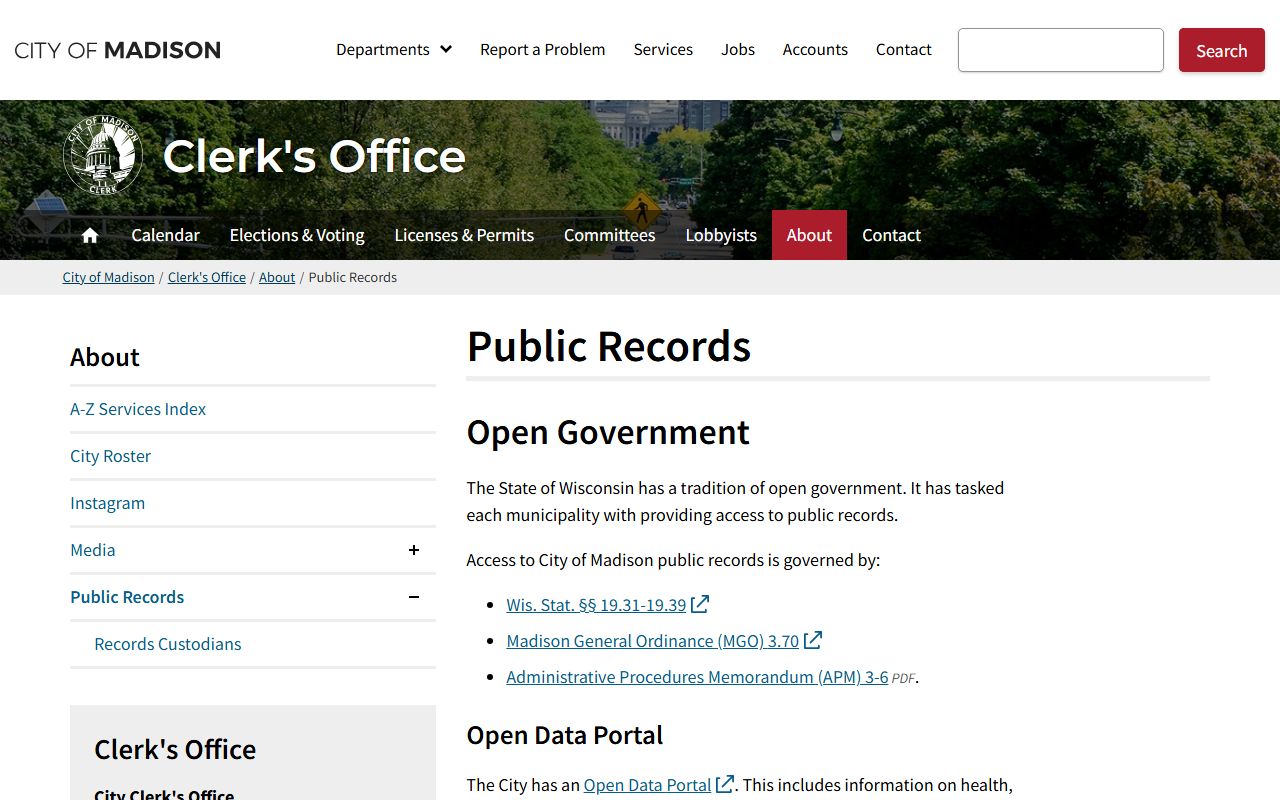
That distinction matters because a lot of searchers start at the city office when they really need a county certificate. The city page is still useful. It confirms where the public records lane begins and where it stops. Once you know that, the obituary search can move faster and stay focused on the right office.
If the obituary names a Madison address or a city event, use the city page as a guide, not as the final stop. The city clerk can show you the public records route, but the certificate itself sits with the county or state. That is why a Madison Obituary search should keep the city, county, and state roles separate from the start.
Note: The Madison city clerk is a public records contact, not the vital records office.
Madison City Public Records
The city records page helps you see what Madison does keep. A family researcher may find that useful when a notice mentions council business, a neighborhood event, or another local record trail that is not a death certificate. The page gives you a clean path for asking the city, and it saves time by showing you that vital records are handled elsewhere.
That separation is especially helpful when a notice is short. If the obituary only gives a name, a date, and a Madison address, the city records page tells you where the city's public records begin. Then the county office can answer the death certificate question. The result is a tighter search and fewer dead ends.
The city clerk page also protects you from mixing different record types. Obituaries, council records, and campaign finance files sit in different lanes. If you keep those lanes apart, the search stays easier to follow and the matches stay cleaner.
Dane County Obituary Sources
The Dane County Register of Deeds is the main local source for Madison Obituary follow-up. It issues certified copies of birth, death, and marriage certificates for events occurring in Dane County, which includes Madison. The office is in the City-County Building, 210 Martin Luther King Jr. Blvd., Room 114, Madison, WI 53703, and the phone number is (608) 266-4141.

Requests may be made in person, by mail, or through VitalChek. That makes the Dane County office the practical next step after the city clerk page confirms that Madison does not keep the vital record itself. If the obituary points to a local death, the county office is usually the cleanest path to the certified record.
The county route also helps when a funeral notice gives only a family name or a street address. A county death record can confirm the place and date, while the obituary gives the human details that the certificate does not carry. For Madison Obituary work, those two pieces fit together well.
- Use the county Register of Deeds for certified Dane County death records.
- Use VitalChek when you need a remote ordering path.
- Use the city clerk page to confirm that Madison does not keep vital records.
- Use the place and year from the obituary before you widen the search.
Dane County Death Records
The Wisconsin Department of Health Services Vital Records page gives Madison Obituary searchers a statewide fallback. It says the Wisconsin Vital Records Office issues certified copies of birth, death, marriage, and divorce certificates for events that occurred in Wisconsin, and requests are accepted by mail, online through VitalChek, or by phone at 877-885-2981.
That state office matters when the county trail is still unclear or when you need a Wisconsin-wide route instead of a county-only request. It also helps if the obituary points to a family move, a later life record, or a death that does not feel tied neatly to one local office. In those cases, the state office gives you a stable backup that still keeps the search official.
The state office is in Madison at 1 West Wilson Street, Room 160. That makes it a natural fallback for a Madison Obituary search, but it should still come after the city and county split is clear. If the city clerk page says the city does not hold vital records, the county and state offices are where the certificate work really happens.
When you compare the city, county, and state routes, the search becomes easier to control. You can start with the notice, move to the right office, and keep the chain of proof intact.
Madison Obituary History
The Madison Public Library Local History collections are useful when the obituary trail gets thin. The library maintains local history resources including newspapers, city directories, and obituary indexes. That mix is practical for family research because it helps you compare a notice, a street address, and a date without jumping straight to a statewide search.
The Wisconsin Historical Society Pre-1907 vital records index covers Dane County and is the best older-record tool when the death predates modern registration. A Madison Obituary search often gets stronger when you start with the index, then move back to the newspaper page or the county certificate that matches the name.
That approach works well when families moved inside Dane County or when the obituary uses an old address or church name. The library can help you fill in the local paper trail, and the historical index can give you the older official record path. Together they make a good pair for a hard-to-find Madison name.
Chronicling America adds a broader newspaper layer when the local paper is incomplete or the family notice ran outside the city. It gives you digitized pages and searchable text, which is useful when you already know the year but still need the exact obituary.
Note: For older Madison Obituary work, the best result often comes from pairing the county index with a newspaper search and one clear family clue.