
Waukesha Obituary Records
Waukesha Obituary research starts with the city public records page on the official City of Waukesha website, then moves to the county office that actually issues death certificates. The city clerk at 201 Delafield Street, Waukesha, WI 53188, phone 262-524-3547, is the local public records contact. That office helps orient the search, but it does not replace the certificate path. For the official copy, the Waukesha County Register of Deeds at 515 W. Moreland Blvd., Room AC110, Waukesha, WI 53188, phone 262-548-7863, is the county office that matters. Because Waukesha sits in one county, the main split is not a city boundary problem. It is a city records versus vital records problem, and that is easier to solve once the roles are kept separate.
Waukesha Obituary Records
The city clerk helps define the local record path, and that matters because many people begin a Waukesha Obituary search by looking for the wrong office. The city public records page tells you where the city handles requests, while the county register of deeds handles the vital record itself. That distinction keeps the search honest. It also keeps you from treating a city clerk page like a death certificate office when it is really a public records contact point.
The two images below show the city side of that trail. One comes from the city official website and the other from the city public records page. Together they keep the search anchored in the local government source before you move to the county death record.
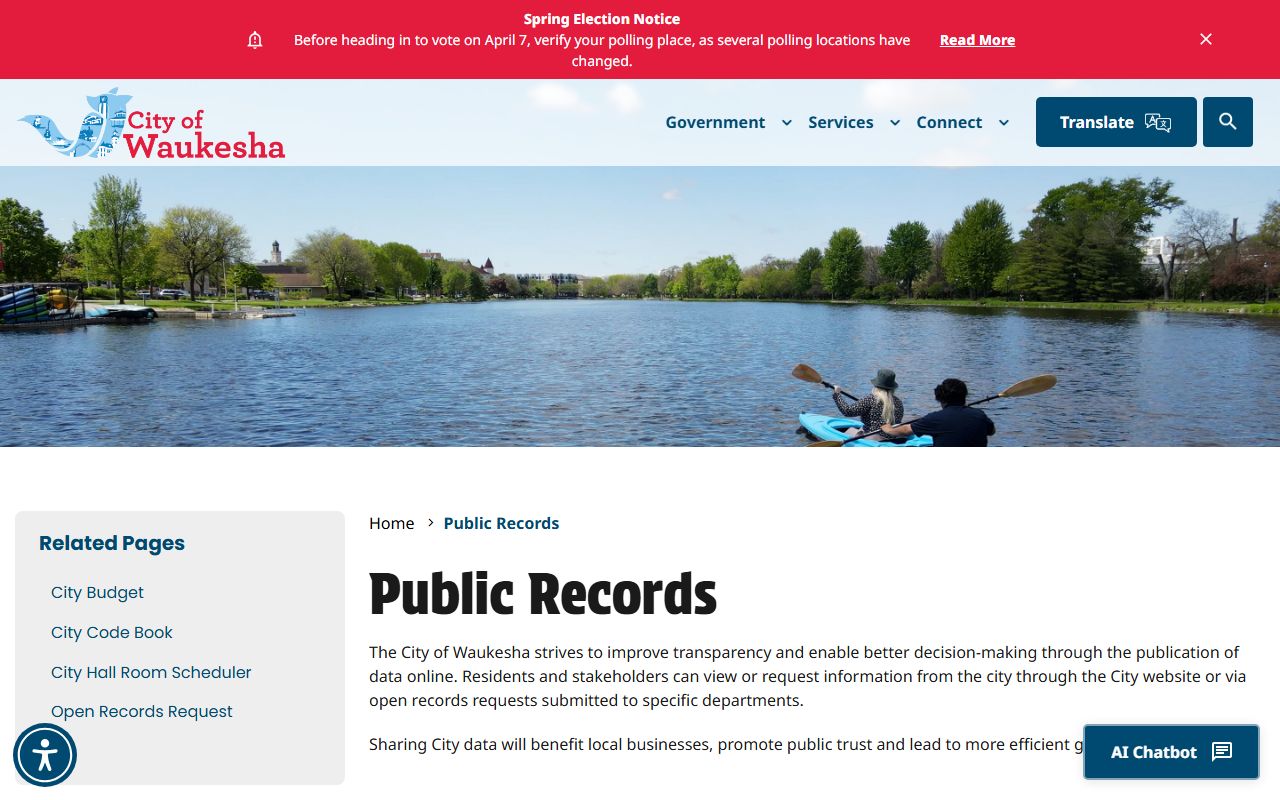
On the official city site, the public records route belongs to the city, not the county. On the county side, the Register of Deeds is the office that issues death certificates and accepts the request for the copy. For a family researcher, that means the city page can confirm the address, the office name, and the local government structure, while the county page gives you the document that proves the death date.
Because Waukesha is fully in Waukesha County, the search does not have to cross county lines. That is useful. A Waukesha Obituary that names a city residence, a hospital, or a family burial note can usually be tied back to the county office without wondering which nearby county owns the record. The local search stays simple if you keep the city and county roles separate.
Note: The city clerk is the public records contact. The county register of deeds is the vital-record office for death certificates.
Waukesha Obituary Sources
The main county source for Waukesha Obituary follow-up work is the Waukesha County Register of Deeds. The office is at 515 W. Moreland Blvd., Room AC110, Waukesha, WI 53188, phone 262-548-7863. That is the local office that can issue or certify the death record when the obituary becomes a document request. It is the right place to start after the city page has done its job of pointing you in the right direction.
The statewide route is the Wisconsin Department of Health Services Vital Records page. DHS confirms that Wisconsin vital records can be issued statewide, which gives you a backup when you are away from Waukesha or when the county line is clear but the local trip is not practical. The state fee schedule is simple: $20 for the first copy and $3 for each additional copy. That matters when a Waukesha Obituary search turns into a family file, an insurance request, or a probate question that needs more than one copy.
The city and county pages work best together. The city site tells you where public records requests begin. The county site tells you where the death certificate lives. The state site tells you where the backup path is. If you keep all three in view, the search stays organized.
- Use the city clerk for public records context and city office contact information.
- Use the county Register of Deeds for the certified death record.
- Use Wisconsin DHS when you need a statewide issuance option or remote request path.
- Use the fee schedule as a quick check before ordering multiple copies.
Waukesha Obituary Search Tips
The Wisconsin Historical Society pre-1907 index is the best older-record tool when a Waukesha Obituary search reaches back before modern statewide registration. That index is useful because it can point you to the right year, the right family line, and sometimes the right spelling when a newspaper notice is thin. If the obituary is old, or if the name appears in several forms, the index helps narrow the search before you place a county request.
A good Waukesha Obituary search usually begins with the name as printed in the notice. Then add the approximate year, the place of death if it is known, and any spouse, child, or burial clue that appears in the obituary. If the city page gives you the public records context, the county page gives you the certificate path, and the historical index gives you the older name trail, the record picture becomes much clearer.
That older trail is especially helpful when the obituary uses a married name, a nickname, or a middle initial that does not match the county file. In those cases, the Wisconsin Historical Society index can be the bridge between the modern record and the older family history. It is also useful when the death record itself is not the only thing you need. A funeral notice, a cemetery note, or a family mention can all be compared against the older index to confirm the right person.
For Waukesha Obituary work, the best habit is simple. Start local, keep the city and county offices separate, and use the historical index before you widen the search beyond the county.
Waukesha Obituary Copies
Once you know the correct name and approximate date, the county office is the best place to request a certified copy. The Waukesha County Register of Deeds handles that request, while Wisconsin DHS gives you the statewide fallback if the county route is not the easiest path. A Waukesha Obituary request usually goes faster when you keep it narrow. The office needs a name, a date or year, and enough detail to avoid confusing one family member with another.
The state fee schedule is the standard one used across Wisconsin: $20 for the first copy and $3 for each additional copy. If you need several copies for a family file, that matters. It is often cheaper to ask for exactly what you need than to order extra copies on the first pass. The Wisconsin DHS page is the best place to confirm the statewide fee path before you submit the request.
For local researchers, the county office is the most direct endpoint. For out of town researchers, the state office can be the easier first move. For older family lines, the historical index can help you find the exact year before you spend money on a certificate order. Those are not competing routes. They are different parts of the same record trail, and Waukesha Obituary work is cleaner when each part is used for what it does best.
Tip: Use the obituary text to confirm the name, then use the county or state office to confirm the certificate.
Waukesha Obituary History
The Wisconsin Historical Society pre-1907 index gives Waukesha Obituary research an older starting point when the family line reaches back beyond modern certification. That matters because older deaths often appear in a newspaper notice, a family memory, or a cemetery clue before they appear in a clean county index. The historical index helps bridge that gap. It gives the searcher a place to begin when the record is old enough that the modern office trail is no longer enough by itself.
For a Waukesha Obituary, the historical approach works best when you keep the search focused. Use the surname, one likely year, and any local clue from the obituary. If the person lived in Waukesha for many years, the city public records page can help orient the local setting, while the county register of deeds can confirm the official certificate. The older index then helps you see whether the same name appears in the pre-1907 record set.
That mix of city, county, state, and historical sources is what keeps a local obituary search useful. It also keeps the search from drifting into broad results that do not belong to Waukesha. The goal is not simply to find a name. The goal is to match the right person to the right office and the right record type. When that happens, a Waukesha Obituary becomes a reliable record trail instead of a vague lead.
For that reason, Waukesha Obituary history is strongest when you read the city page, the county page, the state fee page, and the historical index together. Each one answers a different part of the question, and together they give you the cleanest result.