
Ashland County Obituary Search
Ashland County obituary search works best when you combine the county record office, the court directory, and statewide research tools. The Register of Deeds can issue newer death records, the Clerk of Court and Register in Probate handle related court files, and the county coroner helps explain how a death investigation begins. When a newspaper notice is the only clue, the Wisconsin Historical Society and newspaper databases can fill in the rest. This county page keeps those paths together so you can move from an obituary to the right office without wandering through unrelated records.
Ashland County Obituary Sources
The Ashland County Register of Deeds is an important starting point because its vital-records page says the office can issue death certificates from September 1, 2013 to the present. It also says that Wisconsin birth and marriage certificates are available statewide, which is useful when an obituary points to family events in more than one county. Requests can be made in person, by mail, or through VitalChek, and the page lists the accepted forms of identification. That makes the office practical for anyone trying to match a newspaper notice to the right county record.
The official Ashland County vital-records page is here: Ashland County Register of Deeds Vital Records.
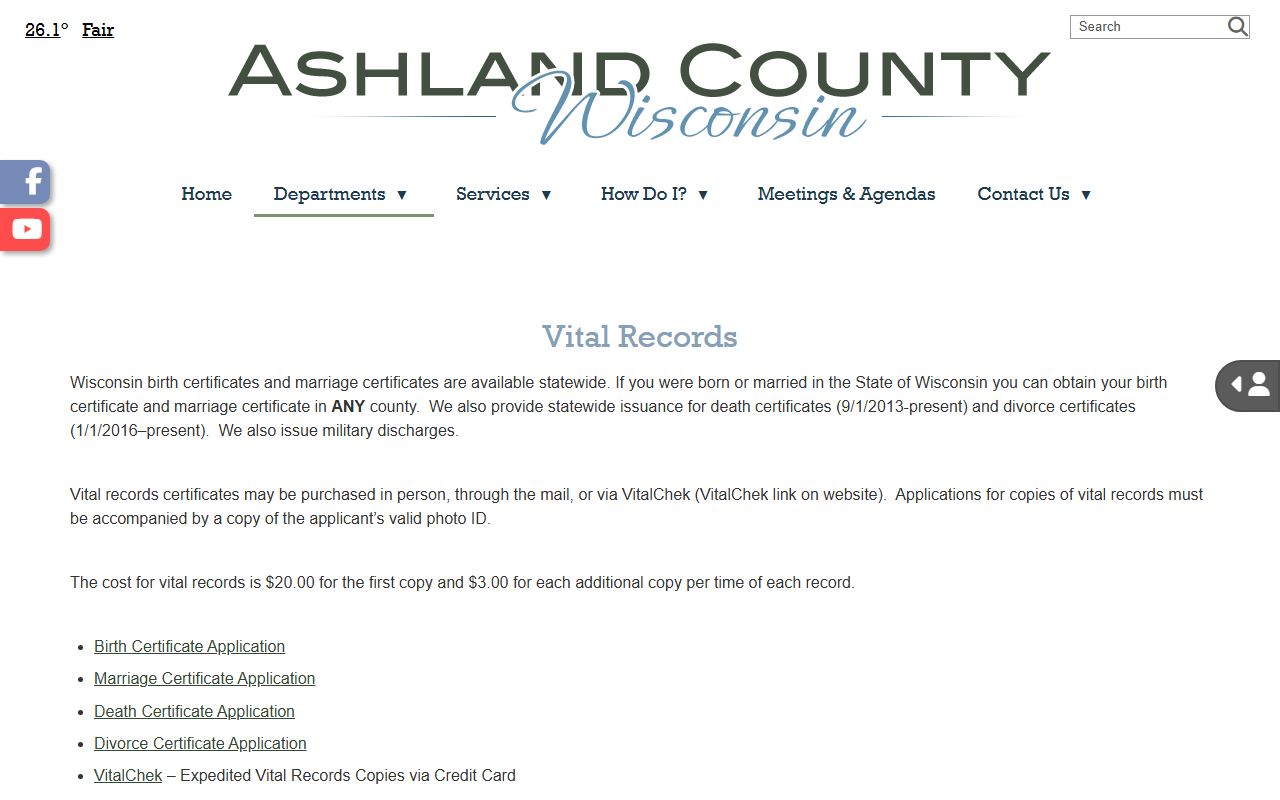
That office also maintains military discharge records, which can matter when an obituary or memorial notice mentions service. The county page shows that the same office handles the public path for a number of family records, not just one certificate type.
If an obituary leads you toward a court matter, the county directory keeps the next doors open. The Wisconsin State Law Library Ashland County directory lists the Clerk of Court, Register in Probate, and County Clerk with direct phone numbers, while the county's Coroner page shows who investigates deaths and handles the facts that can feed a later record search. That mix helps when a family notice is only the beginning of the trail.
Ashland County Obituary Copies
When you need an official copy, Ashland County keeps the process clear. The county VitalChek page lists death certificates and other county or statewide vital-record requests that can be ordered through the authorized service. The Wisconsin Department of Health Services page confirms that requests can also be made through the state office in Madison, and that online orders are generally completed in about five business days. The statewide fee structure is still the familiar $20 for the first copy and $3 for each additional copy, with VitalChek adding its own service charge. That matters when an obituary leads into an insurance claim, a transfer of funds, or a family file that needs proof, not just a notice.
The county's authorized ordering page is here: Ashland County VitalChek Ordering.

Use that path when you need a copy that can travel with a benefits request or family affidavit. The official vendor page is direct, which helps keep you away from the third-party sites that often add needless cost.
Wisconsin law adds another layer. Wis. Stat. § 69.21 covers certified and uncertified vital-record copies, and Wis. Stat. § 69.22 sets the copy and search fees used across the state. The RCFP Wisconsin open-government guide explains the direct-and-tangible-interest rule for certified records, which is why some obituary searches can be done freely while others need the proper request path.
The state office is still the right backup when a county search stalls. You can review its guidance here: Wisconsin DHS Vital Records.
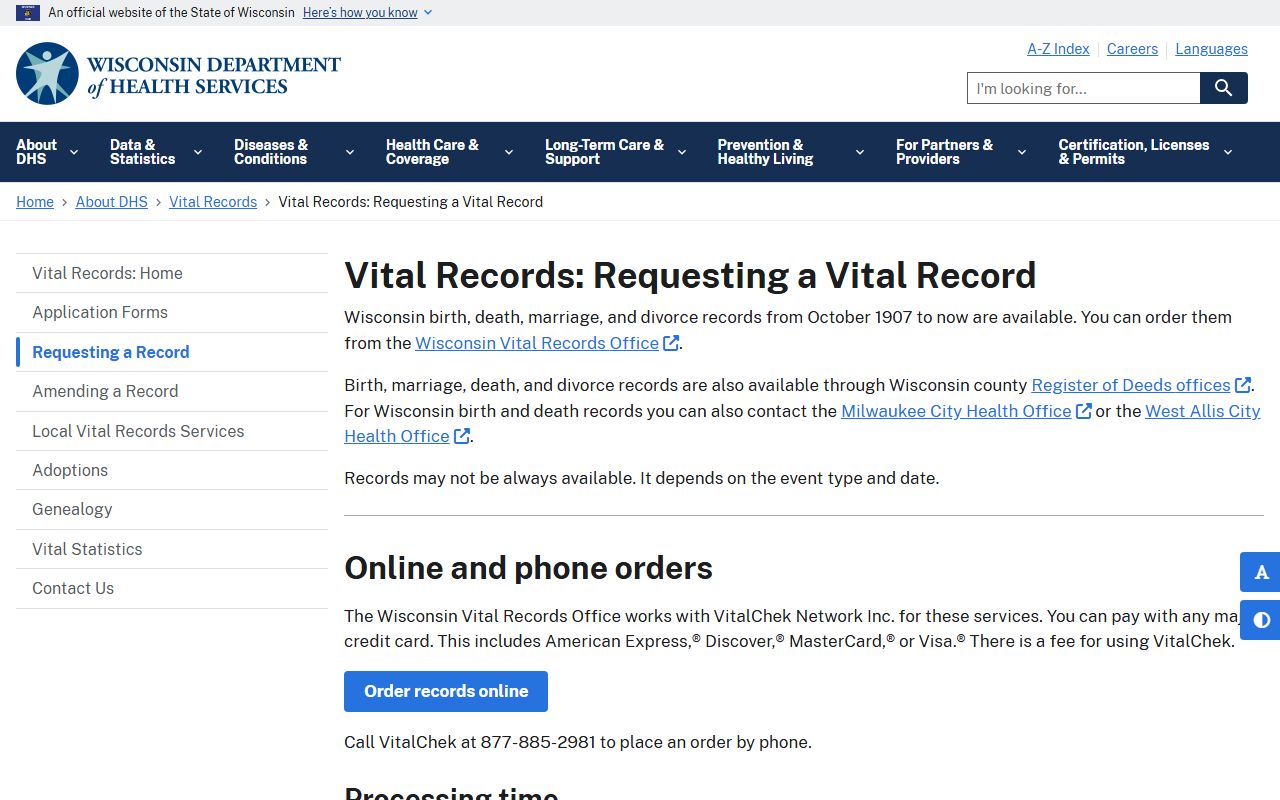
It keeps the request routes in one place and helps connect the obituary to the official record the family may need later.
Ashland County Obituary Research Help
The Wisconsin State Law Library page for Ashland County is a strong utility page because it gathers the local office numbers in one place. It lists the Register of Deeds, Clerk of Court, Register in Probate, County Clerk, and Sheriff, which means you can move from an obituary clue to the right office without hunting across several sites. That matters when the paper notice only gives a name, a town, or a rough date. A clean directory is often the fastest way to confirm where a record was filed and who can answer the next question.
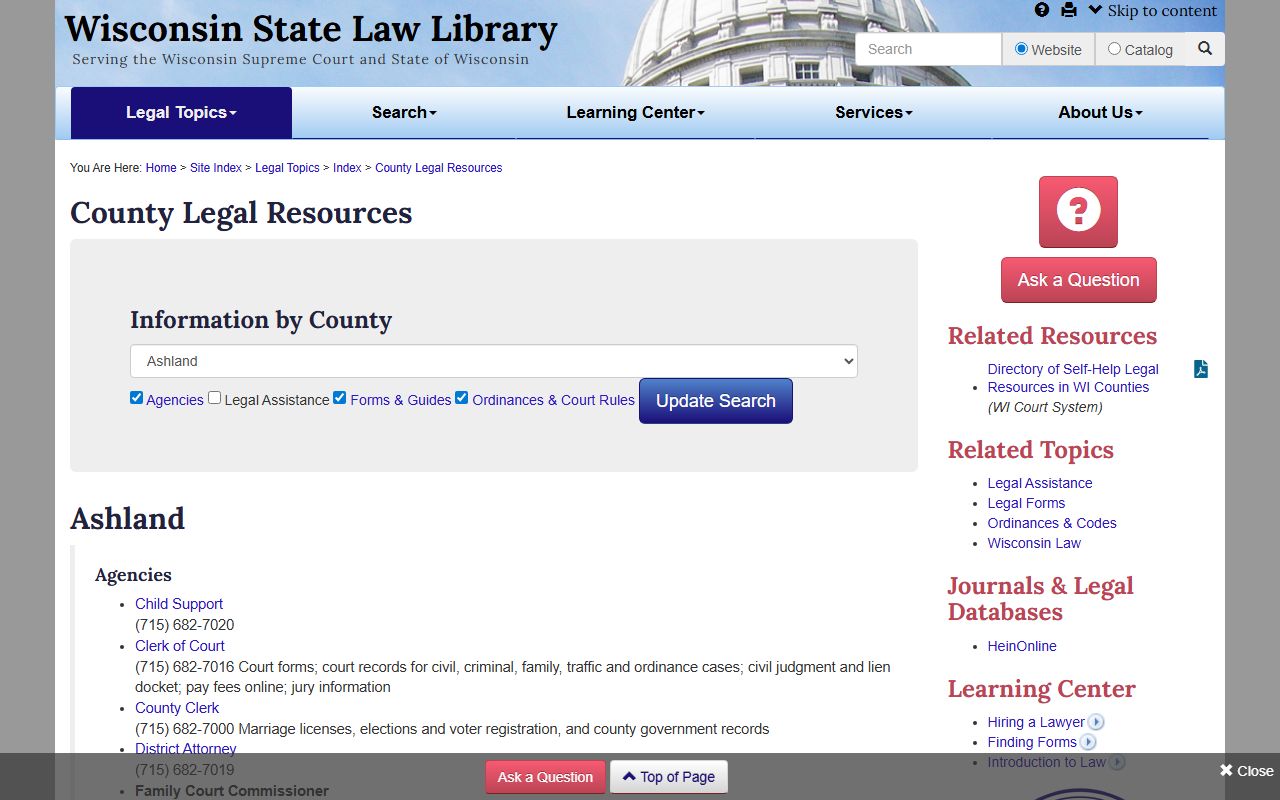
That directory is not an obituary index by itself, but it keeps the search grounded in official contacts. It is especially useful when an old notice points toward probate, a court record, or a county office that has changed names over time.
The statewide obituary collections matter just as much. The Wisconsin Historical Society obituary collections page explains that the library keeps obituary articles, scrapbooks, and microfilm, while the research tips page shows how to use wildcards, exact years, and surname variants. The broader family history portal adds newspaper clippings, photos, and millions of indexed records. When you need a federal newspaper backup, Chronicling America can help you search Wisconsin papers for obituaries and death notices that never made it into a county office.
Ashland County Obituary Death Records
The Ashland County Coroner page is worth reading when the obituary is tied to a recent or unusual death. The coroner is on call every day of the year and investigates deaths under Wisconsin State Statute 979. The office works to identify the decedent, preserve evidence, arrange transportation, communicate with families and law enforcement, and order autopsies or other testing when needed. That matters because the facts gathered there often become the base of the death record that later supports the obituary trail.
The coroner page is here: Ashland County Coroner.
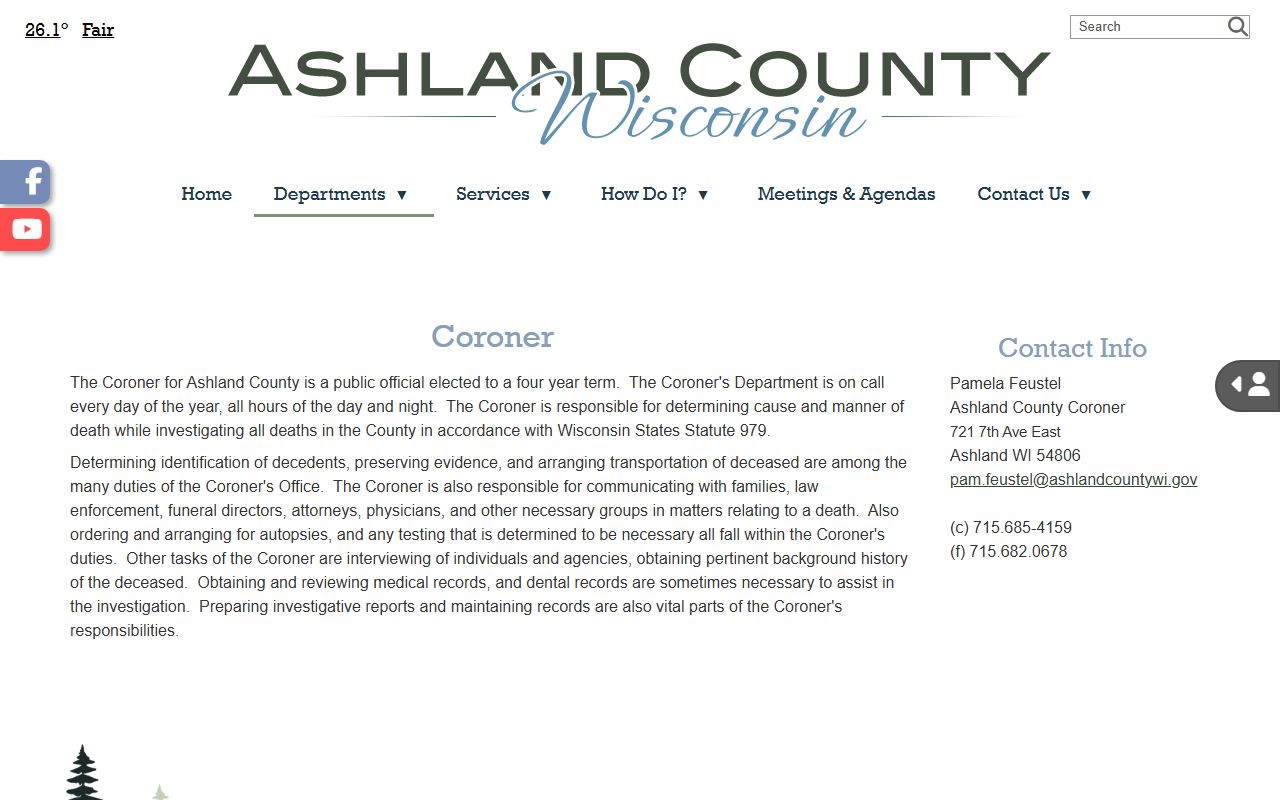
That image is a reminder that an obituary is only one piece of the record chain. When a family needs the legal and medical trail behind a notice, the coroner, medical examiner, and vital-record office work together in different ways.
For the legal side of a death record, Wis. Stat. § 69.18 explains how Wisconsin death records are created and certified, and the RCFP guide shows how Chapter 69 limits some record access even though Wisconsin open records law is broad. If the obituary leads into a probate or guardianship issue, the county directory sends you to the Register in Probate and Clerk of Court, which is where the rest of the family file often lives.