
Burnett County Obituary Records
Burnett County obituary records are easiest to track when you treat the search like a chain, not a single stop. Start with the county Register of Deeds, then move to the Clerk of Courts, the Register in Probate, and the county clerk if the name leads into an estate or a local file. Burnett County also has strong archive support through the historical society, the state law library, and the Wisconsin Historical Society. If a death notice is the first clue, those offices can help you turn it into a record, a date, and a better family trail.
Burnett County Obituary Sources
Burnett County obituary work starts at the Register of Deeds because the office is the county repository for death records, birth and marriage records, mortgages, and military discharge records. The office also offers Property Fraud Alert and online access through Tapestry EON and Laredo, which helps when a family name shows up in more than one kind of record. That mix of record access and alert tools is useful when you are trying to confirm whether a death notice and a county record belong to the same person.
The county Register of Deeds page is the first place to verify the office details: Burnett County Register of Deeds.
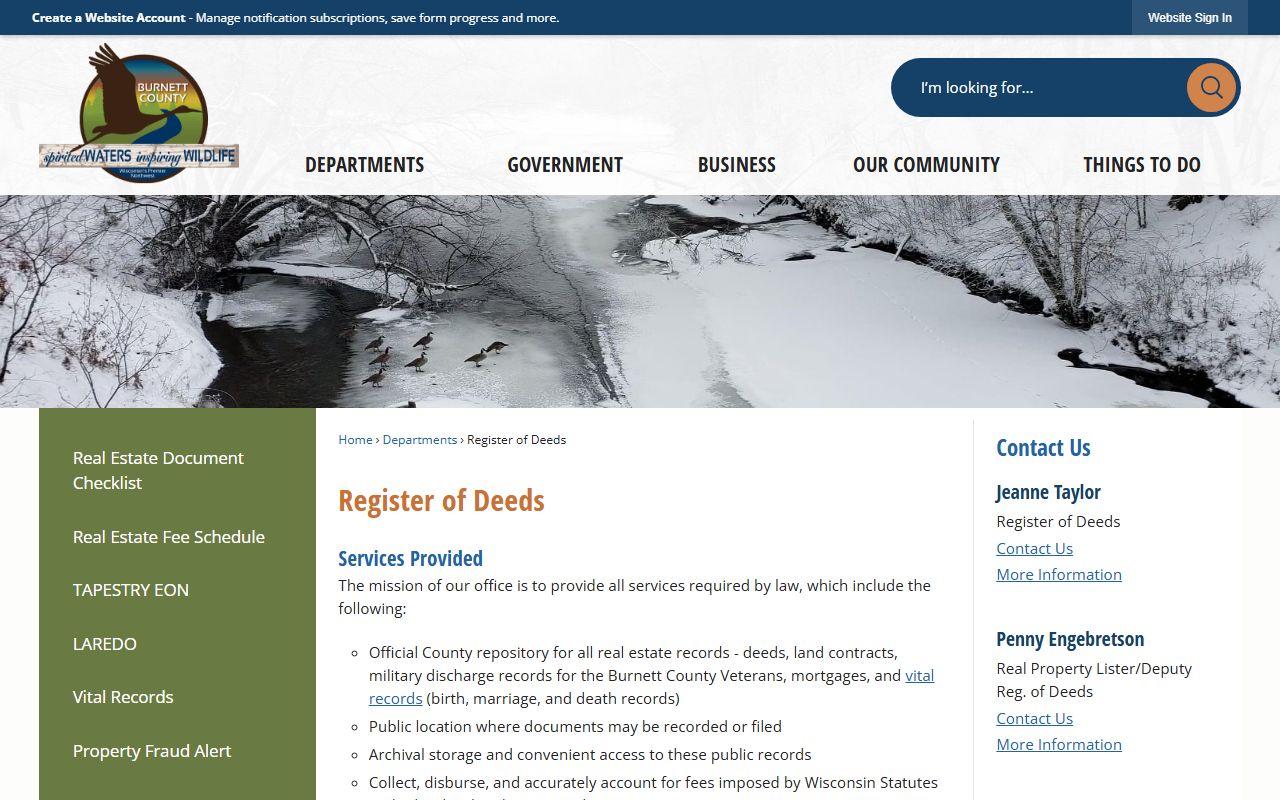
That office keeps the county record lane open for families who need a death certificate, a recording check, or a place to start before they move to probate.
The Burnett County Clerk of Courts / Register in Probate page is the next stop when an obituary leads into a court file or an estate matter. Burnett County says that office handles collections, jury management, small claims, probate, juvenile matters, and family law forms, which is exactly the sort of trail that can follow a death notice. The county clerk also keeps county board minutes from 1874 to 1989 and posts the county directory, so it can help when a family wants a public record outside the courthouse. Those are not obituary files by themselves, but they often point to where the paper trail continued.
Burnett County Obituary Copies
Burnett County's Vital Records page gives a clean route for certified copies. The office says copies can be obtained in person or by mail, and the fee is $20 for the first copy and $3 for each additional copy. The page also lists the full set of vital-record application forms, but the obituary use case is the death record path. When a notice appears in a paper first, the county copy can confirm the full name and the file that goes with it.
The county's Vital Records page is here: Burnett County Vital Records.
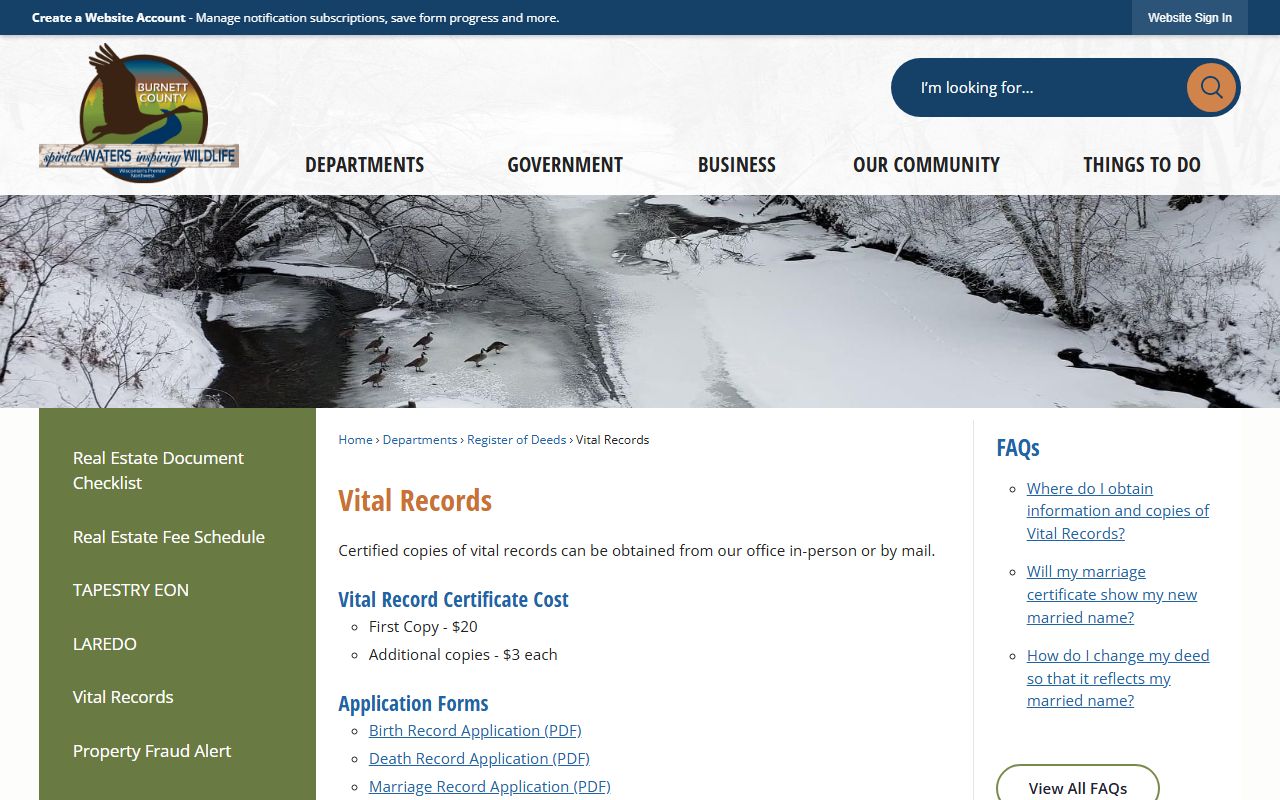
Burnett County also offers online ordering through Official Records Online, and it allows email orders with credit or debit card payment by phone. That helps when you are trying to move quickly after finding a death notice or need a copy sent without a courthouse visit.
The state office in Madison is the broader backup. The Wisconsin Vital Records Office handles Wisconsin vital records, accepts mail requests, online VitalChek orders, and phone orders at 877-885-2981, and usually completes online requests in about five business days. That state route matters when the county office is closed or when the record belongs to the statewide system instead of a single Burnett County file.
State rules explain the copy process. Wis. Stat. § 69.21 covers certified and uncertified copies, while Wis. Stat. § 69.22 sets the standard $20 first-copy fee and the $3 additional-copy fee. The RCFP Wisconsin open-government guide is useful too because it explains the direct and tangible interest rule for certified records. That is the part that tells you why a public obituary search and a certified copy request are not handled the same way.
Burnett County Obituary Research Help
The Burnett County genealogy trail is stronger than it first looks. The FamilySearch Burnett County genealogy page says the Register of Deeds has birth, marriage, and death records from 1861, burial records and land records from 1856, and military discharge records from 1919. It also points researchers to the Burnett County Historical Society and the University of Wisconsin-River Falls Area Research Center. That is helpful when a short obituary needs a deeper family file, because the search can move from one notice to land, burial, or probate material.
The County Law Library page is the best local directory when you need phone numbers and office names fast: Burnett County State Law Library directory.
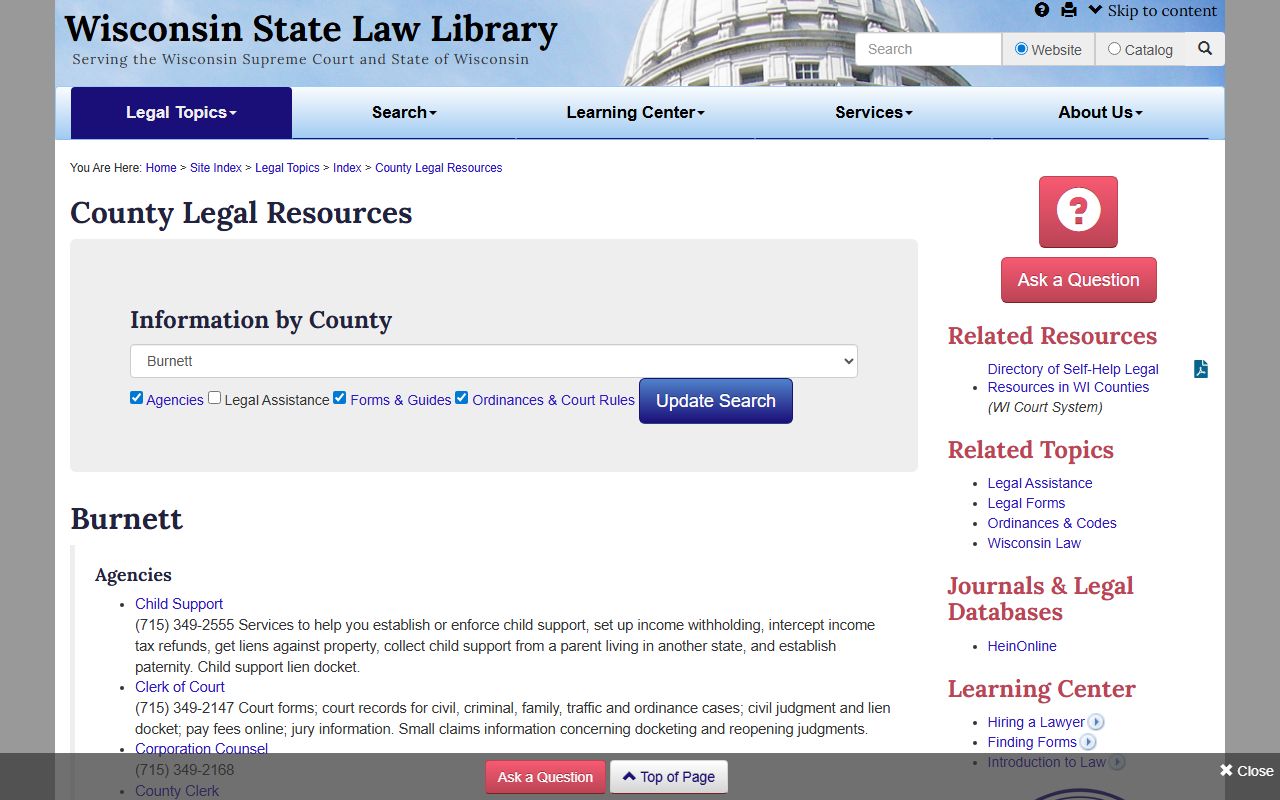
That directory is practical because it points to the Register of Deeds, the Clerk of Court, the Register in Probate, the County Clerk, and the Sheriff's Department without forcing you to guess which office matters first.
For older obituary work, the Wisconsin Historical Society family history portal gives access to more than 3,000,000 records, including obituary-friendly newspaper clippings and index material. The Society's obituary collection at Wisconsin obituary collections adds another route, while the research tips page at Wisconsin obituary research tips explains wildcards, exact years, and the kinds of details a death record may carry. If a name is spelled three ways, those tools can still pull the thread.
When the obituary does not turn up in the county office, a newspaper database can help. Chronicling America searches historic newspapers that may hold death notices, memorial notes, and family references that never made it into a county file. For Burnett County, that kind of backup matters because not every notice survives in the same place.
Burnett County Obituary Public Access
Most obituary research in Burnett County is public, but the kind of copy you need still matters. The county Register of Deeds says it provides certified and uncertified copies of records, and the state rules in Chapter 69 control who can get which version. That distinction matters if you only need to confirm a death notice, a burial date, or a family line. It matters even more when the record will be used for an estate, insurance, or a legal file.
The Burnett County Clerk of Courts / Register in Probate page is the direct follow-up when the obituary points into a court file: Burnett County Clerk of Courts / Register in Probate.
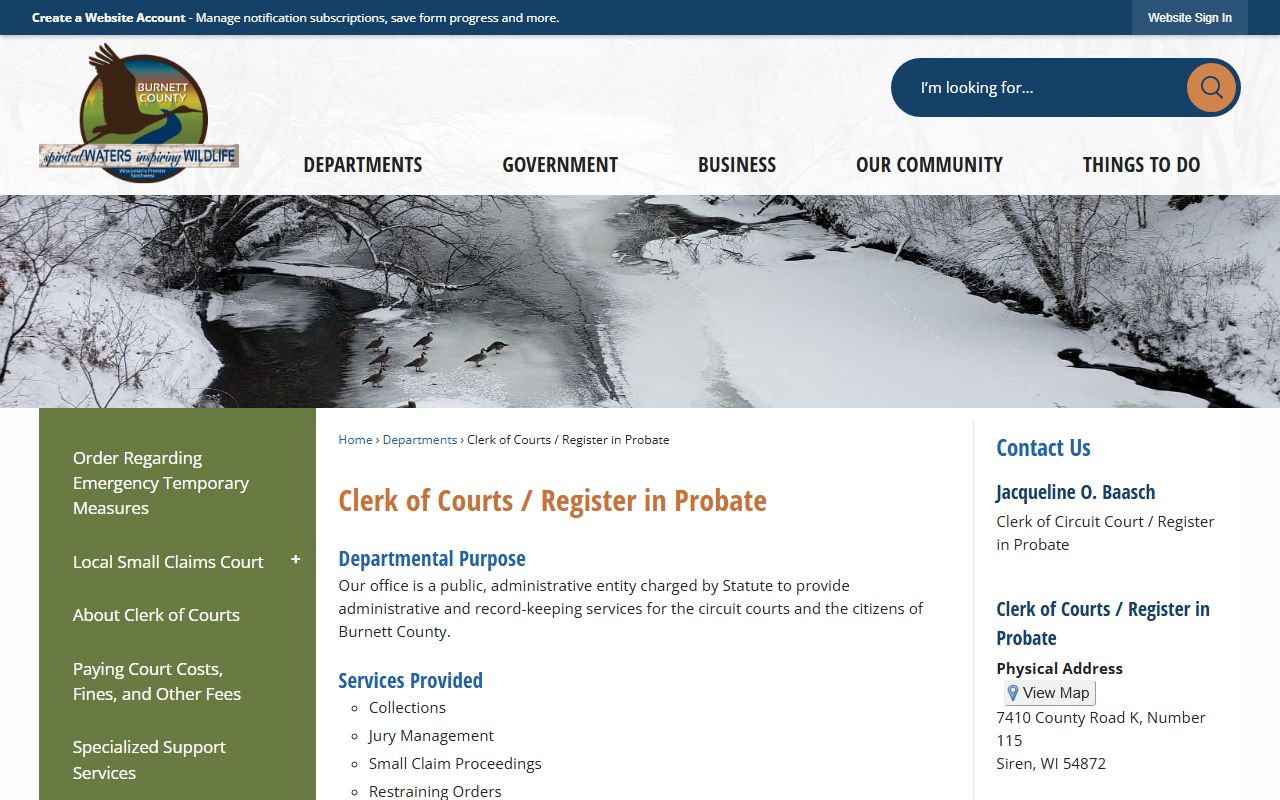
That office handles probate, juvenile matters, and records work for the circuit courts, so it is the right place when a death notice turns into a legal paper trail.
Burnett County's records system is also tied to the county clerk and the public record archive. The County Clerk page explains that the office serves the public and local government, posts the county directory, and keeps county board minutes from 1874 to 1989. Those details are useful when a family search needs a local reference point that is broader than the obituary itself. The county clerk is not the record copy desk, but it helps show how Burnett County keeps older public information in reach.
The legal side still comes back to the same Wisconsin rules. Wis. Stat. § 69.18 describes how death records are created, and Wis. Stat. § 69.21 and Wis. Stat. § 69.22 explain copies and fees. Once you know those rules, it is easier to separate a public obituary, a county death record, and a certified copy that may be needed for a claim or an estate.