
Douglas County Obituary Lookup
Douglas County obituary records are a mix of local office work, county court files, and statewide indexes. The Register of Deeds office in Superior handles the vital-record side, while the Clerk of Courts can matter when an obituary points toward a court record or another family file. For older names, the Wisconsin Historical Society and newspaper databases are often the best backup. That is the path that gets you from a death notice to a record you can trust.
Douglas County Obituary Overview
Douglas County Obituary Sources
The Douglas County Register of Deeds background page explains why the office matters for obituary work. It says the office files and issues records that show events from birth through death and provides constructive notice for births, deaths, and marriages that occurred in the county. That is the local starting point when a notice in the paper needs to be tied to a real certificate or a county record. The office is part of the public record system in Superior, not a side desk for casual searches.
The county register of deeds page is here: Douglas County Register of Deeds background. The FAQ page adds that genealogists may search records Monday through Friday from 8:00 a.m. to 4:30 p.m., except holidays, which is useful when you need a quiet research block instead of a rushed request.
The image below comes from the county register of deeds background page: Douglas County Register of Deeds.
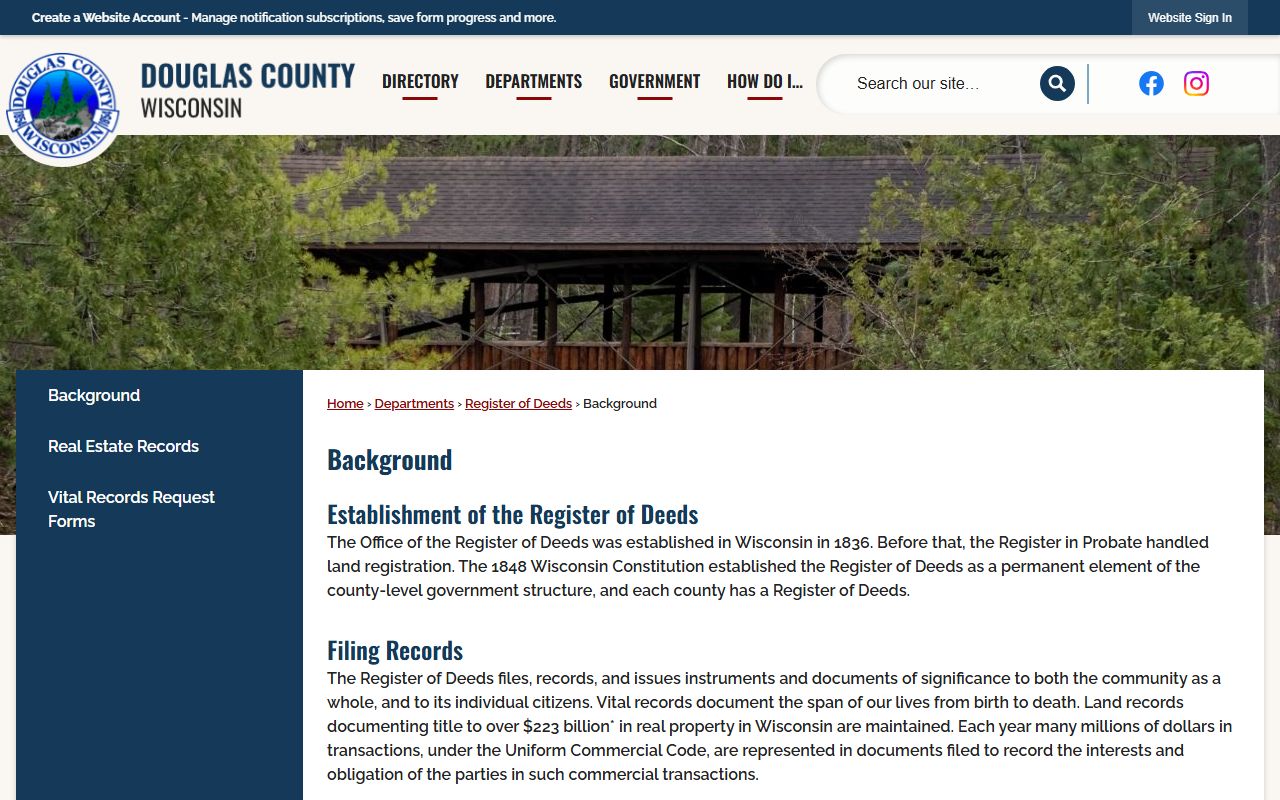
That office is the right first stop when you know the death occurred in Douglas County or when you need a local certificate to go with the obituary. It gives you the county side of the record trail before you move to state sources.
Douglas County Obituary Requests
The county FAQ page says you can apply in person at the courthouse, by mail to P.O. Box 847 in Superior, or online through the "View Vital Records Applications" link. That is a practical setup for obituary work because you can match the request method to the kind of clue you already have. If the death happened in Douglas County, the Register of Deeds is the office to start with. If you only have a name and a rough date, the genealogy window at the office can help narrow it down.
The county VitalChek page is the faster route for an online order: Douglas County VitalChek ordering.
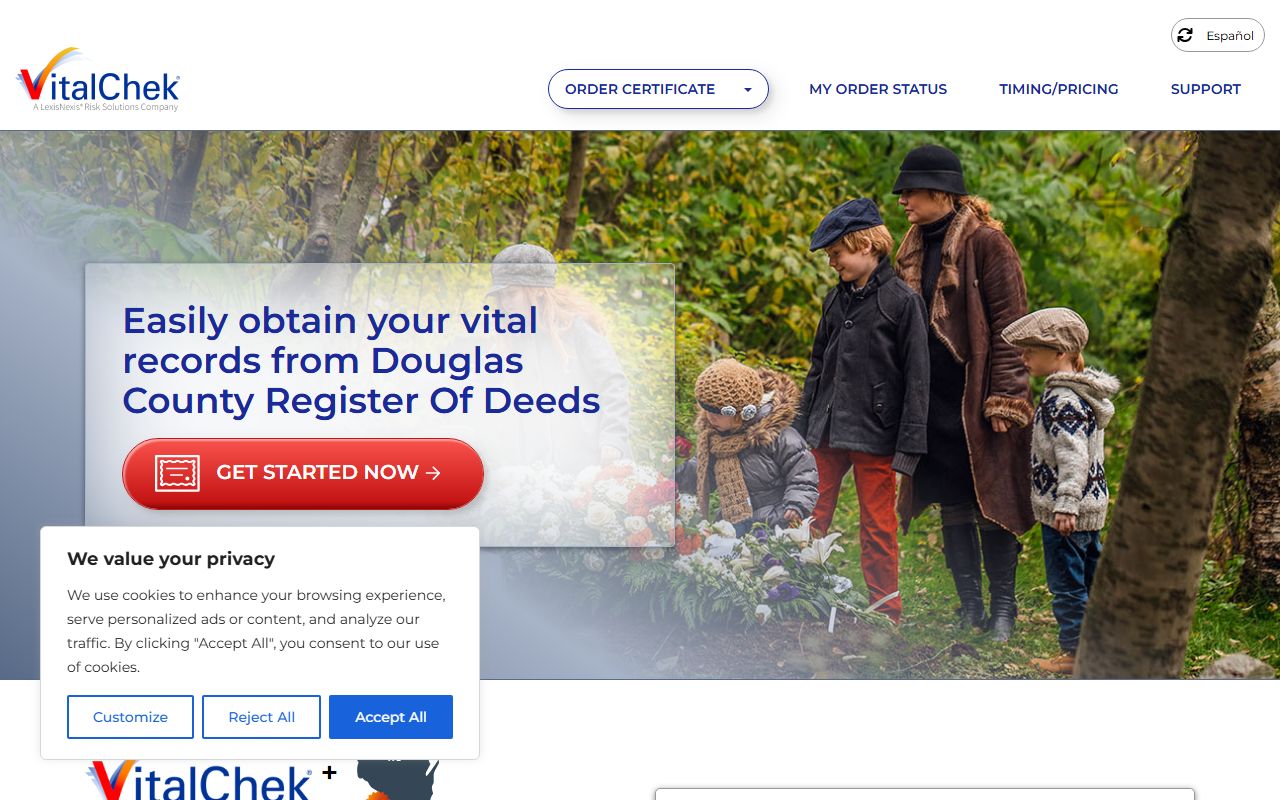
That page confirms the county issues certified copies of Douglas County birth, death, and marriage records and that VitalChek is the authorized online service. For a family member who needs a certificate fast, that is usually the cleanest path.
If you are building a record file, keep these basics close:
- Full name of the deceased
- Approximate date of death
- Town, village, or township in Douglas County
- Any spouse, parent, or child name from the notice
Wisconsin's state office in Madison still matters here. The Wisconsin Vital Records Office accepts mail, online, and phone requests, and it stays useful when the county office is closed or when you need a broader search path.
Douglas County Obituary Archives
The Wisconsin Historical Society is the best broad backup for Douglas County obituary work. Its obituary collections page says the library keeps obituary articles, microfilm, and scrapbook material, while the research portal gives you a larger family-history view when the county office does not answer every question. That is valuable in a county like Douglas, where a local notice may have been clipped from a paper, indexed later, or preserved only in a state collection.
The image below comes from the Wisconsin Historical Society obituary collections page: WHS Wisconsin obituary collections guide.
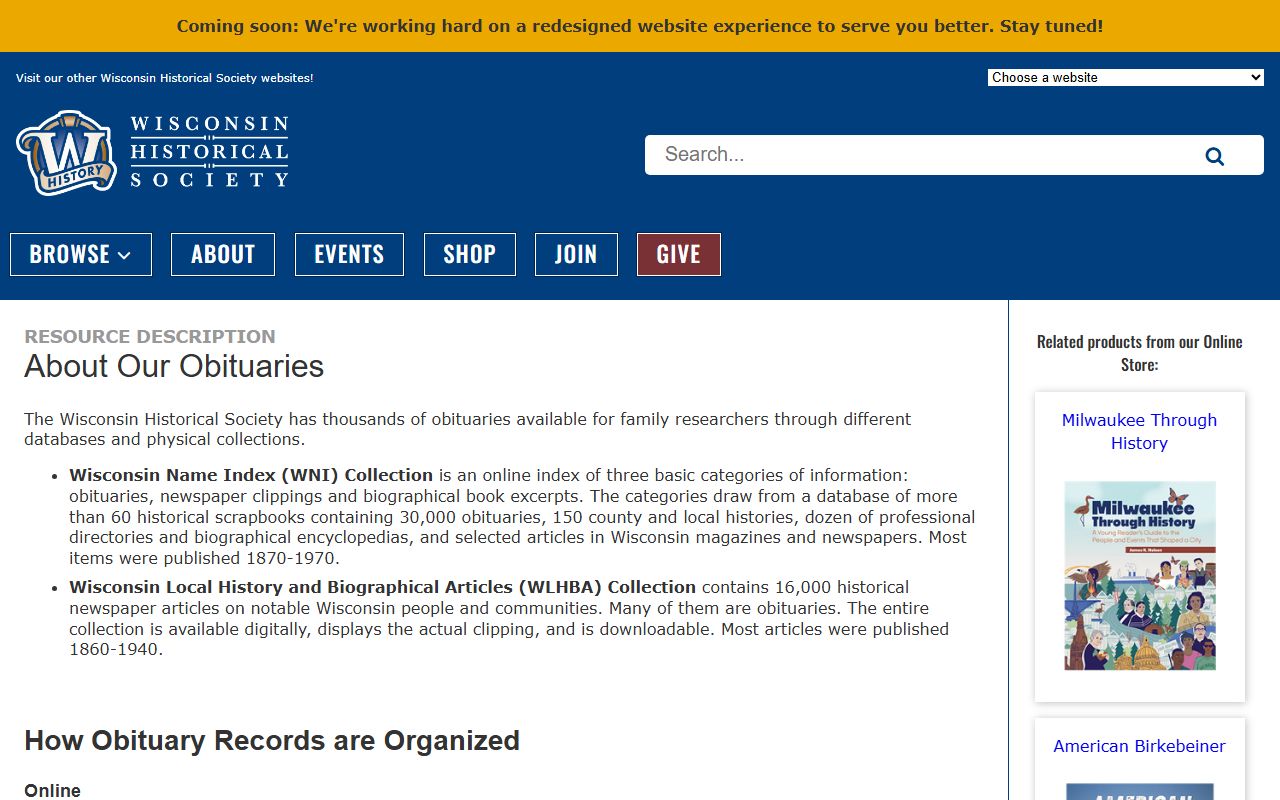
That collection can bridge the gap between a paper death notice and a fuller family story. If the obituary is brief, the society's linked articles and indexes can still give you a stronger trail.
For newspaper work beyond the state society, Chronicling America is another good check. It can surface death notices, obituaries, and local references that never landed in a county file. That makes it a strong cross-check when the search is stuck on an old surname or a thin clipping.
Douglas County Death Records
Death certificates do the official work, and the obituary does the human work. Douglas County keeps the county side through the Register of Deeds, while the Wisconsin Department of Health Services handles the state side for mail, online, and phone requests. That means you can begin with the notice, then move to the certificate when you need proof for insurance, probate, or a family file. The state office is a useful fallback when the county search turns up a name but not the paper you need.
The law that sets the rules is in Wis. Stat. § 69.18, Wis. Stat. § 69.21, and Wis. Stat. § 69.22. Those statutes explain how death records are made, who can get certified copies, and how the standard copy fee works. The Wisconsin open-government guide is a useful plain-language backup because it explains why certified copies are limited even when the public obituary is easy to read.
Note: If you only need the story, the obituary may be enough. If you need proof, the certificate still has its own request path.
Douglas County Obituary Access Rules
Douglas County searches work best when you keep the offices in order. Start with the Register of Deeds for the local certificate trail. Use the Clerk of Courts only when the obituary points to a court file, an estate issue, or another record that belongs on the court side. Then move to the state and newspaper collections if the first pass does not answer the question. That sequence keeps the search focused and saves time.
The image below comes from the county Clerk of Courts page: Douglas County Clerk of Courts.
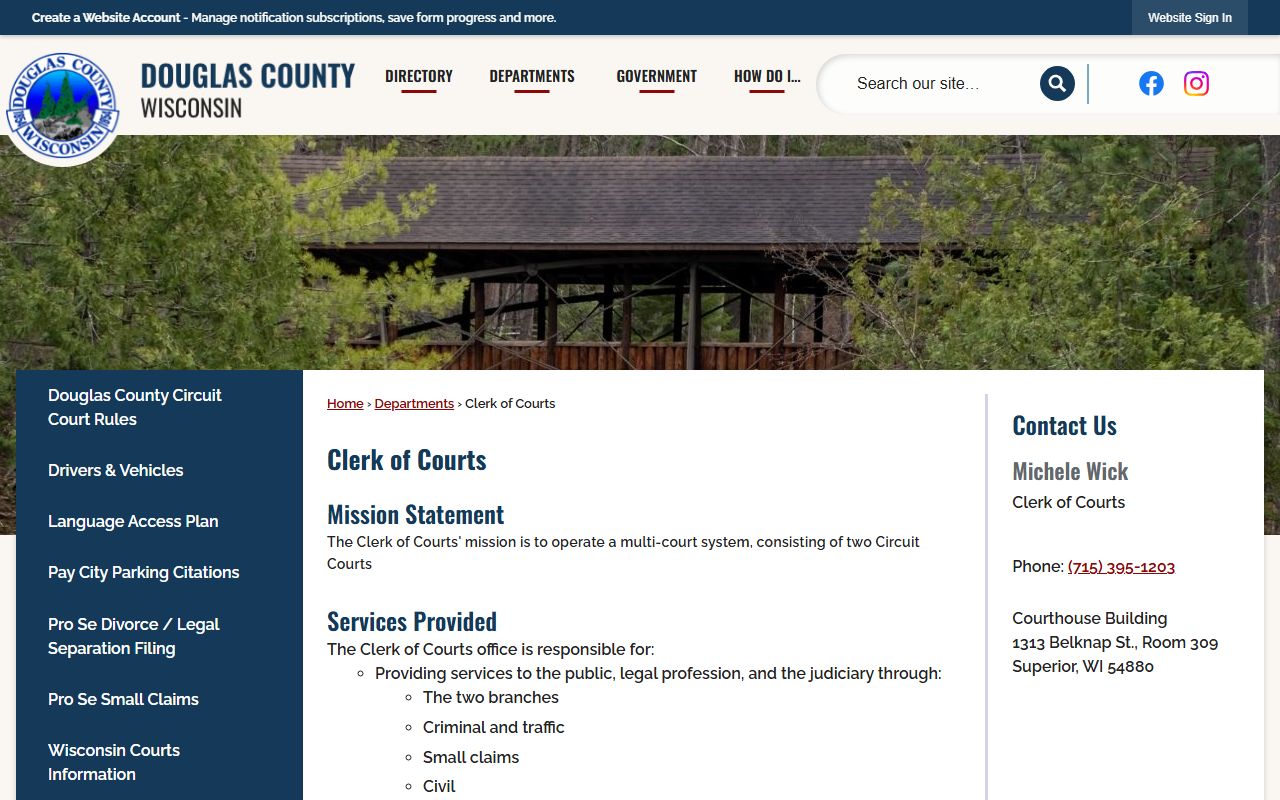
The clerk's office keeps a court record of every civil, criminal, traffic, and other proceeding. That is not the same thing as an obituary, but it can be the next door to open when a death notice is tied to an estate or family court paper trail.
The Wisconsin Historical Society research tips page is worth another look when a surname is hard to pin down or the year is fuzzy. Its wildcard advice and exact-year search help are simple, but they are often what turns a dead end into a match. For Douglas County obituary research, that small shift can make the whole search work.