
Eau Claire County Obituary Records
Eau Claire County obituary research usually begins with the county register of deeds and then widens to the county clerk, the Wisconsin Vital Records Office, and the Wisconsin Historical Society when the death notice is older or the spelling is not exact. The county office is the place to ask for a certified copy, but the obituary itself may point you to a city address, a local newspaper, or a family line that needs one more clue. If you keep the search local first and use the state and historical sources as support, the trail stays specific and easier to follow.
Eau Claire County Obituary Overview
Eau Claire County Obituary Sources
The Eau Claire County Register of Deeds is the official county repository for land records and vital records. The office uses optical imaging for permanent storage and retrieval and says that birth, death, marriage, domestic partnership, and military discharge records are indexed and filed in safe archival storage. The office also notes that, effective January 1, 2025, a postage-paid envelope must be provided for the return of documents. That makes the register of deeds the practical first stop when an Eau Claire County obituary turns into a death certificate request.
The image below comes from the register of deeds page and shows the county office that holds the record trail.
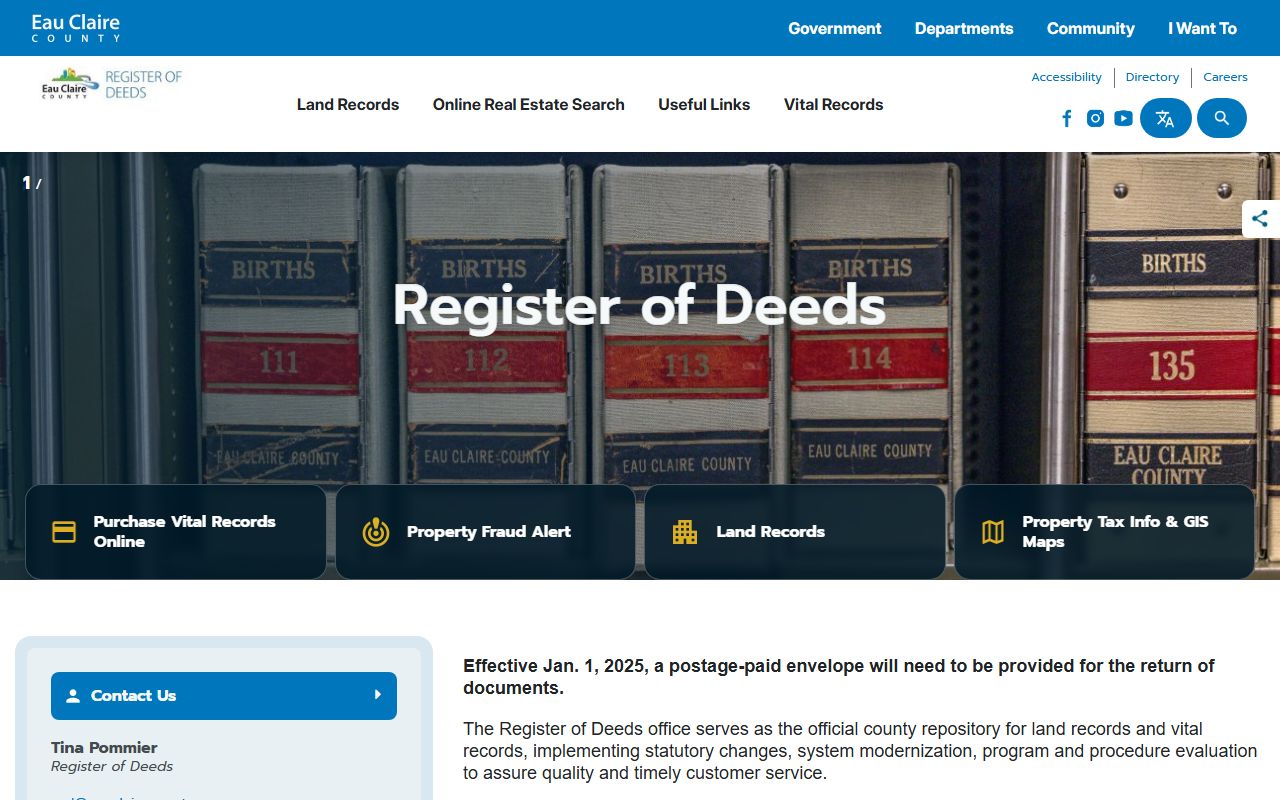
The county office can issue certified copies on request, and it is the cleanest path when the obituary gives you a full name and a likely year. Because the register is the office of record, a short notice or a newspaper clipping can often be matched there faster than in a broader statewide search. The county office is also the point where the search turns from local memory into an official document request.
The county clerk gives a second local layer. The Eau Claire County Clerk handles elections, marriage licenses, public notice, and the official record of county board actions. It also issues timber cutting notices. That is not an obituary archive, but it can help place a family name in the county's administrative history. The image below comes from the clerk page.
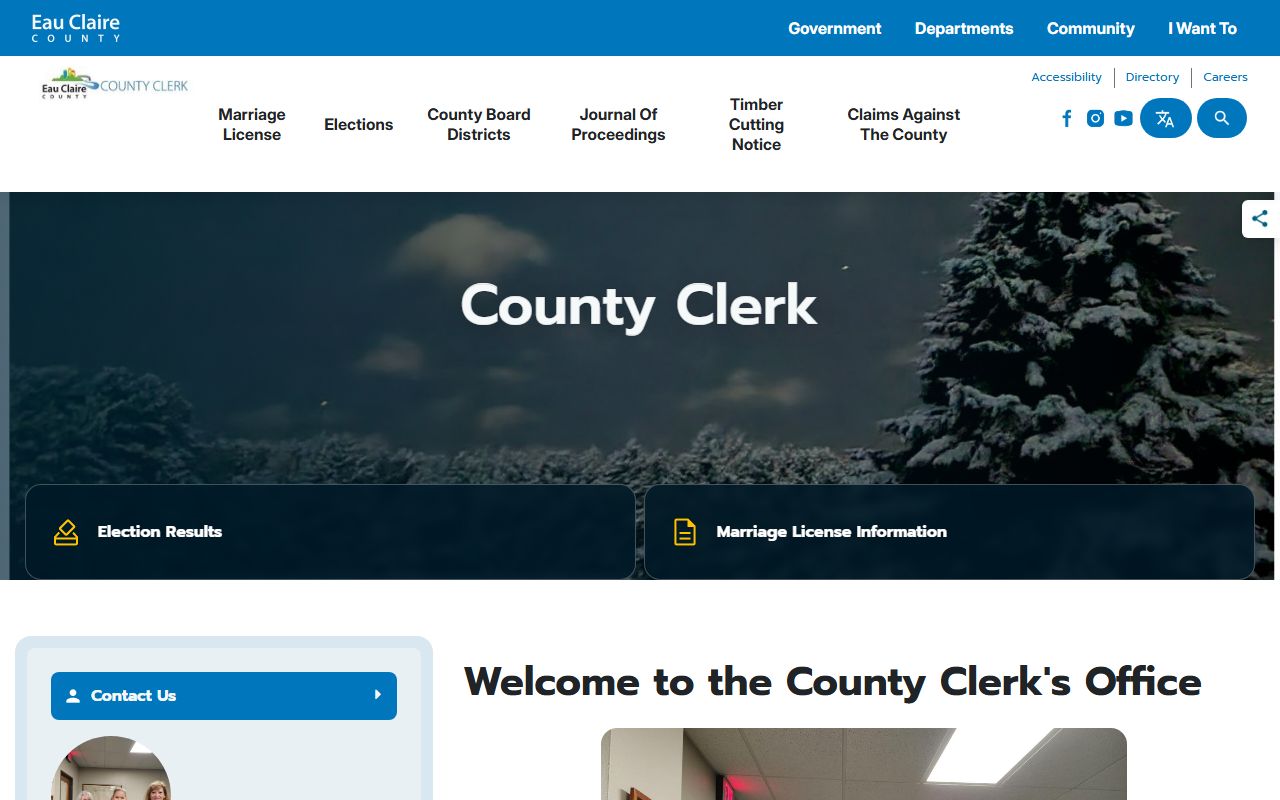
That clerk office is useful when a notice refers to a family that also appears in county meeting records, marriage license files, or other public notices. It will not issue a death certificate, but it can help you confirm that the name belongs in the Eau Claire County record set before you move on.
Eau Claire County Vital Records
The county vital-records page provides the request details that matter most for obituary work. Eau Claire County Vital Records says application forms are available for birth, death, marriage, and other certificate requests. The fee is $20 for the first copy and $3 for each additional copy of the same record issued at the same time. In-person requests are usually completed within 10 to 15 minutes, and mailed requests are usually completed within one to two business days plus mail time.
The page also says a valid driver's license is required for identification and that a self-addressed stamped envelope should be included with mailed requests. Those details are useful because a clean request saves time at the counter or in the mail. The image below comes from the Eau Claire County vital-records page and shows the form and fee path that family researchers use most often.
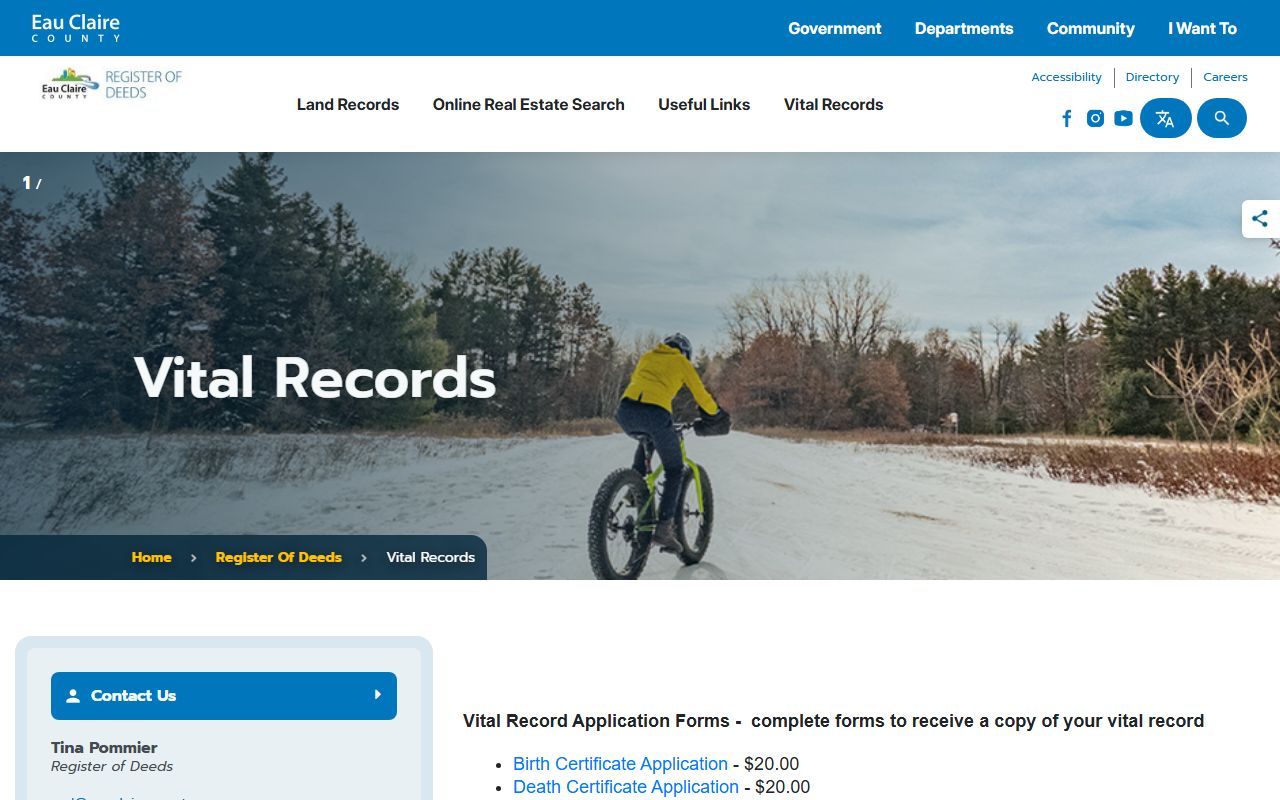
For obituary research, that means you can keep the request focused. Give the office the full name, a rough death date, and any county or city clue from the notice. A narrow request is usually better than a broad one, especially if the name is common or the family used a nickname in print. The goal is to make the county office see the same person the obituary describes.
If you need a remote path, the Wisconsin Vital Records Office still matters. The state office accepts requests by mail, through VitalChek, or by phone at 877-885-2981. It also sets the fee structure for Wisconsin copies. Under Wis. Stat. 69.18, death records are filed in the state system, while Wis. Stat. 69.21 and Wis. Stat. 69.22 explain copies and fees. That state layer is the backup when the county route is not enough on its own.
- Use the county form when you already know the name and approximate year.
- Bring a valid ID if you request the copy in person.
- Include a stamped envelope for mailed requests.
- Use the state office when the county trail needs a broader search.
Eau Claire County Obituary Research Help
County research becomes much easier when you know which office does which job. The county clerk handles elections, marriage licenses, public notice, and board records. That can help you place a family in time and place, even when the obituary is the first thing you found. For a local search, that kind of administrative clue can be the missing piece that ties the notice to the county record set.
The image below comes from the county clerk page and keeps that local context visible.
State history tools are the next layer. The Wisconsin Vital Records Office is the official statewide backup, and the Wisconsin Historical Society family history portal gives you a large searchable index of records and newspaper-related material. The obituary collections guide adds obituary files and newspaper clippings, while the research tips page helps when the spelling is uncertain or the date range is narrow. For newspaper scans outside the local county run, Chronicling America is a useful official source.
That layered approach keeps Eau Claire County obituary work practical. Start with the county office for a certified record. Use the county clerk for context. Move to the state office if you need a statewide copy path. Use the historical sources when the obituary is older, brief, or missing from the county file. Each source does one job, and the search is easier when those jobs stay separate.
Eau Claire County Obituary Access Rules
Access rules are what keep obituary research from becoming guesswork. The Wisconsin open-government guide explains that vital records are handled under Chapter 69, which is separate from the general open-records law. That matters because a notice can be public while the certified record still needs the proper request and the proper interest standard.
In practice, that means the county register of deeds is the right place for a modern local copy, the Wisconsin Vital Records Office is the right statewide fallback, and the Wisconsin Historical Society is the right place for older deaths and obituary collections. If the obituary gives you a full name, a city, and a year, the county office is usually enough. If the name is older or the spelling is fuzzy, the historical path becomes more important.
The simple rule for Eau Claire County is this: keep the county at the center of the search, then use state and history sources to finish the match. That is the cleanest path from a notice to a record.