
Green Lake County Obituary Search
Green Lake County obituary work is a mix of county office records, old local history, and Wisconsin statewide tools. The Register of Deeds keeps the county copy, the county clerk helps with nearby family records, and the historical collections fill in the older gaps. That matters because Green Lake County has records that go back well before the modern statewide system, so a death notice can lead you to a much older paper trail if you know which office to ask first.
Green Lake County Obituary Overview
Green Lake County Obituary Sources
The Green Lake County Register of Deeds keeps a deep stack of records. The county page says deeds and mortgages go back to 1845, birth and death records to 1876, and marriage records to 1852. It also says some wills are recorded there as well as in the Register in Probate. That kind of depth is exactly why obituary research in this county can reach well beyond the modern file date.
The office also explains its online and in-person access. Residents can order vital records online through OfficialRecordsOnline.com, and the page says an overnight FedEx option is available for added service fees. For genealogy, people must sign an application agreeing to the office rules. The county page also notes that the Veterans Service Office can record or certify DD-214s, which helps when a family file includes military service.
The county Register of Deeds page is here: Green Lake County Register of Deeds.
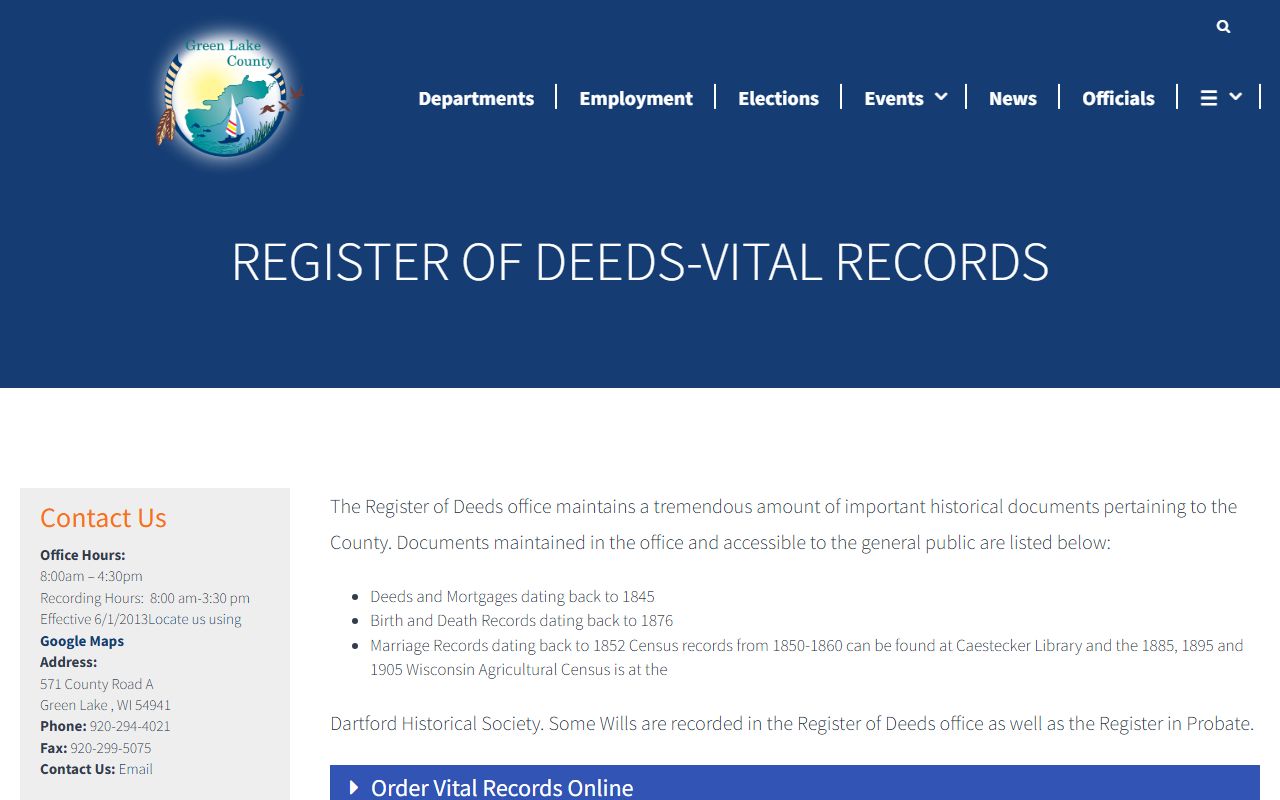
That page is the starting point for the county's older record trail and the current request process.
The register of deeds office also says genealogists are welcome and that calling ahead is wise if you are coming from a distance. That is useful in a county where older records are the real strength.
Green Lake County Obituary Requests
Green Lake County's news article on statewide vital records explains how the system changed after January 1, 2017. It says residents can now obtain many vital records through the Green Lake County Register of Deeds office or through Official Records Online. It also gives the statewide issuance dates for birth, death, marriage, and marriage-related records. That is useful when an obituary leads to a record that is recent enough for the county system but still needs a precise request.
For an obituary request, keep the details narrow. The county office and the state office both work best when you have the name, the approximate date, and the county or town tied to the event. If you need a certified copy, bring identification and the right payment method. If the record is older, the county office can still tell you whether it sits locally or needs a different path.
What to gather first:
- Full name from the obituary or death notice
- Approximate date of death
- County or town tied to the record
- Photo ID for certified requests
- Any family names that may help match the file
The Green Lake County vital-records article is here: Green Lake County vital records article.
That article explains why the county office can now handle more records than it could before the statewide system opened up.
Green Lake County Obituary Research
The Green Lake County clerk office is part of the obituary search trail too. It handles marriage licenses and records, and it reminds applicants to check with the Register of Deeds to make sure the marriage certificate was filed. That is useful when a family line crosses from an obituary to a marriage record that helps prove a name change or a family connection.
The WRDA profile adds the practical side. It says the office has two full-time deputies and one part-time deputy in addition to the register, and it confirms the office hours, Laredo and Tapestry access, and Property Fraud Alert. It also says the office processes death and marriage records and that genealogists are welcome. That makes the office a good place to ask when you need more than one record type.
The WRDA page is here: Green Lake County WRDA profile.
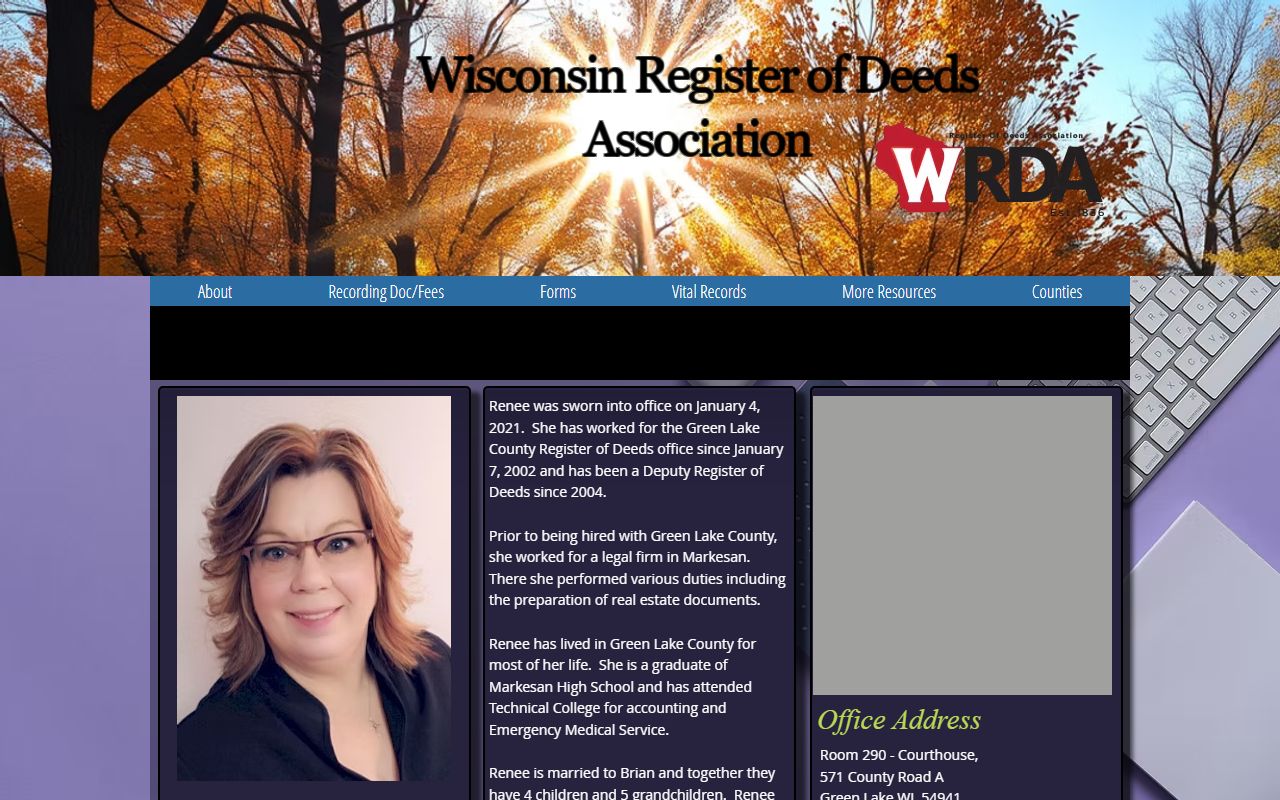
That profile gives a clean view of how the office works and how it handles research traffic.
The Wisconsin Historical Society is the broader history path. Its pre-1907 database covers every county, and its collections include birth, death, and marriage indexes, newspaper clippings, photographs, and property records. Because Green Lake County has record holdings that go back to the 1800s, the Society can be the best next step when the obituary is old or the family name is hard to pin down.
The historical society portal is here: Wisconsin Historical Society research portal. For newspaper hunting, Chronicling America can help you search death notices and obituary reprints that are not in a county file.
The county law library directory is also useful because it lists the Register of Deeds, Clerk of Courts, Register in Probate, and County Clerk with direct numbers. That keeps the office map clear when a death notice becomes a probate or court search.
The law library page is here: Green Lake County State Law Library resources.
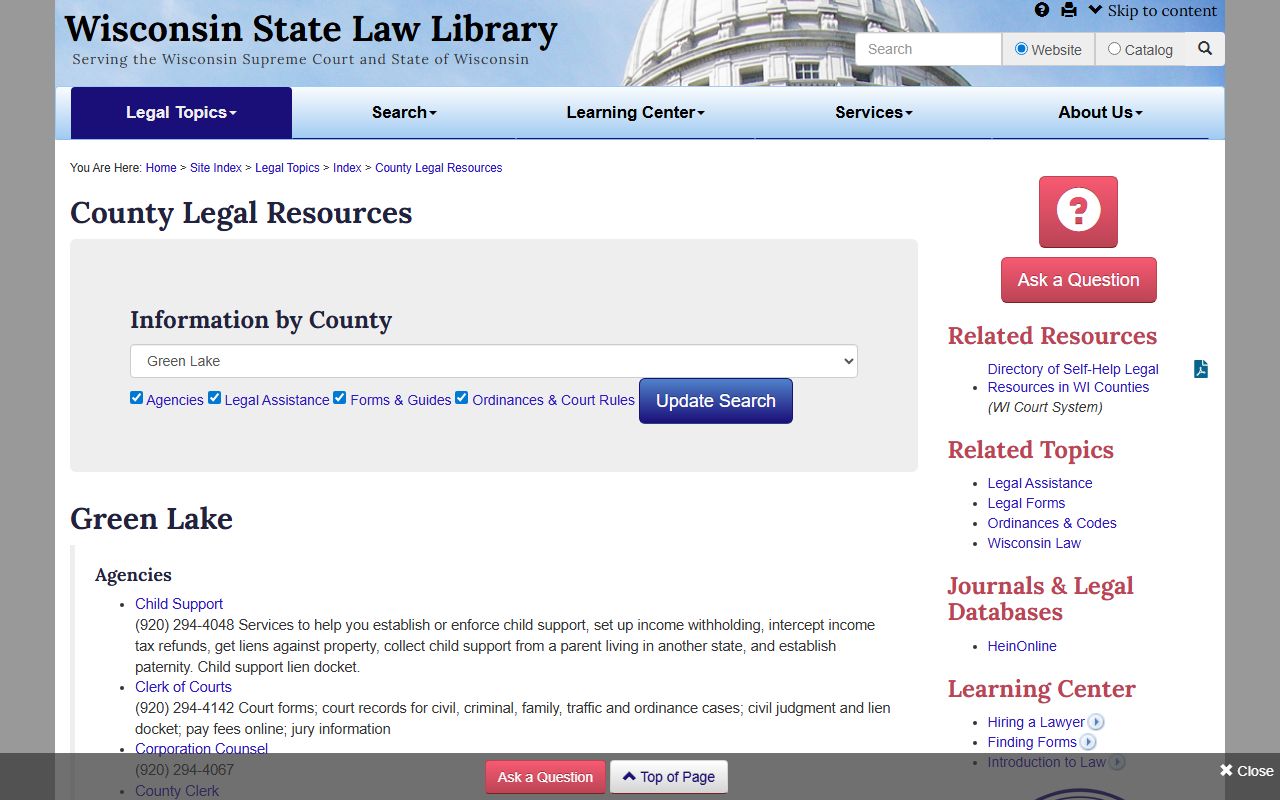
That directory is a fast way to see the whole office chain in one place.
Green Lake County Obituary Access Rules
Wisconsin law explains why some obituary-related records are public while others need the right request. Wis. Stat. 69.18 explains how death records are created and certified. Wis. Stat. 69.20 limits certified copies to people with a direct and tangible interest. That is the rule that keeps an obituary notice and a certified county copy from being treated as the same thing.
The copy and fee rules in Wis. Stat. 69.21 and Wis. Stat. 69.22 explain the standard fee structure and the request process. If you only need background research, the county page or the Historical Society may be enough. If you need proof, the county office will want the request complete before it issues a certified copy.
The county clerk and register in probate matter whenever an obituary leads into a will, guardianship, or other family record. That is common in a county with deep archives and a long record trail. The county office, the state office, and the historical collections work best when you move between them in a straight line.
Note: For Green Lake County obituary research, start with the county office, then move to the Historical Society and the state office when the record is older or the request needs a broader search.
The Wisconsin DHS page is here if you need the statewide backup route: Wisconsin DHS Vital Records.