
Green County Obituary Lookup
Green County obituary research works best when you start with the Register of Deeds and use the county clerk and state history tools as backup. The county office keeps the official record copy, the state office gives you the statewide route, and the Wisconsin Historical Society helps when the name or date is old enough to need a broader search. That is the practical way to move from a newspaper notice to a record that can be used for a family file or a formal request.
Green County Obituary Overview
Green County Obituary Sources
The Green County Register of Deeds is the main office for obituary and death-record work. The county page says the office maintains the official county repository for real estate records and vital records, and that birth, death, and marriage records are available there. The office is run by Deanna Miller and is located at 1016 16th Avenue in Monroe. That is the first place to go when a death notice needs to become an official record path.
Green County also gives you a clean list of request details. The office says in-person copies cost $20 for the first copy and $3 for each additional copy. It accepts cash, personal check, debit, or credit cards with a card fee. Mail requests need a completed application, a copy of acceptable ID, and payment sent to the Register of Deeds. The office also says it cannot give legal advice, which is another reason a clear request works better than a vague one.
The county Register of Deeds page is here: Green County Register of Deeds.
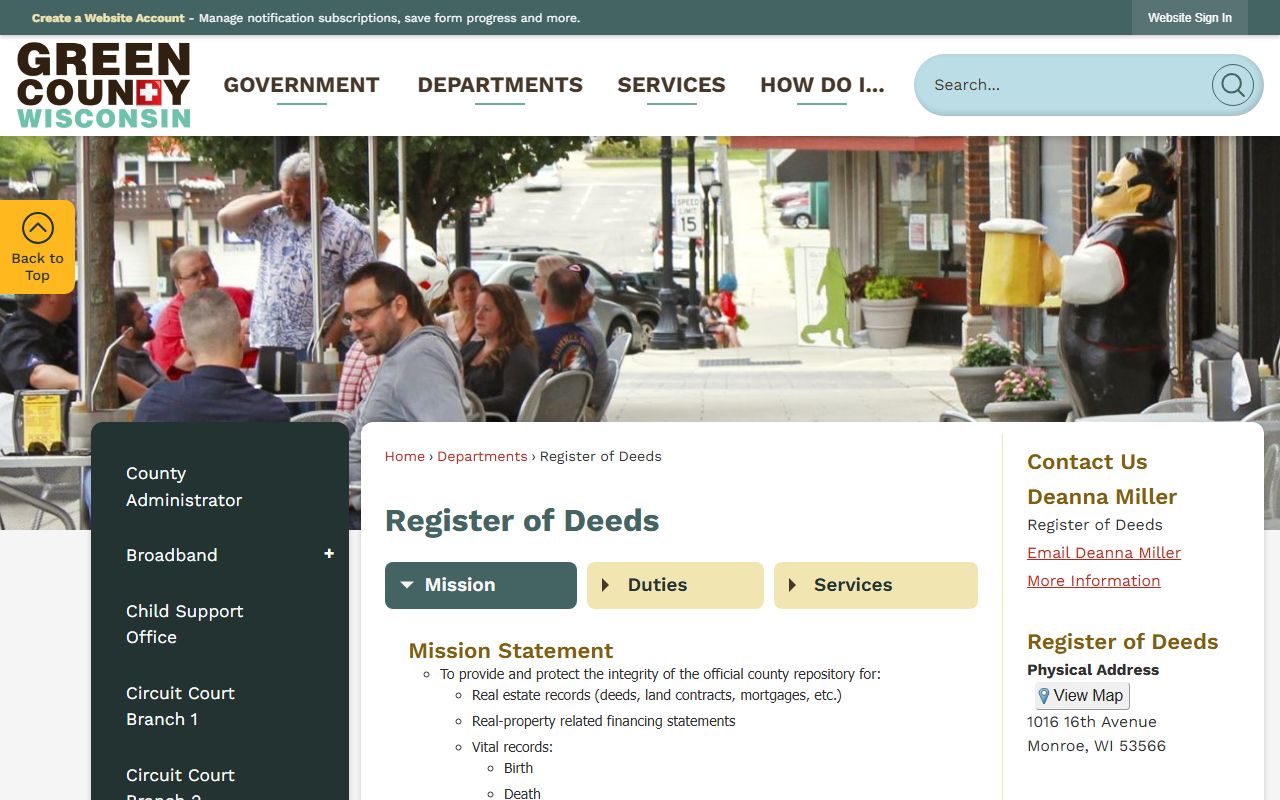
That page confirms the office contact details and the basic records path for obituary research.
Green County also says online orders can be handled through VitalChek or Official Records Online, which helps when you are not near Monroe or need a faster request path.
Green County Obituary Requests
For an obituary search, keep the request short and clear. The county office and the state office both want the name, the date range, and the right form of identification before they issue a certified copy. The Green County Submit page says residents can order official vital records online through VitalChek, and it also lists Official Records Online as an authorized source for certified government-issued records. That gives you a direct county route and a second online route.
The county clerk is another useful piece of the local map. Green County says the clerk handles elections, marriage licenses, and county records, and the law library directory points you to the clerk of courts and register in probate as well. That is useful when an obituary leads into an estate file, a marriage record, or another record that supports the family story.
What to have ready:
- Full name from the obituary or family note
- Approximate date of death
- County or city tied to the event
- A valid photo ID copy for mail requests
- Payment method that matches the office rules
The official online submit page is here: Green County Submit page.
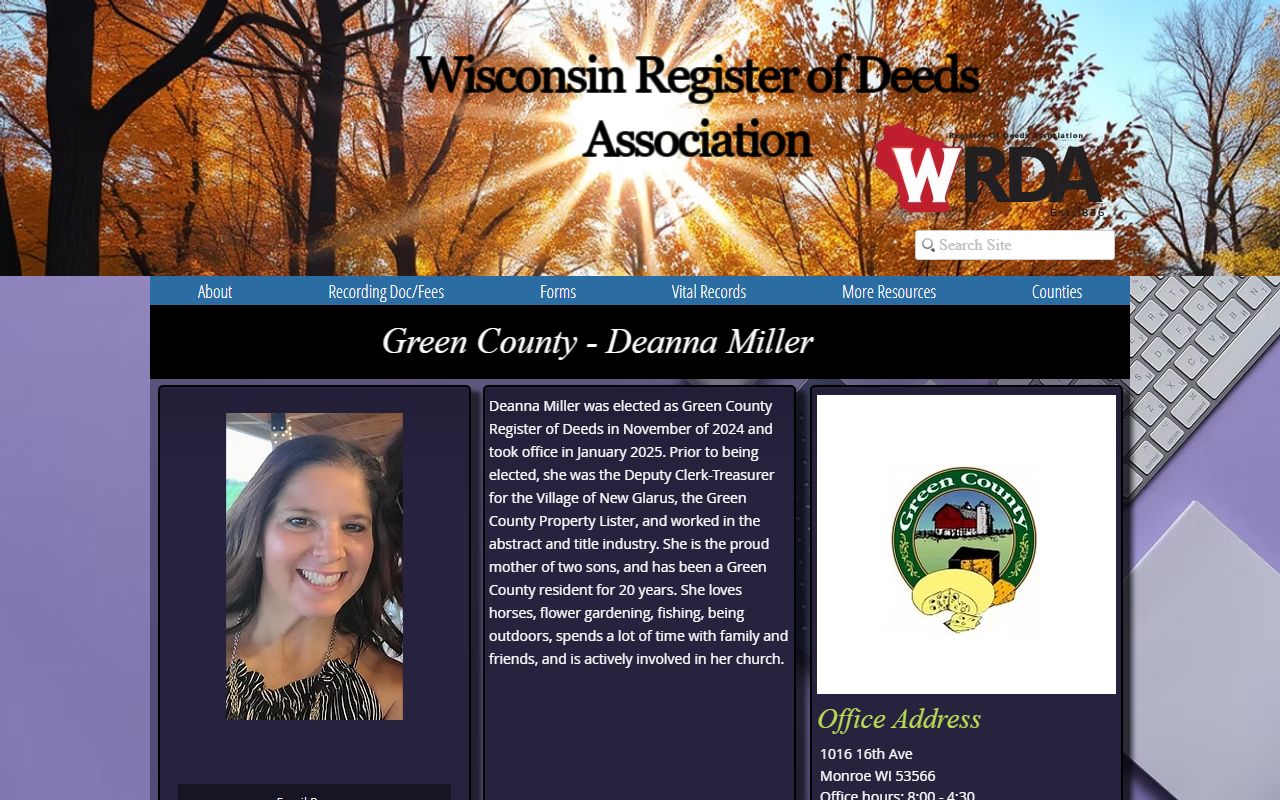
That WRDA profile is helpful because it shows how the office actually runs and where the records work is centered.
Green County Obituary Research
The Wisconsin Historical Society is the broader research path when an obituary is older or the name shows up in more than one form. Its pre-1907 vital-record database covers all counties, and its collections include birth, death, and marriage indexes, newspaper clippings, photographs, and property records. That makes it a strong next step after you check the county office.
The Green County State Law Library directory is also useful because it names the Register of Deeds, County Clerk, Clerk of Courts, and Register in Probate together. That turns a confusing search into a simple office map. If the obituary leads to a probate file or a court matter, you already know where to call next.
The county law library page is here: Green County State Law Library resources. For death notices that do not show up in a county file, Chronicling America and the Wisconsin Historical Society can help you widen the search.
The law library directory is also a useful last-mile check when an obituary points to probate or court work. It keeps the county contacts lined up in one place, so you can move from a notice to the right office without wasting time.
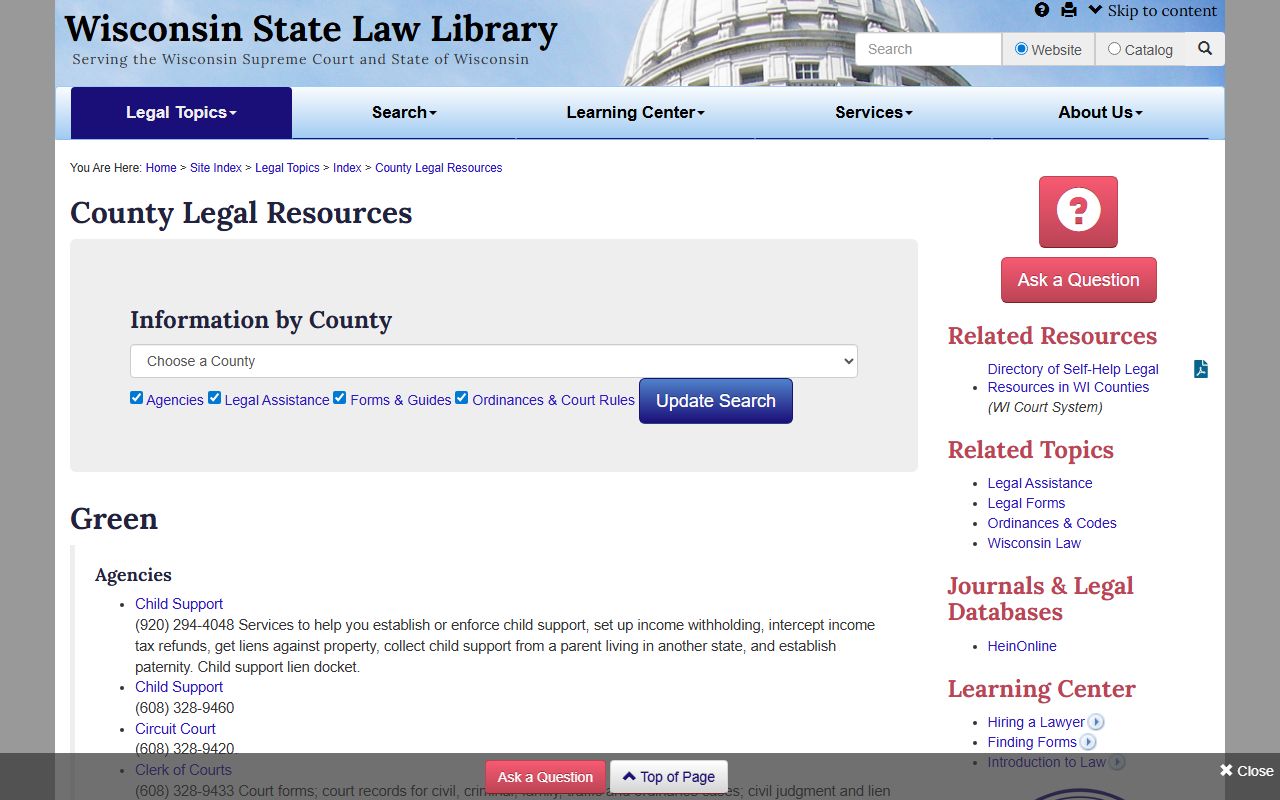
That page helps you verify the office chain and keeps the search practical when the record trail splits.
The Wisconsin Historical Society portal is here: Wisconsin Historical Society research portal.
The Wisconsin DHS page is also a useful statewide backup: Wisconsin DHS Vital Records. It handles Wisconsin vital records by mail, through VitalChek, and through local offices across the state.
Green County Obituary Access Rules
Wisconsin law explains why a death notice can be easy to find while a certified copy still needs a proper request. Wis. Stat. 69.18 explains how death records are created and certified. Wis. Stat. 69.20 limits full disclosure and certified copies to people with a direct and tangible interest. That rule matters any time a family needs a copy for probate or another formal use.
The copy rules in Wis. Stat. 69.21 and the fee rules in Wis. Stat. 69.22 explain the standard fee structure. They also explain why identification and a complete application matter. If you only need background obituary research, the historical society or county office may answer the question before you need a copy.
The county Register of Deeds is still the main point of contact when you need the official file, but the clerk and probate offices can help when the obituary leads into a will, a guardianship, or another county record. That is the normal route in a county where records move through several desks.
Note: For Green County obituary research, start with the county office, then use the state and history sources when you need older records or a broader search path.
The WRDA profile is here again for a quick cross-check: Green County WRDA profile.