
Search Iowa County Obituaries
Iowa County obituary searches often begin with the Register of Deeds, but the best result usually comes from a wider trail. A newspaper notice can point to a death record, a marriage link, a probate file, or a county clerk record that fills in the names around it. In Iowa County, the local office rules are strict, the search rooms are limited, and the records go back far enough to help with older family lines. Start with the county office, then widen the search to state history tools and courthouse contacts when the obituary is only part of the story.
Iowa County Obituary Sources
The official Iowa County Register of Deeds page is the first stop for a lot of obituary work because it covers record searching, office rules, and the local path to birth, death, and marriage records. The office says in-person searches are scheduled Tuesday through Thursday in two-hour blocks, and only two people can be in the vault area at once. The same page also warns that cell phones, cameras, and food are not allowed near the records area. That keeps the search controlled, but it also means the office can protect the files you need when an obituary leads back to a death record or family document.
The county office is here: Iowa County Register of Deeds.
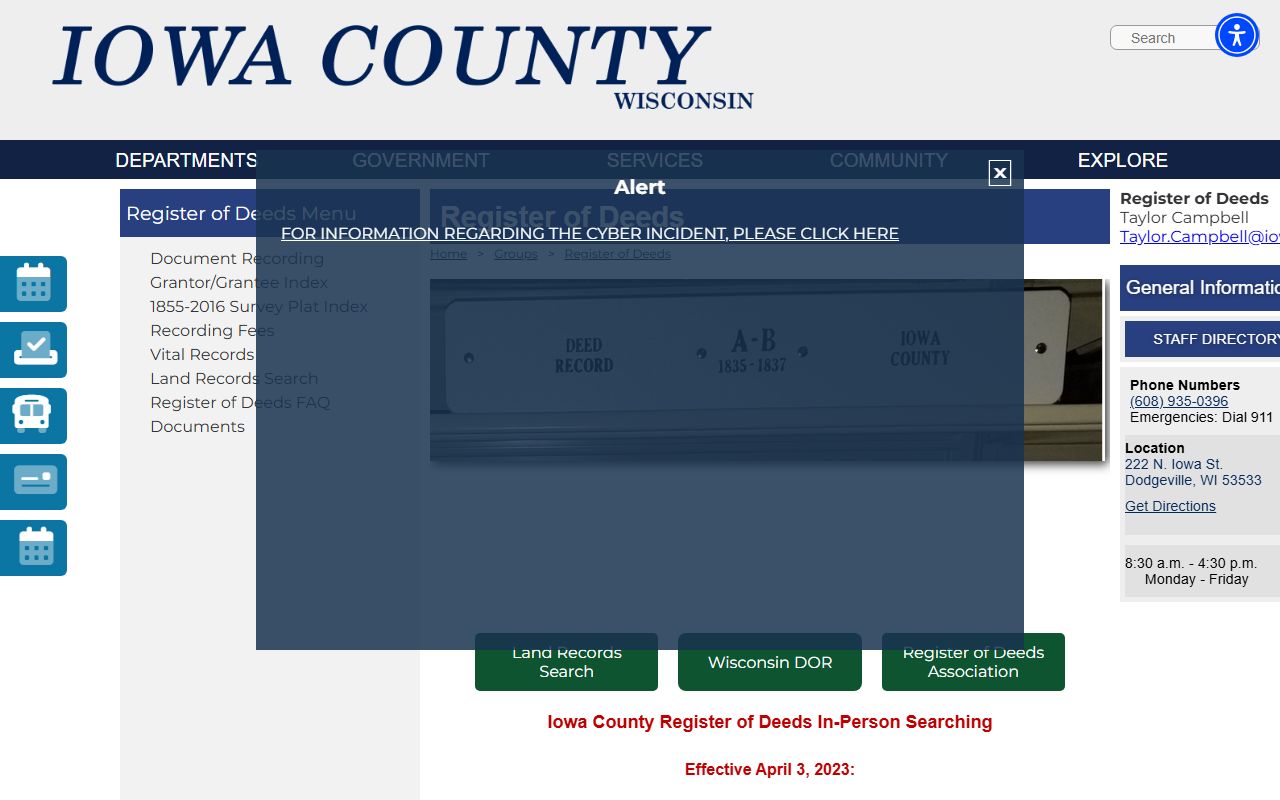
That source is useful because it shows both the office contact and the local search limits, which matter when you need a real file and not just a notice in print.
The county clerk can also matter when an obituary search expands into a family trail. The clerk handles county board records, marriage licenses, elections, and general county administration. The office says public computers are available in the hallway, although genealogy searches are suspended for now. If an obituary name appears in more than one county record, the clerk's office can help show how the county tracks its own records and services. The county clerk page is here: Iowa County Clerk.
Iowa County Obituary Requests
To request a record, keep the details narrow and exact. Iowa County says the register of deeds office has two deputies, online images going back to the early 1800s, and grantor or grantee indexes that reach back to the 1940s. That helps when the obituary is old, the name is common, or you only know part of the family line. If the record is recent, the county can issue vital records depending on the date of the event. If the record is older, the state office or another county may still be the right place to ask, but only if the time line fits the event.
Bring the cleanest facts you have and keep the request simple.
- Full name from the obituary or death notice
- Approximate date of death
- Place where the person lived or died
- A photo ID for certified copy requests
- A stamped envelope if you mail the request
The Iowa County State Law Library directory is a good cross-check because it lists the register of deeds, clerk of courts, county clerk, and register in probate together. That makes it easier to see which office handles the record you need next. The county directory is here: Iowa County State Law Library directory.
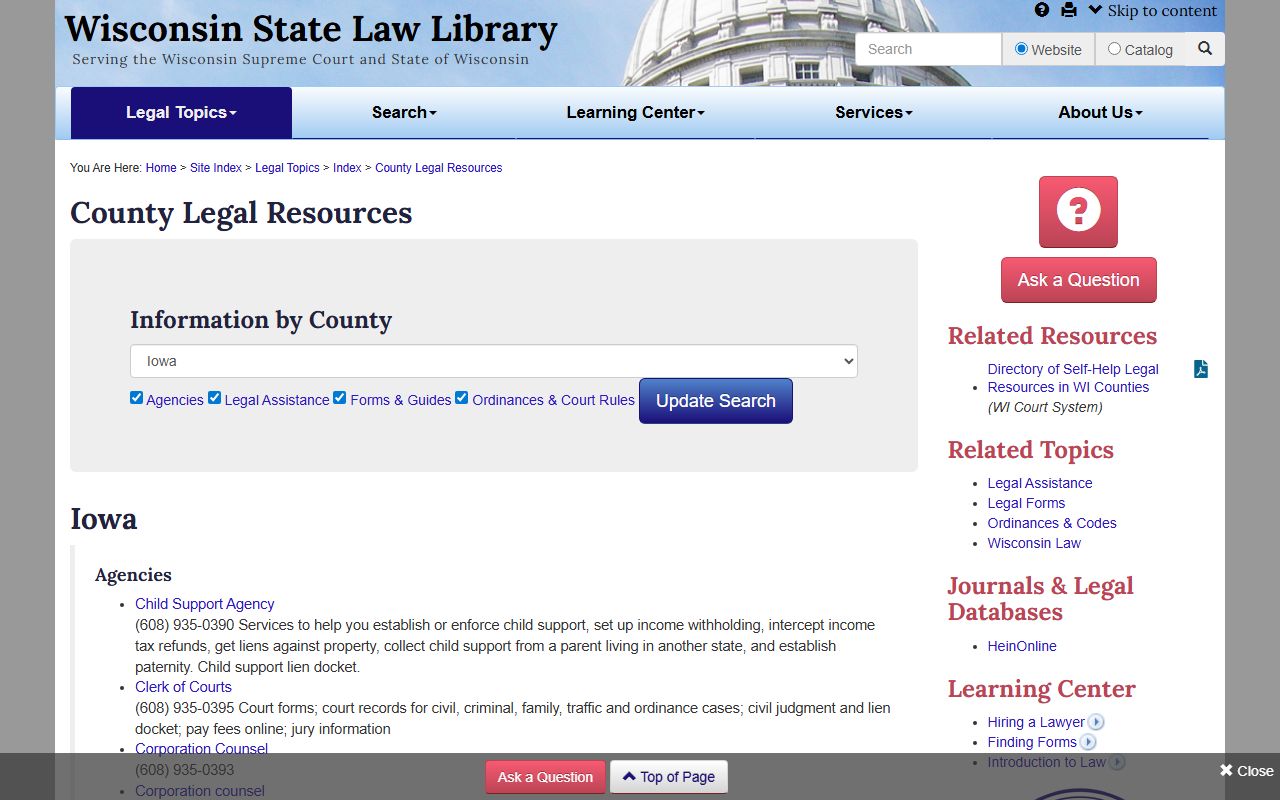
When an obituary points to probate or a court matter, that directory saves time because it gives you the right office names before you travel or mail forms.
Iowa County Obituary Research Help
For older obituary work, the Wisconsin Historical Society is the strongest statewide tool in the file. Its pre-1907 vital-record collection covers all Wisconsin counties, and the broader family-history portal gives access to millions of records, newspaper clippings, photographs, and property material. That matters when a burial notice has no middle name, when a maiden name is uncertain, or when a family branch moved in and out of Iowa County. The society's obituary collections and research tips also help when a name has variant spellings or when you need to search by a narrow year range instead of a broad surname list.
The statewide history portal is here: Wisconsin Historical Society family history portal.
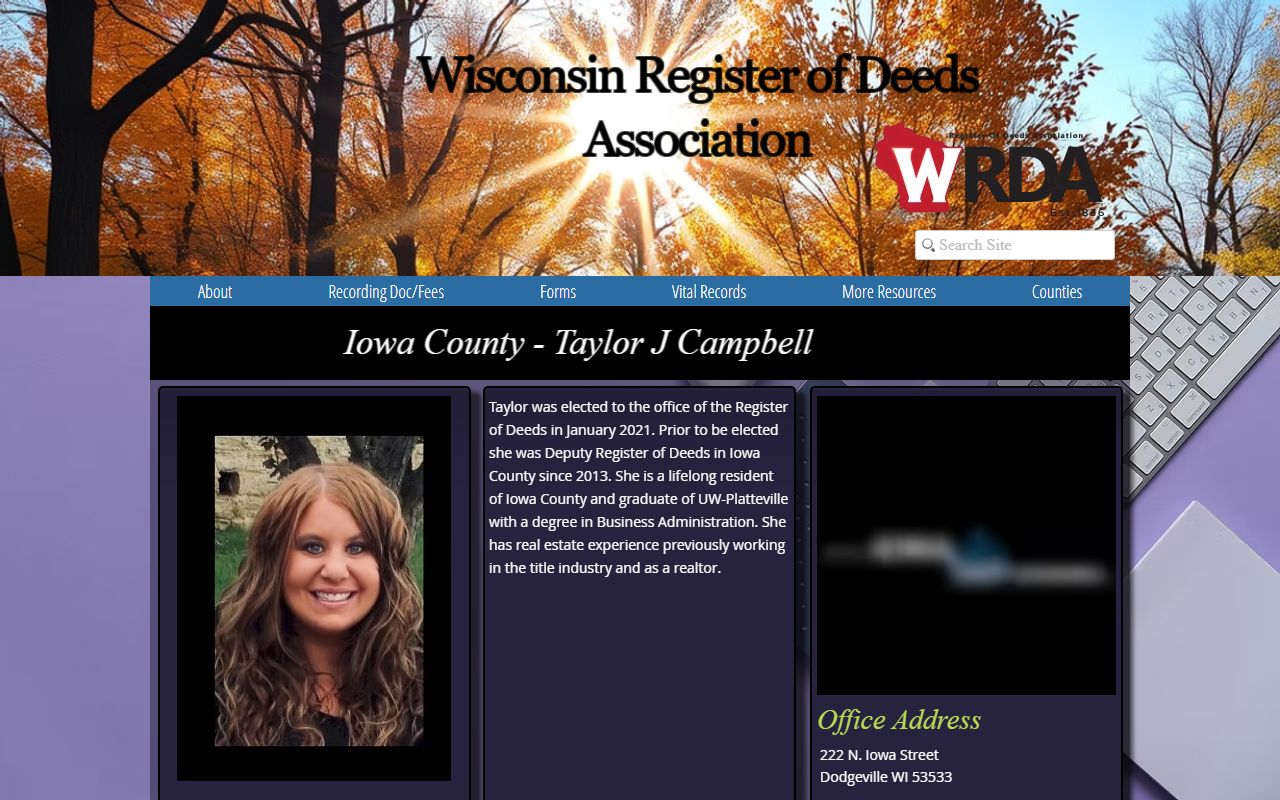
The WRDA profile gives a practical office view too, including the register of deeds address, office hours, and the fact that digital images reach back into the early 1800s. That helps when the obituary trail is old but still tied to a local county file.
For newspaper work, the Wisconsin Historical Society obituary collections page and research tips page are both worth opening. The collections explain how the obituary index, scrapbook material, and local-history articles fit together, while the tips page shows how to use wildcards and exact years to tame a search. If the obituary never made it into the county file, those tools and the Library of Congress's newspaper archive can still surface the notice or a companion death story. The obituary collections page is here: Wisconsin Historical Society obituary collections and the search tips page is here: Wisconsin Historical Society research tips.
Iowa County Death Records
When an obituary needs proof, the death record is usually the next stop. Iowa County notes that the statewide vital-records law began on June 1, 1907, which is why older files can be thin and why the county, the state, and the historical society each matter in a different way. The Wisconsin Department of Health Services says requests can be made by mail, through VitalChek, or by phone through VitalChek at 877-885-2981. It also confirms that local vital-record offices include all 72 county register of deeds offices plus the Milwaukee and West Allis city health offices.
The state office is here: Wisconsin DHS Vital Records.
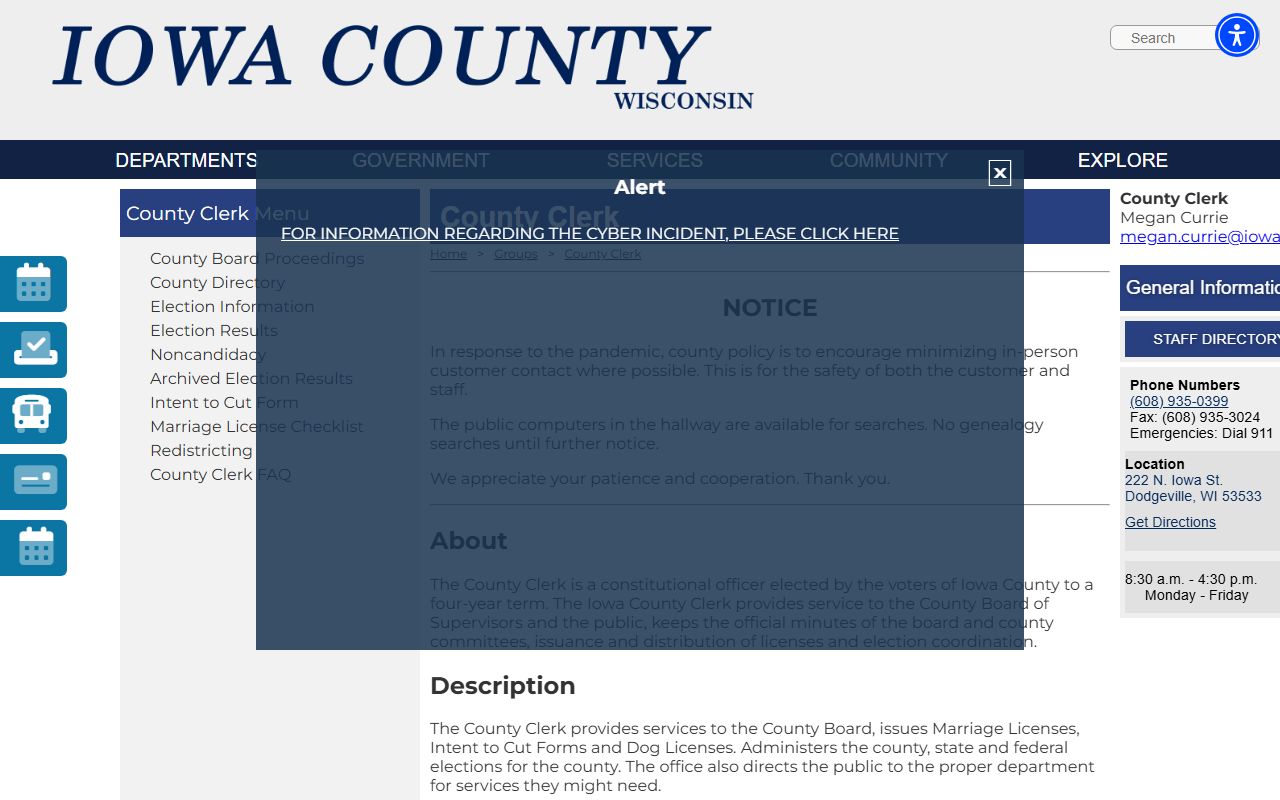
That county clerk image helps because the clerk is part of the wider county record trail. The office manages county board minutes, licenses, and public records, which can matter when an obituary leads from a death date into a family or estate question.
For a recent death, the county register of deeds can usually tell you whether a certified or uncertified copy is available, and the state history collection can help with older entries that were never fully indexed. If the obituary connects to probate, the county clerk directory also points you to the register in probate and the clerk of courts. That is the right follow-up when a death notice is only the start of the record trail.
Iowa County Obituary Access Rules
Iowa County's search rules are strict for a reason. The register of deeds office allows only two people in the vault area, and it says no cell phones, cameras, or food are allowed near the records. The same office also gives only one verbal warning before a searcher can be asked to leave. Those rules can feel stiff, but they protect the records that obituary researchers need. If you are going in person, plan the trip, bring the right facts, and keep the request focused.
When the county file does not answer the question, the next move is usually a wider history search rather than a guess. The Wisconsin Historical Society can help with obituary collections, the family history portal, and archival holdings cataloged through the University of Wisconsin-Madison. The county clerk and register in probate contacts in the state law library directory round out the trail. Use them in that order and the search stays grounded in the record, not in assumptions.