
Iron County Obituary Search
Iron County obituary research often starts in Hurley, but the trail can move fast into county land records, probate, or a death certificate request. The county sits on a smaller office network, so the right phone number and the right contact name save time. If you have an old death notice, a burial clue, or a family name that has moved across county lines, the local register of deeds and the state history tools can help you pin down the record. Keep the search simple, then widen it only when the first office cannot finish the job.
Iron County Obituary Sources
The Iron County Register of Deeds is the local anchor for obituary work because it handles birth, marriage, and death records, real estate records, and the office side of county record keeping. The WRDA profile says the office uses LandShark, maintains a computerized tract index, and supports full e-recording. That makes it easier to move from a newspaper notice to a county file without guessing where the record sits. Iron County also links its Register of Deeds inside the county administration structure, which shows that the office is part of a broader county record system rather than a stand-alone desk.
The county register of deeds page is here: Iron County Register of Deeds.
That office page is the best local starting point because it gives the county structure, the records role, and the practical place to call first.
The county website itself is worth checking too. Its department menu places the Register of Deeds alongside the County Clerk, Clerk of Courts, Coroner, District Attorney, and Register in Probate. That tells you where the obituary trail may go if the death notice turns into probate, a court file, or a family records question. The county website is here: Iron County official website.
Iron County Obituary Requests
When you request a copy, start with the county office and the cleanest facts you can verify. Iron County's WRDA profile lists the office address in Hurley, the phone number, and the office hours from Monday through Thursday and again on Friday morning. It also notes that the office works with the Wisconsin Statewide Vital Record System to issue birth records for people born anywhere in Wisconsin. That kind of setup matters for obituary research because it gives you a local office and a statewide backup path in one place.
Bring enough detail to keep the request narrow.
- Full name from the obituary or death notice
- Approximate date of death
- Place where the person lived or died
- A photo ID if you need a certified copy
- A stamped envelope for mailed requests
The county law library directory is a strong second stop because it lists the Register of Deeds, County Clerk, Clerk of Court, and Register in Probate together. That makes it easy to see which office handles marriage, court, or probate follow-up after you find the obituary. The directory is here: Iron County State Law Library directory.
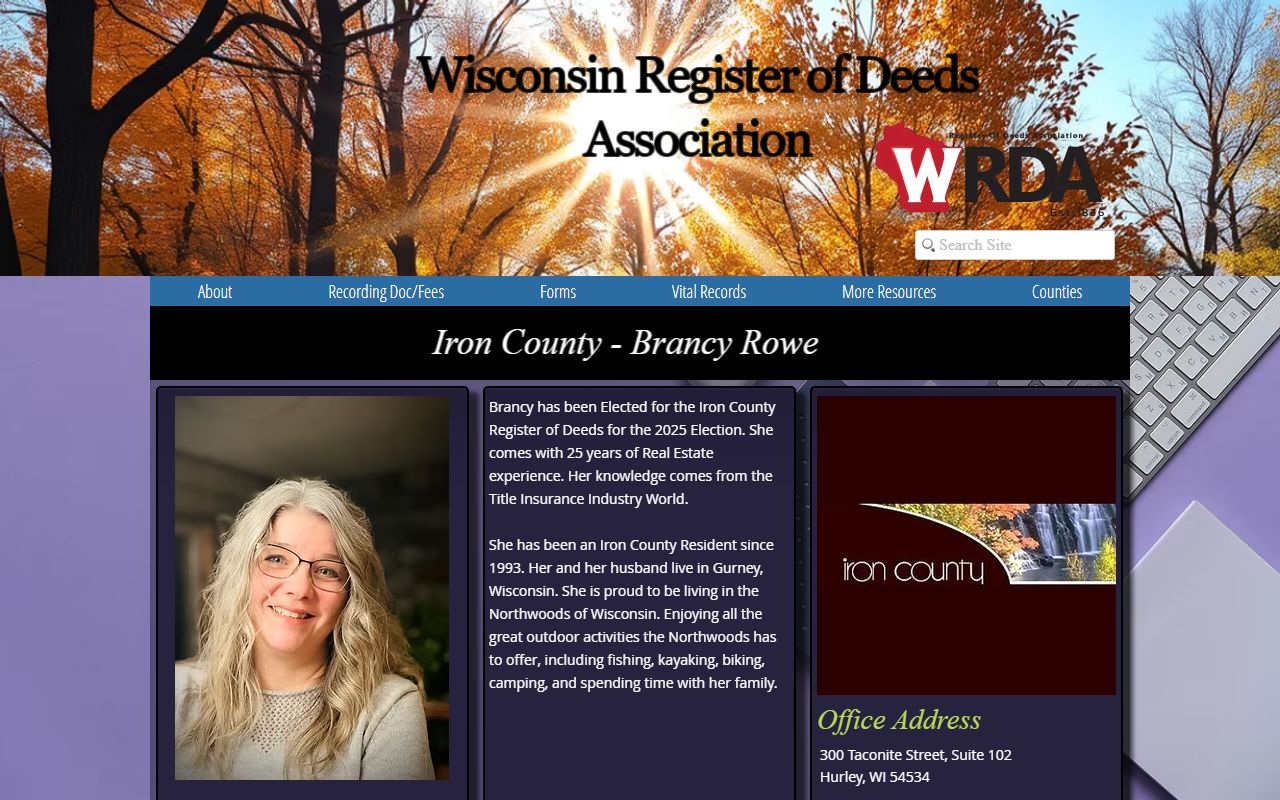
Use that profile as a practical contact cross-check, not just a name list. It helps you keep the request tied to the right office and the right hours.
Iron County Obituary Research Help
Older obituary work usually needs more than one search base. The Wisconsin Historical Society's family history portal gives you pre-1907 vital records, obituary collections, newspaper clippings, photographs, and property records. That is useful in Iron County because old notice spelling can drift, especially when a surname appears in a mining, logging, or small-town paper. The society also catalogs archival holdings through the University of Wisconsin-Madison, and its area research centers can move materials closer to you. If the obituary is not in the county file, the history portal is often the fastest way to find the next clue.
The statewide history portal is here: Wisconsin Historical Society family history portal.
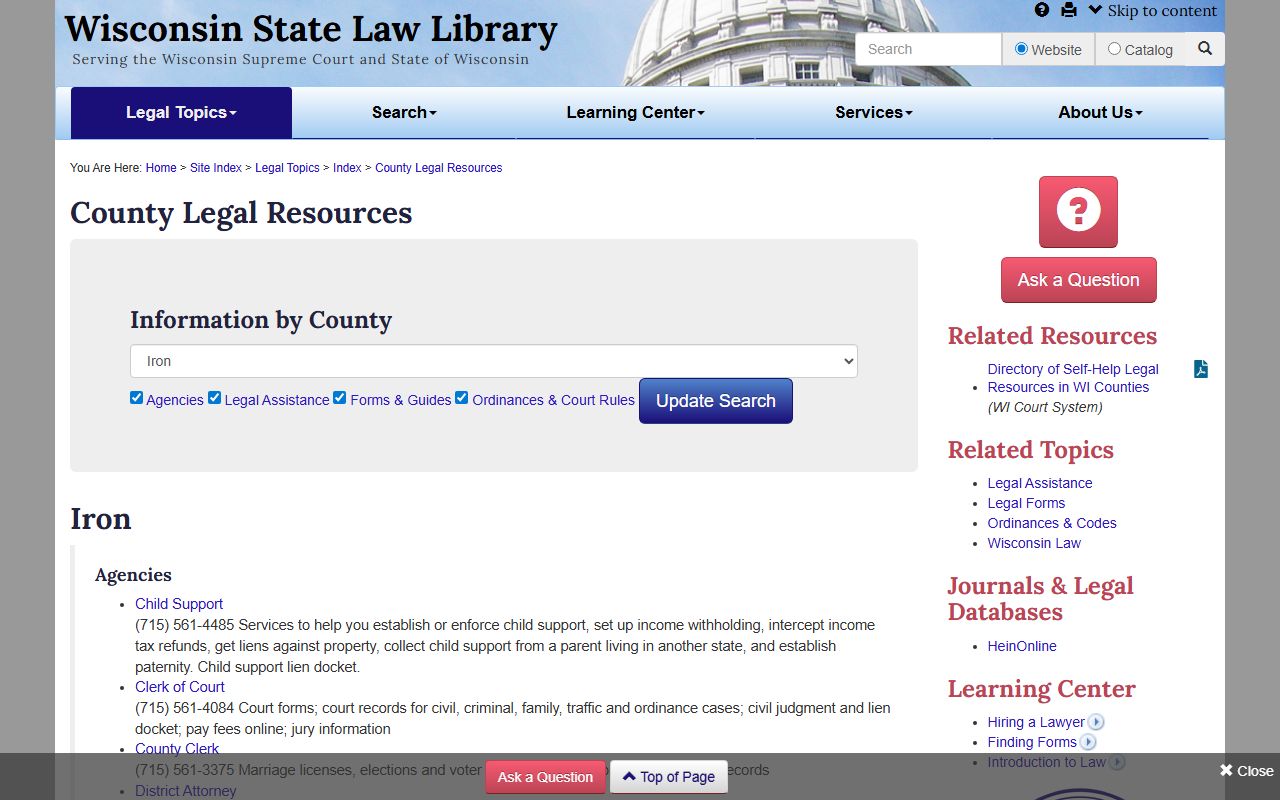
The state law library directory gives the office map too. It lists the county clerk, clerk of court, register in probate, and vital-record application forms in one place. That helps when an obituary points to probate, a marriage record, or a court matter instead of only a death file. The county directory and the history portal work well together.
For newspaper hunting, the Wisconsin Historical Society obituary collections and research tips pages are worth using side by side. The collections page explains how obituary articles, scrapbook material, and historical articles are grouped. The tips page shows how to search names with wildcards or exact years, which is useful when the name is common or the spelling changed over time. If the obituary never made it into the county office file, that can still pull it back into view. The obituary collections page is here: Wisconsin Historical Society obituary collections and the search tips page is here: Wisconsin Historical Society research tips.
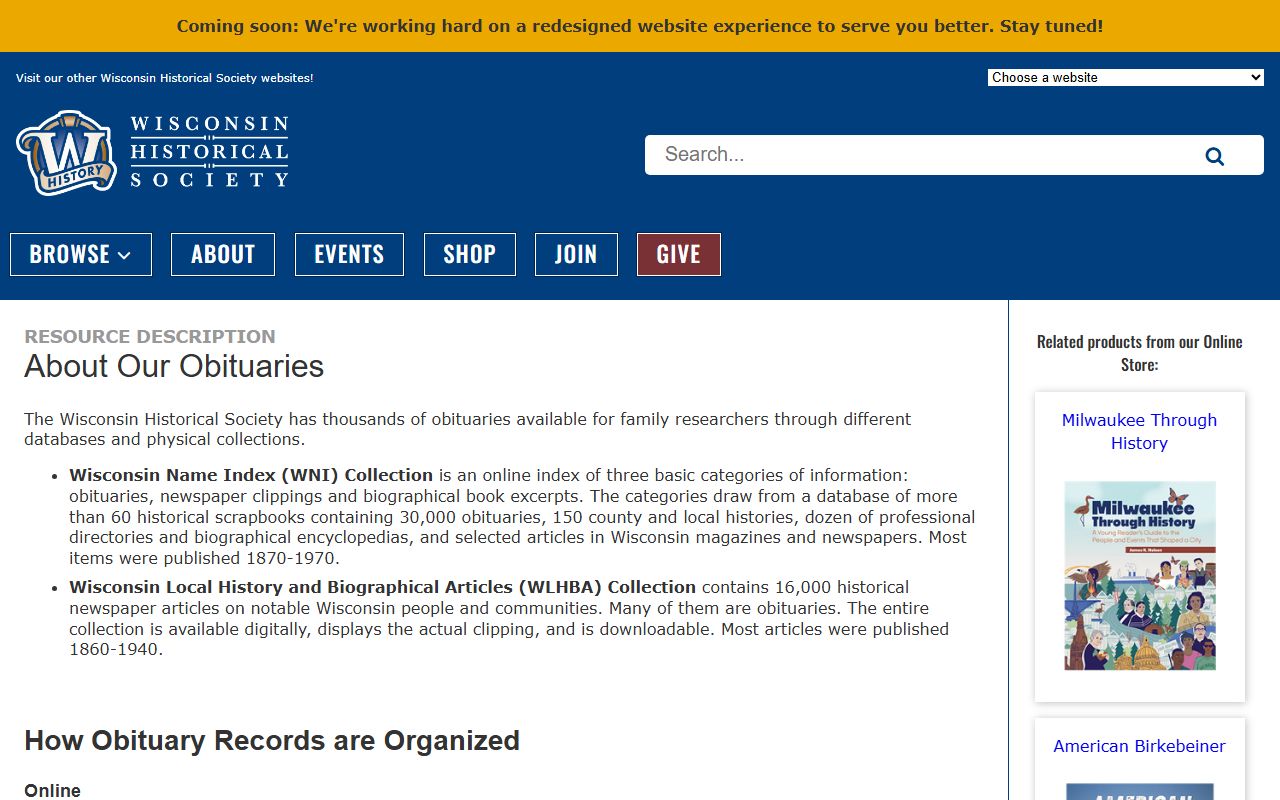
That state image points to the exact obituary collections researchers use when they need newspaper clippings instead of a courthouse copy.
Iron County Death Records
When an obituary needs proof, the death record is the next step. The Wisconsin Department of Health Services says the state office handles birth, death, marriage, and other vital records and accepts requests by mail, through VitalChek, or by phone through VitalChek at 877-885-2981. It also confirms that county register of deeds offices are part of the local vital-record system. For Iron County, that means a local office for recent records and a state office for broader backup when the county file is not enough.
The Wisconsin DHS page is here: Wisconsin DHS Vital Records.
The WRDA profile is helpful again because it confirms the office hours, the address, and the statewide issue path for birth records. That kind of cross-check matters when an obituary leads to a record request and you need to know whether the county office or the state office is the cleaner route.
If the death notice points toward probate, the county clerk and register in probate directory entries in the State Law Library guide are the next office names to use. The county clerk handles elections and county records, while probate handles estates and wills. That gives the obituary search a second lane when the family needs more than a single certificate.
Iron County Obituary Access Rules
Iron County is not a large office network, so a clear request helps a lot. The county and WRDA pages show a small staff, fixed hours, and a system that uses LandShark and tract indexing. That means the search runs best when you already know the name, the date, and the likely place. If you go in person, bring the exact details you have and do not assume the office can guess the right person from a broad family name. That is how obituary research stays efficient.
When the county does not have the answer, move to the Wisconsin Historical Society and the state vital-record office instead of widening too far. Those two state resources cover both older obituary material and the certificate path when a death record is still needed. If you keep the sequence tight, the record trail stays manageable and the result is easier to trust.