
Search Langlade County Obituaries
Langlade County obituary research works best when you use the local Register of Deeds, the state office, and the historical death books together. The county office keeps the current vital-record path open, the state office covers Wisconsin records that move beyond the local desk, and the older death registrations can fill in the details that the obituary left out. Start with the full name, the date or year range, and the place of death if you know it. Then match the request to the office that actually holds the record. That keeps the search focused and saves time.
Langlade County Obituary Sources
The Langlade County Register of Deeds is the local starting point. The county page says the office maintains and issues copies of vital records for births, deaths, marriages, and domestic partnerships. It also lists other county records, the official contact information for Brenda Sue Mayr, the mailing address at Courthouse, 800 Clermont Street, Antigo, WI 54409, and office hours from 8:30 a.m. to 4:30 p.m., Monday through Friday, with a lunch closure from 12:00 to 1:00 p.m. Those details matter when a Langlade County obituary leads you to a fresh request instead of an older archive.
The county register image below comes from the official Langlade County page: Langlade County Register of Deeds.
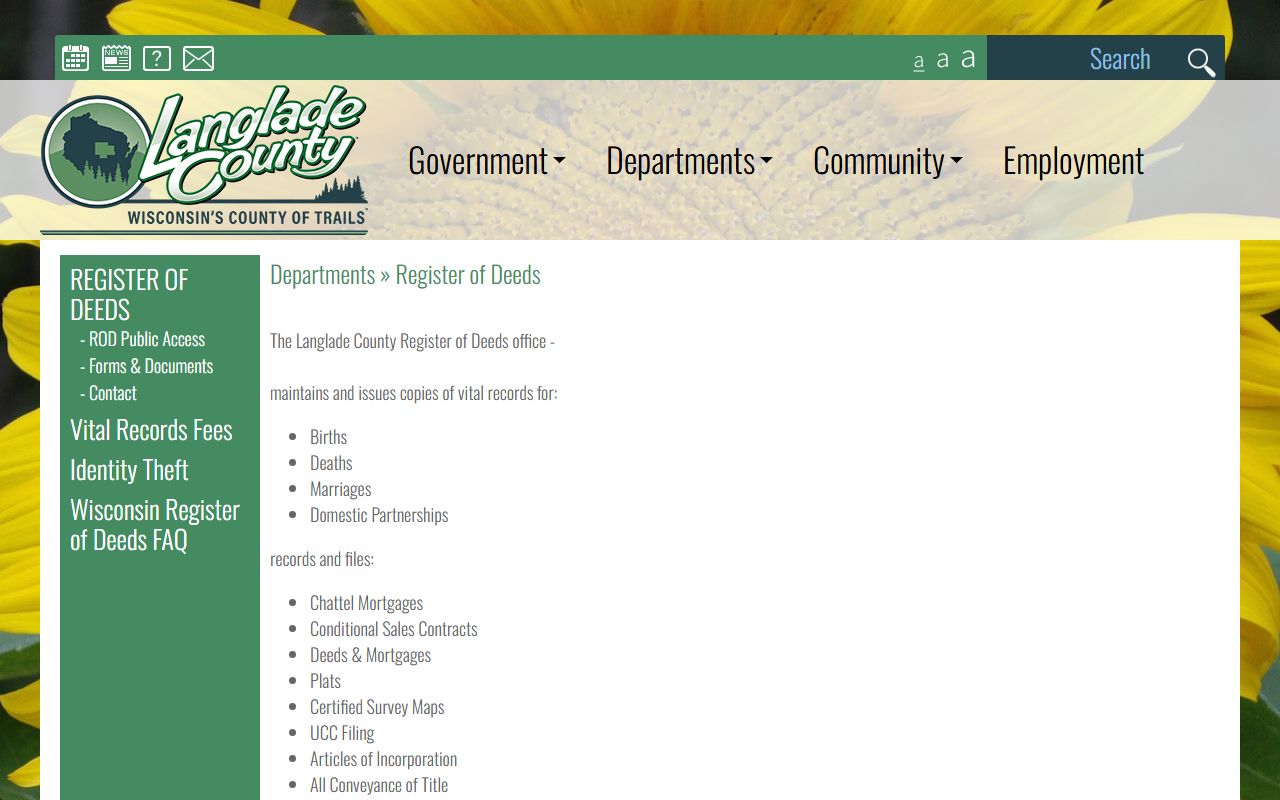
That image is useful because it points directly to the county office that handles the current vital-record request and keeps the local record trail in one place.
The Wisconsin State Law Library directory gives the broader office map. It lists the Langlade County Register of Deeds at (715) 627-6209 for ordering birth, death, and marriage records and for searching county death and birth indexes. It also lists the County Clerk, Clerk of Courts, Register in Probate, and Sheriff, plus legal assistance resources and the county forms directory. That is especially helpful when an obituary search turns into a probate question or a court follow-up.
The law library directory image below points to that county office map: Langlade County State Law Library directory.
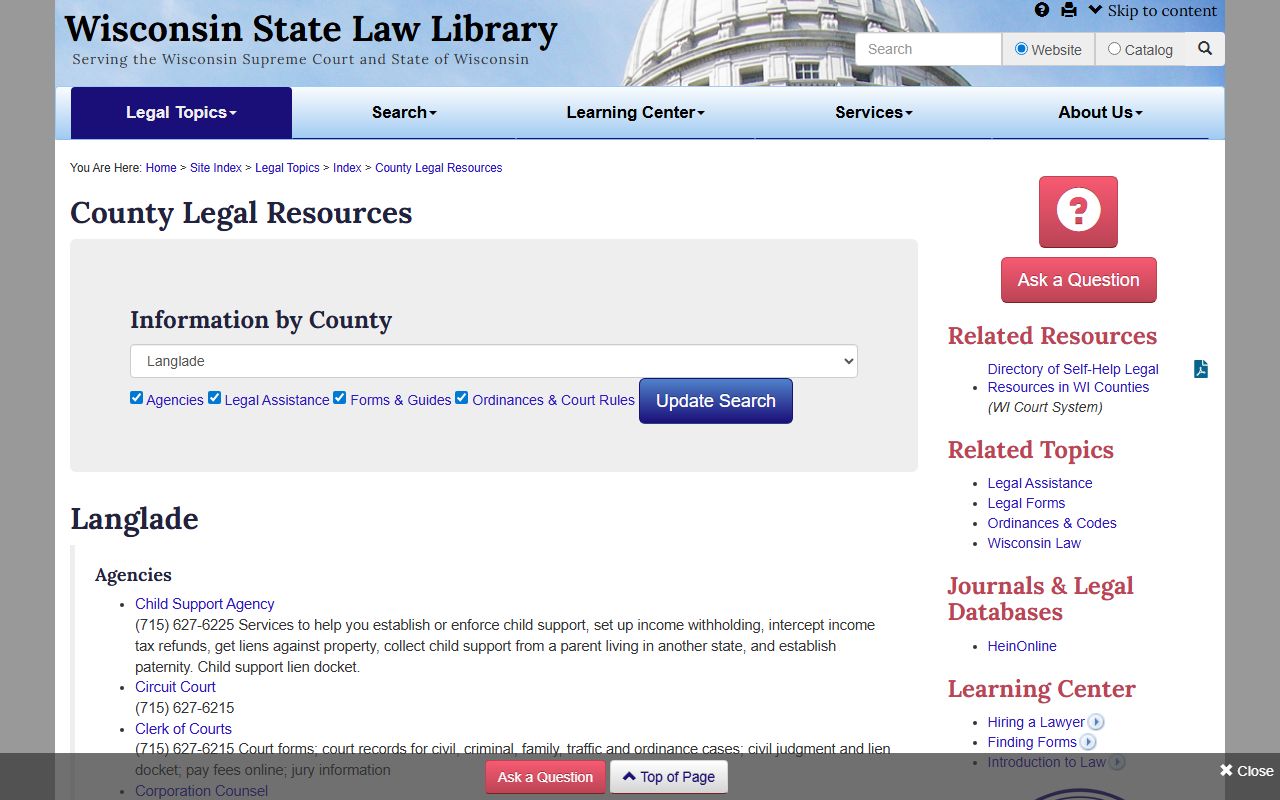
That image gives you the county contact structure in one quick view, which is exactly what obituary research needs.
The Wisconsin Department of Health Services and the Wisconsin Historical Society fill the statewide and historical gaps. DHS handles Wisconsin death certificates and other vital-record requests, with mail, VitalChek, and phone options. The historical death-registration collection shows where the pre-1907 records live, and it explains the fields that may appear in each entry. Together, those sources keep Langlade County obituary research from stalling when the record has moved beyond the local desk.
The state office is here: Wisconsin DHS Vital Records. The historical collection is here: Wisconsin Historical Society death registrations.
Langlade County Obituary Requests
Langlade County obituary requests work best when you use the county office details first. The Register of Deeds handles birth, death, and marriage records, and the law library directory shows the direct phone number for ordering and for searching county death and birth indexes. That makes the local office the first stop when the date range is recent enough to sit in county files. If the copy you need is older or part of a statewide file, the Wisconsin Vital Records Office in Madison is the backup path.
The county forms directory is here: Wisconsin State Law Library vital records directory.
Keep the request simple and specific. A short, accurate form is easier for the office to process. If the obituary gives you a middle name or nickname, write it down too. That can help when the death index uses a different spelling from the newspaper notice.
- Full legal name from the obituary
- Approximate date of death
- Place of death if the notice gives one
- Mailing address for the return copy
- Photo ID if you need a certified copy
The county directory also lists legal assistance and victim support contacts. That is useful when a death record search spills into probate or another family file. An obituary can point to a surviving spouse, a guardian, or an estate, and those office names tell you where the follow-up belongs. The search stays cleaner when you keep the office list in view.
Langlade County Death Records
The Wisconsin Historical Society finding aid shows Langlade County death registrations on Reel 33, volume 1, covering 1882 through 1907. That is a strong source for obituary research because the record can carry the names of parents and a spouse, the person's occupation, the place of birth, the date and cause of death, and the burial place. If a newspaper notice is short or incomplete, the death registration often fills the gaps.
The early records are not perfect. Before 1897, filing was limited to deaths where a physician was in attendance, so some entries are thin. In October 1907, registration moved into the State Bureau of Vital Statistics. That change explains why Langlade County obituary searches often split into two eras, one that is rich and one that needs more patience. The archive tells you where the break happens.
When the obituary reaches back into the nineteenth century, the death registration can do more than confirm a date. It can point to a burial place, connect a married name to a maiden name, and show who filed the certificate. That makes it easier to move from a printed notice to cemetery records, probate files, or family papers. For a county page, that is the kind of detail that matters most.
Langlade County Obituary Research
The county office list from the State Law Library is important because obituary research often crosses into more than one office. The County Clerk handles marriage licenses, elections, and voter registration. The Clerk of Courts handles civil, criminal, family, traffic, and ordinance records. The Register in Probate handles estates, trusts, guardianship, and probate. The Sheriff runs the jail and law enforcement side. Those office names help when a death notice leads to a court file or an estate question instead of another vital record.
The same directory gives you the county's legal assistance contacts. Langlade County Victim/Witness Assistance and the Language Assistance Program are listed alongside the record offices, which can be useful when a family needs a procedure explained before a request is filed. That is not the same as a record copy, but it can keep a search from going sideways when the paper trail gets complicated.
The county forms directory is also useful because it shows the death, birth, and marriage certificate applications in the same system. That keeps the request process tied to the actual county forms rather than a third-party summary. For Langlade County obituary work, that direct route is the cleaner route every time.
Langlade County Obituary Access Rules
Langlade County follows the same Wisconsin vital-record rules that apply statewide. Certified copies are limited to people with direct and tangible interest, while uncertified copies are handled more broadly. The obituary tells you who died. The certificate tells the office what kind of copy you can receive. That distinction matters when a request is tied to estate work, insurance, or other formal use.
Wis. Stat. § 69.20 explains who may receive a certified copy: Wis. Stat. § 69.20. Wis. Stat. § 69.21 explains copies of vital records: Wis. Stat. § 69.21. Wis. Stat. § 69.22 sets the fee structure: Wis. Stat. § 69.22. The RCFP guide explains the same rule in plain language: Wisconsin open-government guide.
That legal framework is why a county office can help you find the record but still need more proof before issuing a certified copy. It is normal. For Langlade County obituary searches, the best approach is to keep the request accurate, keep the office list close, and match the document type to the reason you need it.