
Search Lincoln County Obituaries
Lincoln County obituary research is easiest when you treat the office directory, the state vital-records office, and the historical death books as one chain. The county directory tells you who handles birth, marriage, and death records, probate, and court matters. The state office covers Wisconsin records that need a statewide request. The historical collection reaches back to the old registration books. A good search starts with the name in the notice, the year range, and the place where the death likely occurred. After that, the office list tells you where the copy belongs.
Lincoln County Obituary Sources
The Wisconsin State Law Library directory is the primary local guide for Lincoln County obituary work. It lists the Register of Deeds at (715) 539-1061 for birth, marriage, and death records, real estate records, termination of decedent's property interest, and firm-name registration. It also lists the County Clerk, Clerk of Courts, Register in Probate, and Sheriff, plus legal help through Lincoln County Victim/Witness Assistance and Haven, Inc. That office map matters when a death notice leads into probate, guardianship, or another file beyond the obituary itself.
The county directory image below points to that office map: Lincoln County State Law Library directory.
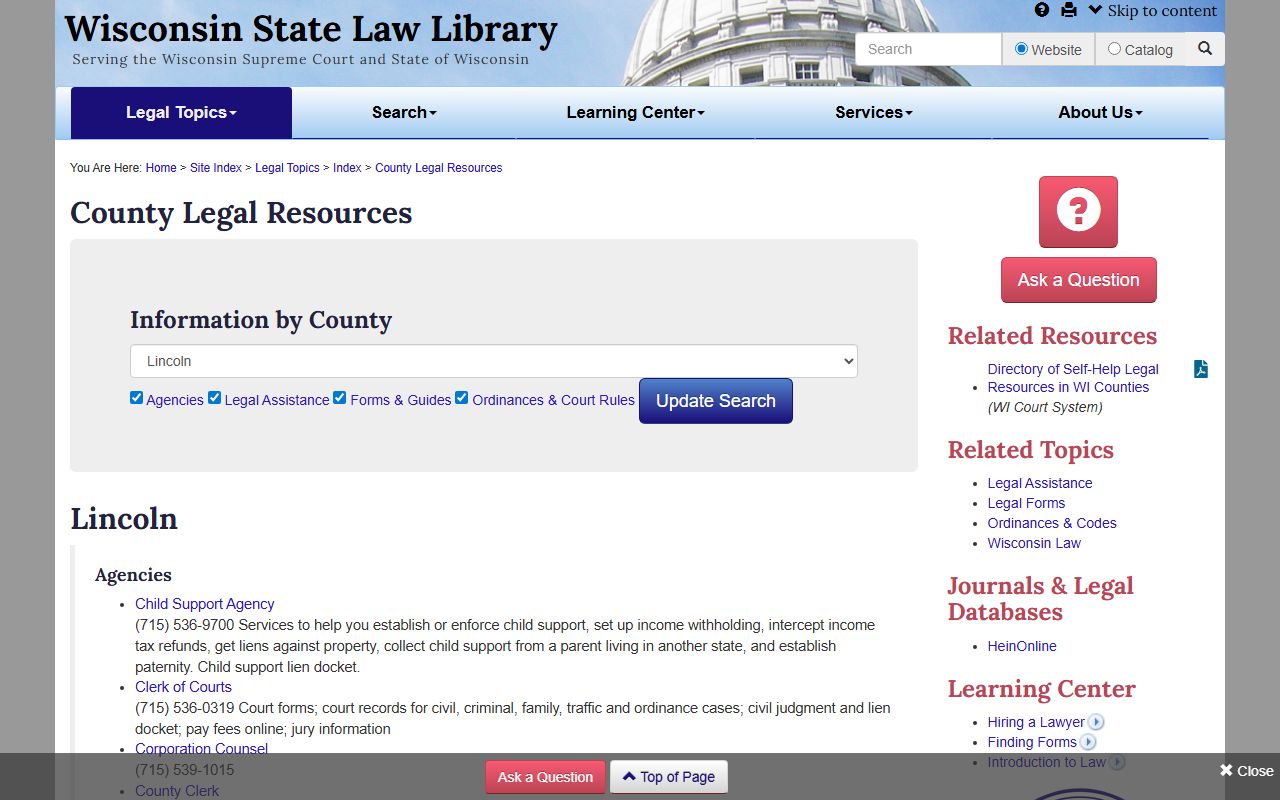
That image is a quick way to see the county contact structure before you start calling or mailing requests.
The official statewide backup is stronger than a third-party summary when you need a second path after checking the county office. This state image points to the official Wisconsin DHS page: Wisconsin DHS Vital Records.
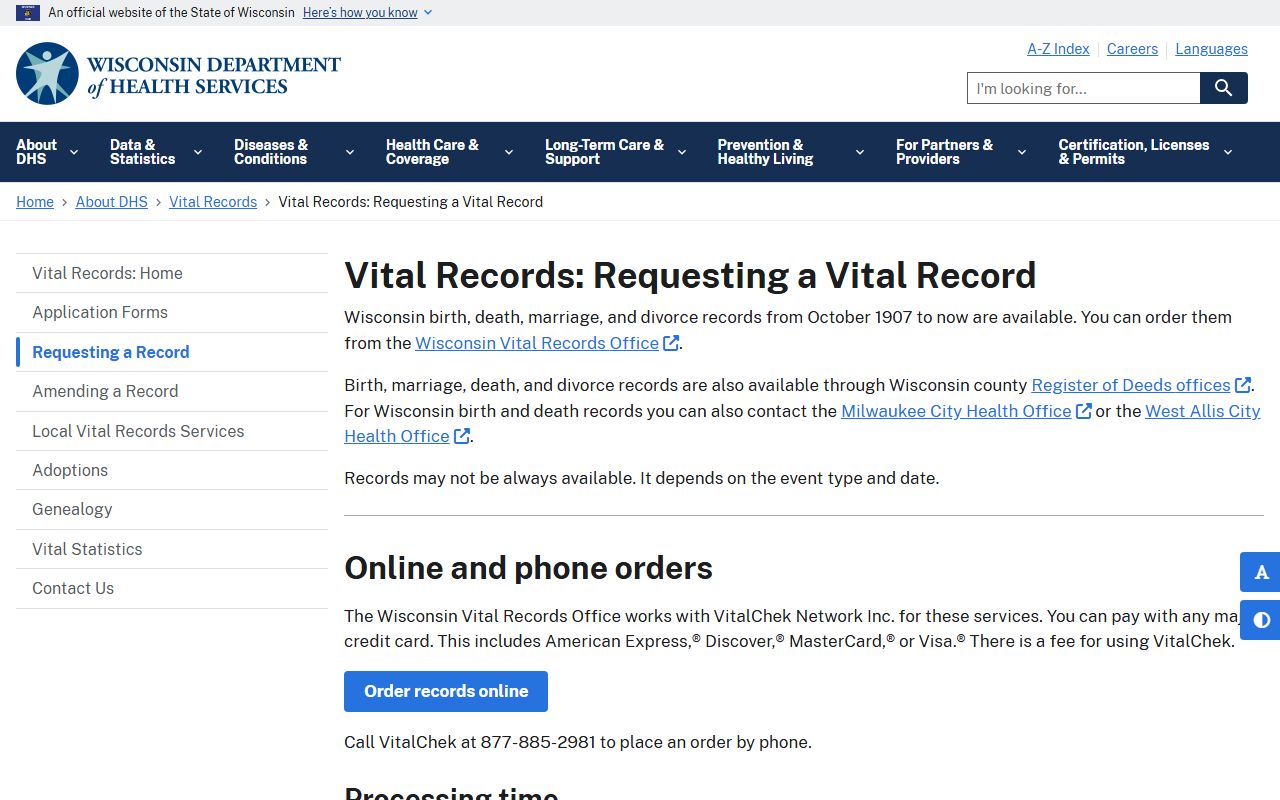
That keeps Lincoln County obituary work tied to an official statewide source while still keeping the county law library directory as the main local office guide.
The Wisconsin Department of Health Services handles Wisconsin death certificates and other vital-record requests statewide, while the Wisconsin Historical Society death-registration collection covers the older books. DHS gives Lincoln County researchers a mail, VitalChek, or phone route when the local office is not the right one. The historical finding aid shows where the nineteenth- and early twentieth-century records live and what information they can contain.
The state office is here: Wisconsin DHS Vital Records. The historical collection is here: Wisconsin Historical Society death registrations.
Lincoln County Obituary Requests
Lincoln County obituary requests should follow the office that actually holds the record. The state law library directory shows the Register of Deeds for birth, marriage, and death records, and the secondary records reference confirms the request path by mail or in person. If you need a certified copy, you need to show direct and tangible interest. If you only need a working copy for family history, the office may be able to guide you toward the right document type. Either way, the office list is the first tool to use.
Before you mail or submit a request, keep the key facts close. A clean request is easier to fill. A vague one slows the search down.
- Full name from the obituary
- Approximate date of death
- County and town if known
- Photo ID if you want a certified copy
- Mailing address for the return envelope
The county directory also points you to the Register in Probate and the Clerk of Courts. That is useful when the obituary mentions an estate, a guardianship, or a surviving family member who may have filed court papers. If the death record is not enough, those offices can explain where the next record sits. The county clerk can also help with marriage licenses and voter or election questions when a family search moves into adjacent records.
Lincoln County Death Records
The Wisconsin Historical Society finding aid says Lincoln County death registrations are found on Reel 34, volumes 1 and 2, covering 1875 through 1907. That is exactly the kind of source that helps when a newspaper obituary is too short to tell the whole story. The record can list the deceased person's name, occupation, age, parents, spouse, place of birth, cause of death, burial place, and the person who submitted the certificate. That makes it easier to connect the obituary to the family line.
Early records are uneven. Before 1897, filing was limited to deaths where a physician was in attendance, so some entries are incomplete. In October 1907, registration moved into the State Bureau of Vital Statistics. For Lincoln County obituary research, that means the older books are useful but not always complete. The archive itself tells you where the data starts and where the gaps are likely to appear.
When the obituary points to a family in the late nineteenth century, the historical death registration often becomes the anchor record. It can confirm the burial place, suggest the right cemetery, and help you identify relatives who are not named in the notice. That is why the older books are still worth checking, even after you have the newspaper clipping in hand.
Lincoln County Obituary Research
The county office list from the State Law Library is the best guide to the rest of the record trail. The County Clerk handles marriage licenses, elections, and voter registration. The Clerk of Courts handles civil, criminal, family, traffic, and ordinance records. The Register in Probate handles estates, trusts, guardianship, and probate. The Sheriff manages county law enforcement and the jail. Those office names matter because obituary research often ends up in one of those files after the death certificate is found.
The directory also lists Lincoln County Victim/Witness Assistance and Haven, Inc. Those resources are useful when a death or estate question leads to a family matter that needs procedural guidance. They do not replace the office that keeps the record, but they can help explain what step comes next. For Lincoln County obituary research, that can save time and prevent a request from being sent to the wrong place.
The county forms directory is another useful tool because it links the birth, marriage, and death record applications in one place. That is cleaner than relying on a third-party summary or a guess. When the office list, the form, and the state backup route all line up, the search stays accurate.
Lincoln County Obituary Access Rules
Lincoln County follows Wisconsin's Chapter 69 rules for vital records. Certified copies require direct and tangible interest. Uncertified copies are broader, but they do not serve the same purpose. That difference matters when you are using an obituary for legal, estate, or identity work. The notice can tell you who died. The certificate tells the office what kind of copy you can receive.
Wis. Stat. § 69.20 explains who may receive a certified copy: Wis. Stat. § 69.20. Wis. Stat. § 69.21 explains copies of vital records: Wis. Stat. § 69.21. Wis. Stat. § 69.22 sets the fee structure: Wis. Stat. § 69.22. The RCFP guide helps translate the rules into plain language: Wisconsin open-government guide.
That legal framework is why a county office may help you identify the record but still need more proof before issuing a certified copy. For Lincoln County obituary research, that is standard. The best approach is to keep the request specific, the office list close, and the copy type matched to the reason you need it.