
Marathon County Obituary Search
Marathon County obituary research usually begins at the Register of Deeds office in Wausau, where the county keeps vital records, document search tools, and genealogy help in one place. That office can issue death records and other records tied to a family name or date. It also gives researchers a clear path when they need to move from a newspaper notice to an official record. For recent deaths, the county page and the state office work together. For older deaths, the Wisconsin Historical Society and its microfilm collections become much more useful. The best search starts with a name, a date, and the right office.
Marathon County Obituary Sources
The Marathon County Register of Deeds is the main local stop for obituary follow-up. The county page says the office is the central location for vital records and land records, and that it can issue copies for births, deaths, marriages, and domestic partnerships. It also points to document recording, document search, and genealogy search. That matters when a notice in the paper is only the start. The office in Wausau can help you push the search toward the record that proves the date and place.
The county also gives you a clean online ordering path. If you need a copy from the authorized vendor, the safest route is the county's VitalChek page. This image points to that official ordering page: Marathon County VitalChek ordering.

That path is useful when you need a certified copy without making the trip to the courthouse. It keeps the request inside the authorized county vendor channel.
The State Law Library directory also helps keep the search pointed at the right forms. It links to Marathon County vital-record applications and the county clerk's vital-record resources. If you are trying to match a death notice to a record request, that directory saves time and cuts out guesswork.
Marathon County Obituary Requests
When you file a Marathon County obituary request, keep it short and exact. Use the full name from the notice, the approximate date of death, and the place if you know it. The county register of deeds handles vital records tied to state dates, and the Wisconsin Vital Records Office can also help when the record belongs at the state level. For a recent death, the county office is usually the fastest first stop. For an older record, the state route or the historical collection may be the better fit.
What to bring or send:
- Full name from the obituary or death notice
- Approximate date of death
- County or place of death, if known
- Photo ID for certified copy requests
- Self-addressed stamped envelope for mail requests
The Wisconsin Department of Health Services is the statewide backup when the county office is not the right place. It handles death certificates and other Wisconsin vital-record requests by mail, through VitalChek, or by phone. This image points to the official state ordering page: Wisconsin DHS Vital Records.
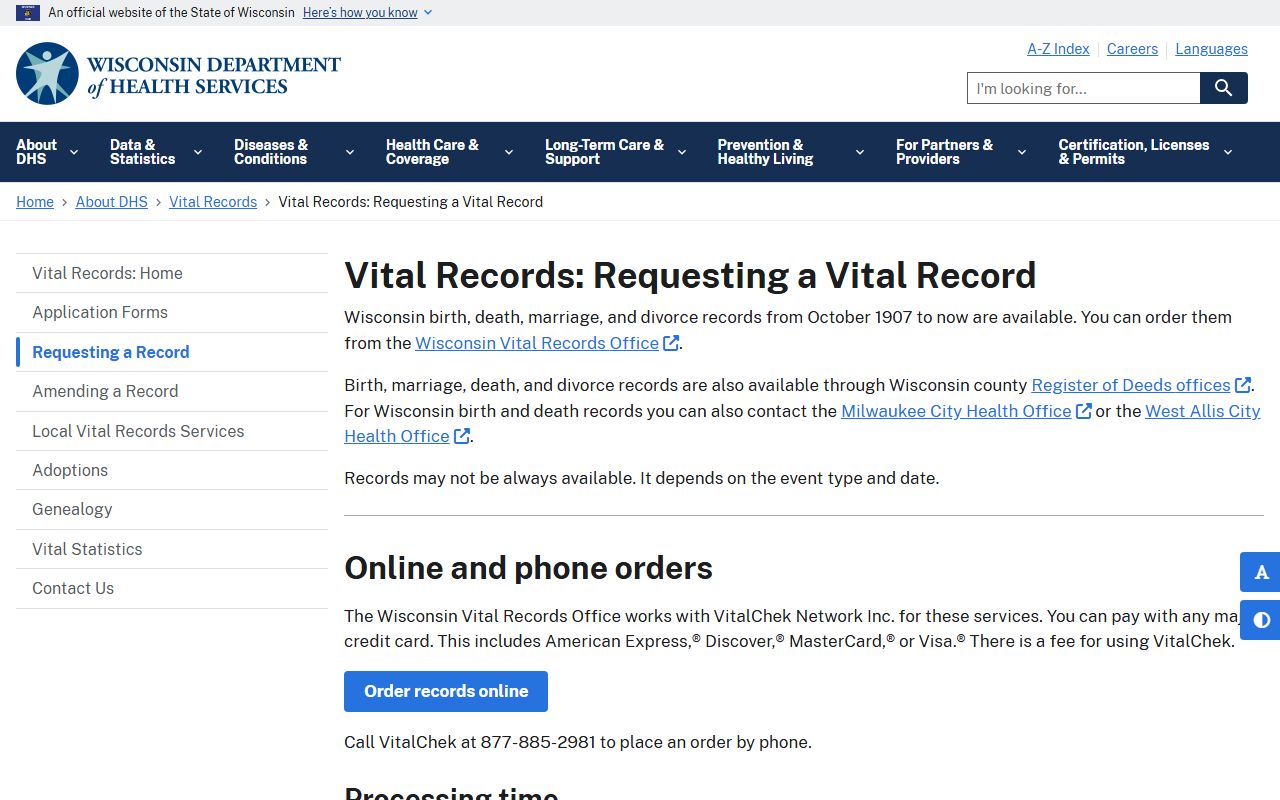
That gives Marathon County researchers an official statewide fallback when the obituary is recent but the county office is not the right endpoint.
Marathon County Obituary Research
The Wisconsin Historical Society is the strongest statewide companion to Marathon County obituary work. Its obituary collections include indexed obituaries, newspaper clippings, and scrapbook material from around the state. That helps when the local paper notice is brief or when the family name appears in more than one county. The Society's death-record tips also explain how pre-1907 death records work and why a county search can be incomplete if the record was never forwarded or was filed with variant spelling.
This image points to the Society's obituary collection page: Wisconsin Historical Society obituary collections.
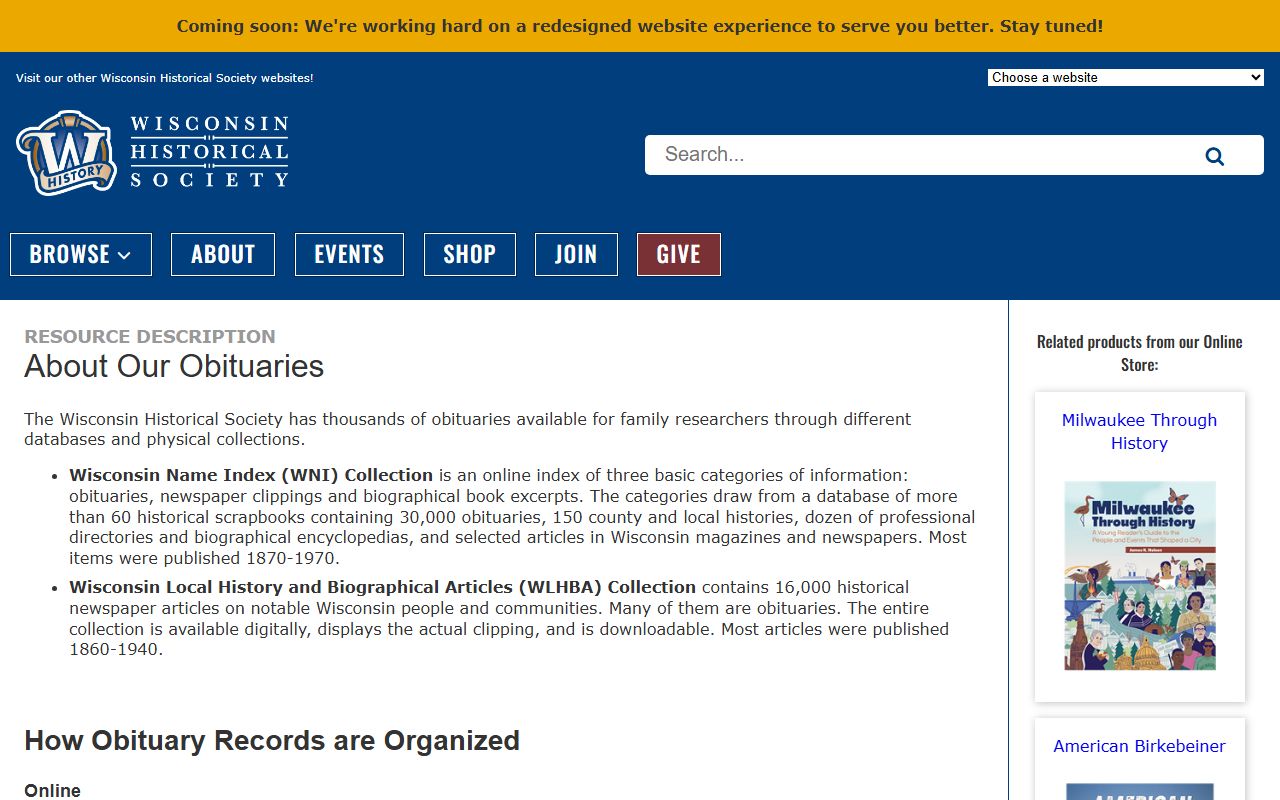
The collection is useful because it gives you more than one lane at once. You can move from a notice, to a clipping, to a family line.
For older deaths, the Society's research tips page and pre-1907 death-record page are the best pair. One explains how to search names and dates. The other shows that the index points you toward the microfilm reel holding the full death record. That is the right path when a Marathon County obituary reaches back into the 1800s and the county office file is thin or hard to read.
The search tips page is here: Wisconsin Historical Society research tips. The death-record page is here: Wisconsin Historical Society death records.
Marathon County Obituary Access Rules
Wisconsin law separates a newspaper notice from a certified record. The open-government guide explains that a person usually needs a direct and tangible interest to receive a certified copy of a vital record. That matters in Marathon County because the obituary may be public, but the death certificate can still require proof, a fee, or a specific request channel. The county office, the state office, and the historical collection each serve a different purpose.
Wis. Stat. § 69.18 explains the death-record process. Wis. Stat. § 69.21 explains certified and uncertified copies. Wis. Stat. § 69.22 sets the fee structure. Together, those rules tell you why one request gets a copy while another gets a search result or an uncertified version. If you want the legal overview in plain language, the RCFP guide is the most readable summary.
This image points to the statutory rules that shape record access: Wis. Stat. § 69.18.
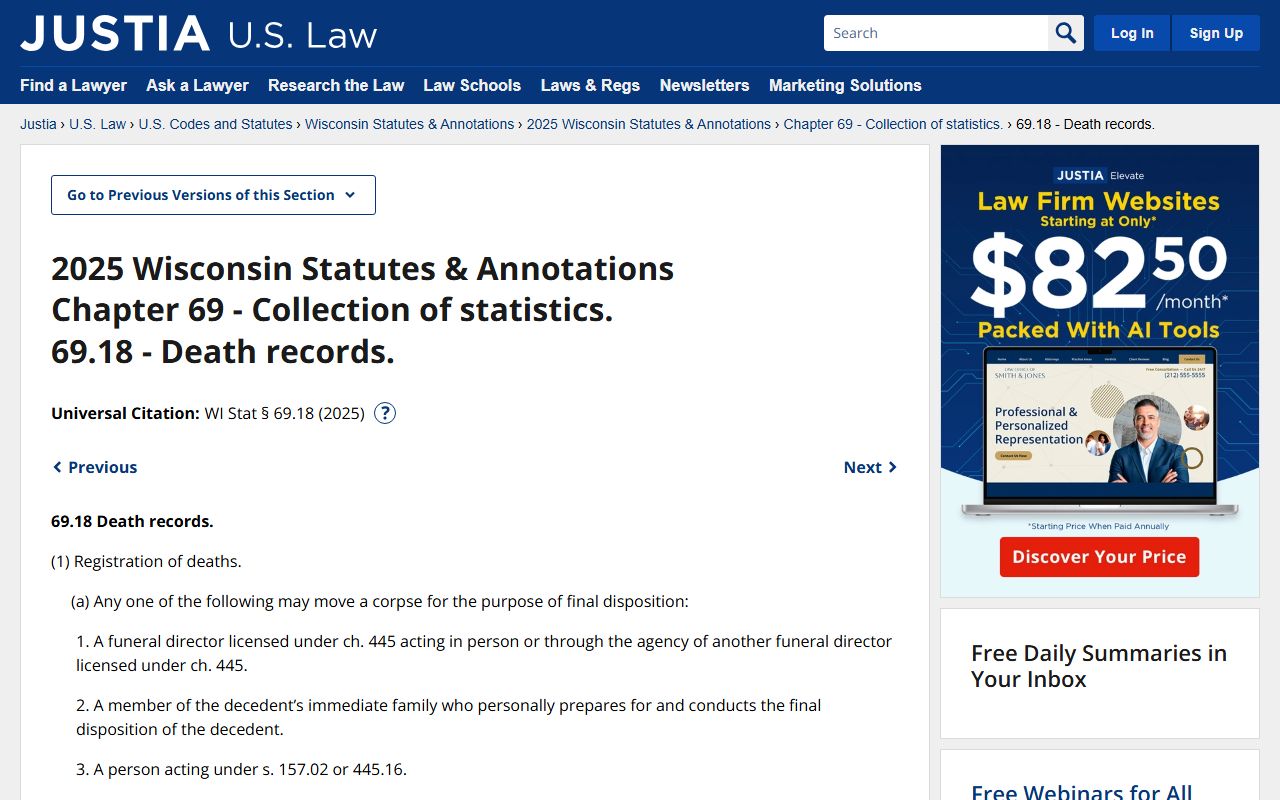
That source is useful because it ties the obituary search back to the actual legal rules that govern death records in Wisconsin.
Note: Certified copies can still require direct and tangible interest, so a public obituary is not the same thing as an official death certificate.