
Search Milwaukee County Obituaries
Milwaukee County obituary research starts with the office that holds the local certificate trail, then widens to the Milwaukee Public Library and the Wisconsin Historical Society when the paper notice is older than the county file or when the family needs a second source. If you are trying to match a death notice to a certified record, the county Register of Deeds, the state Vital Records Office, and the local genealogy rooms give you a practical path. The fastest route depends on the date, the place, and whether you need a public clue or an official copy.
Milwaukee County Obituary Sources
The Milwaukee County Register of Deeds Vital Records Office is the main county stop. It is located in the courthouse at 901 N. 9th Street, Room 103, Milwaukee, Wisconsin 53233, and it issues certified copies of Milwaukee County birth, death, and marriage records. The office also maintains other vital records tied to domestic partnerships and related certificates. For obituary work, that makes the office the clean starting point when you already know the death happened in Milwaukee County.
The county office also uses automated ordering with kiosks and online OnDemand services for faster pickup. If you need the office page itself, it is here: Milwaukee County Register of Deeds Vital Records.
The county office image below links to the same Milwaukee County vital-records page and shows the office that keeps the local death record path moving: Milwaukee County Vital Records.
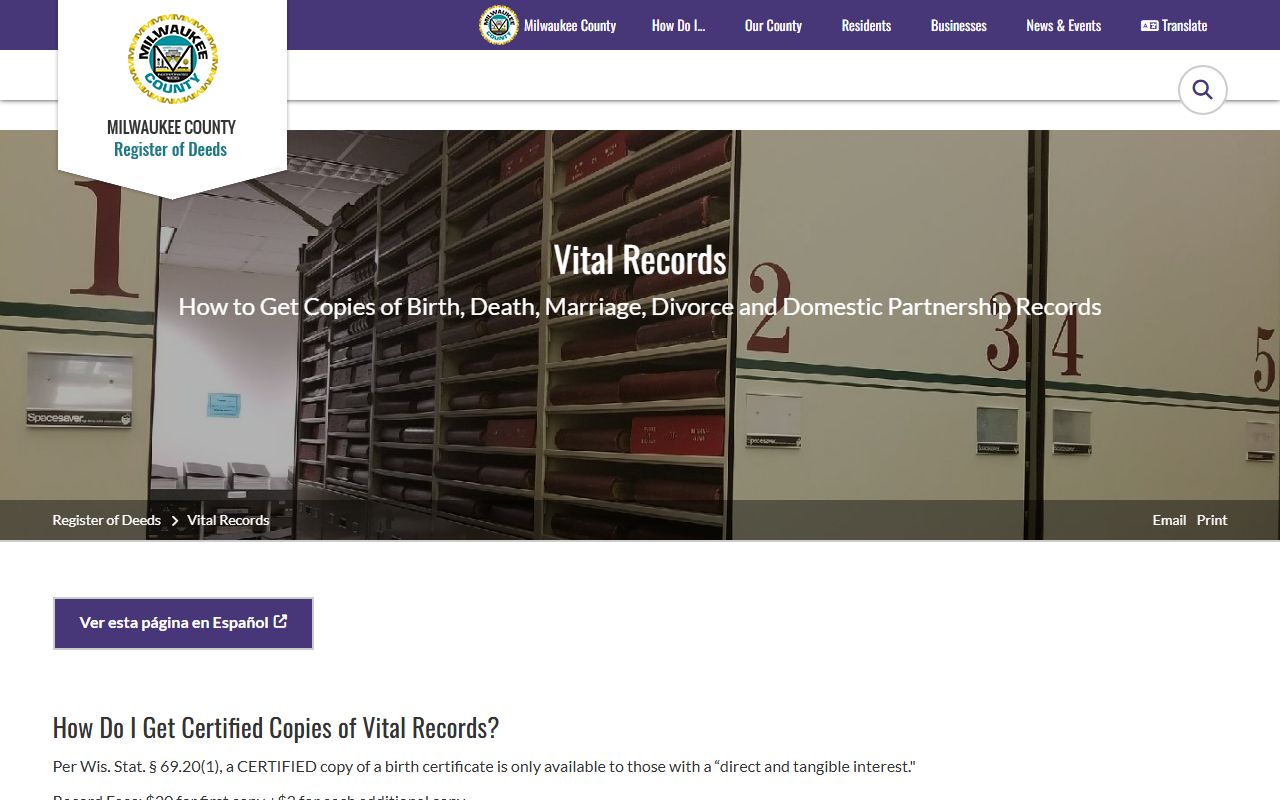
That page matters because it ties a newspaper notice to the courthouse counter, where the record can be checked, issued, or confirmed.
The Milwaukee Public Library is the other major local source. Its genealogy guide says the Central Library keeps Birth Records 1854-1911, Marriage Certificates 1822-1876, Marriage Records 1836-1911, and Death Records 1852-1912 on microfilm. It also notes that pre-1907 alphabetical and chronological death lists are available on microfiche and that the Wisconsin Genealogy Index can be searched online. That is a strong fit for obituary searches that need a date, a spouse name, or a burial clue.
The library guide is here: Milwaukee Public Library vital records guide.
Milwaukee County Obituary Requests
When you ask for a Milwaukee County obituary record, keep the request plain. Use the full name from the notice, the approximate date of death, and the county or city if you know it. The county office and the authorized VitalChek page both say the records are tied to events that occurred within Milwaukee County, and genealogical requests must be submitted in writing. That makes the county easier to work with if you send enough detail and ask for the correct type of copy the first time.
The authorized online ordering page is here: Milwaukee County VitalChek ordering. It is the right channel when you want an online request rather than a courthouse visit.
The image below points to the authorized online ordering option and is useful when you want a fast, official route into the county records system: Milwaukee County VitalChek ordering.
That path is practical for families who already know the record date and need the request to move without a long office visit.
What to bring or send:
- Full name from the obituary or death notice
- Approximate date of death
- Milwaukee County as the place of event, if known
- Photo ID for certified copy requests
- Written request if you are ordering genealogically
The Wisconsin State Law Library directory adds the county form side. It points to Milwaukee County Clerk forms for birth, marriage, and death certificate applications, which helps when you want the official application instead of a generic web form. The directory is here: Milwaukee County vital records forms directory.
Milwaukee County Obituary Research
Milwaukee County obituary research usually gets better when you move beyond the courthouse. The Milwaukee Public Library guide explains that the pre-1907 index is searchable through the Wisconsin Historical Society and that older records can be viewed in the library collections. It also says the library does not own the state records, which is important because it tells you where to stop looking locally and when to shift to the state office or historical index. That keeps the search efficient.
The Wisconsin Historical Society death-record guides are useful here too. One guide explains that the Society holds about 400,000 pre-1907 Wisconsin death records dated between 1852 and September 30, 1907, while the research tips guide explains how the index works and why some older deaths are easier to find than others. The tips page also notes that the Society has 30,000 indexed obituaries from around the state, which can help when the Milwaukee County notice was clipped in a local paper but not in a county file.
The Wisconsin Historical Society death record page is here: Wisconsin Historical Society death records. The research tips page is here: Wisconsin Historical Society death record tips.
The image below points to the Milwaukee Public Library genealogy guide, which is the best local road map for older Milwaukee County obituary work: Milwaukee Public Library vital records guide.
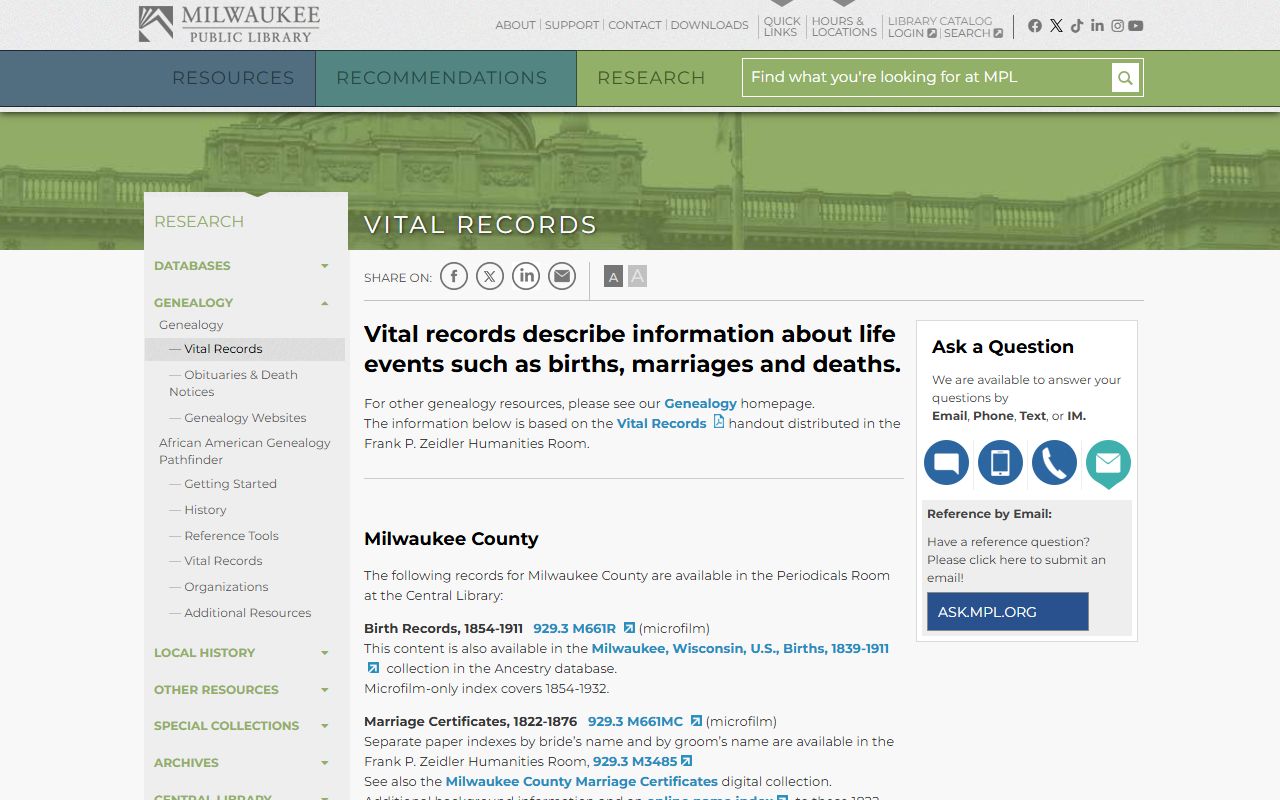
That library guide is especially useful when a notice mentions an old church, neighborhood, or family line that needs a paper trail beyond the courthouse.
Because the library also points researchers to the Golda Meir Library Archives on the UW-Milwaukee campus for in-person work on Milwaukee-area pre-1907 records, it can serve as a bridge between the county file and the historical index. That matters when the obituary is old, the name is common, or the death record is buried in a microfilm run instead of a modern database.
Milwaukee County Death Records
The state office remains the fallback for Milwaukee County death records when the county desk is not enough. The Wisconsin Department of Health Services says it handles death certificates and other Wisconsin vital-record requests statewide, and it accepts requests by mail, online through VitalChek, or by phone through VitalChek at 877-885-2981. For a recent death, that statewide route can be the quickest way to match the obituary with the official certificate.
The Milwaukee County Register of Deeds and the state office both fit the same record chain. A newspaper notice tells you who died. The county office tells you whether the event belongs in Milwaukee County. The state office gives you another way to order if the date or place makes the county line awkward. That is why obituary work in Milwaukee County often crosses between local and state sources instead of stopping at one desk.
The state office page is here: Wisconsin DHS Vital Records.
Milwaukee County also benefits from the State Law Library form directory, which points researchers to the official county forms for birth, marriage, and death records. When a family is trying to match an obituary to a certificate, the official application form keeps the request clean and short.
The county form directory is here: Wisconsin State Law Library vital records directory.
Milwaukee County Obituary Access Rules
Wisconsin law separates a public obituary from a certified vital record. The RCFP open-government guide explains that certified copies are limited to people with a direct and tangible interest, even though the broader open-records law is more open. That matters in Milwaukee County because the death notice itself may be easy to read, but the certificate still follows Chapter 69. A request can be public in one sense and restricted in another.
Wis. Stat. § 69.18 explains the death-record process: Wis. Stat. § 69.18. Wis. Stat. § 69.21 covers certified and uncertified copies: Wis. Stat. § 69.21. Wis. Stat. § 69.22 sets the fee schedule: Wis. Stat. § 69.22. Those rules explain why an obituary search can be open while the certificate request still needs ID or a qualifying interest.
The RCFP guide is here: Wisconsin open-government guide. It helps translate the law into plain language and keeps the request on the right side of the county and state rules.
Milwaukee County obituary searches are easiest when you start with the county office, then move to the library and state records if you need older or certified copies.