
Monroe County Obituary Lookup
Monroe County obituary research starts with the local history room because that is where the older index work lives. The county history collection covers birth, marriage, death, and mortality indexes that stretch far beyond the modern state cutoff, which makes it useful when a newspaper notice points to a family line instead of a fresh certificate. If you need a recent official copy, the statewide records system and the state Vital Records Office in Madison are the next stop. That mix gives Monroe County researchers both a local archive and a clean statewide backup.
Monroe County Obituary Sources
The Monroe County Local History Room & Museum is the main local research stop. Its vital-record indexes cover Monroe County birth records from the 1850s through 1944, marriage records from 1854 through 1968, death records from the 1850s through 1968, and a mortality schedule index from 1859 through 1880. That is the kind of span that turns a short obituary into a wider family record. It also means you can work well beyond the modern certificate system when you need an older name or burial clue.
The history room page is here: Monroe County Local History Room vital records.
The image below points to the Monroe County Historical Society vital records page and shows the local archive side of the search: Monroe County Historical Society vital records.
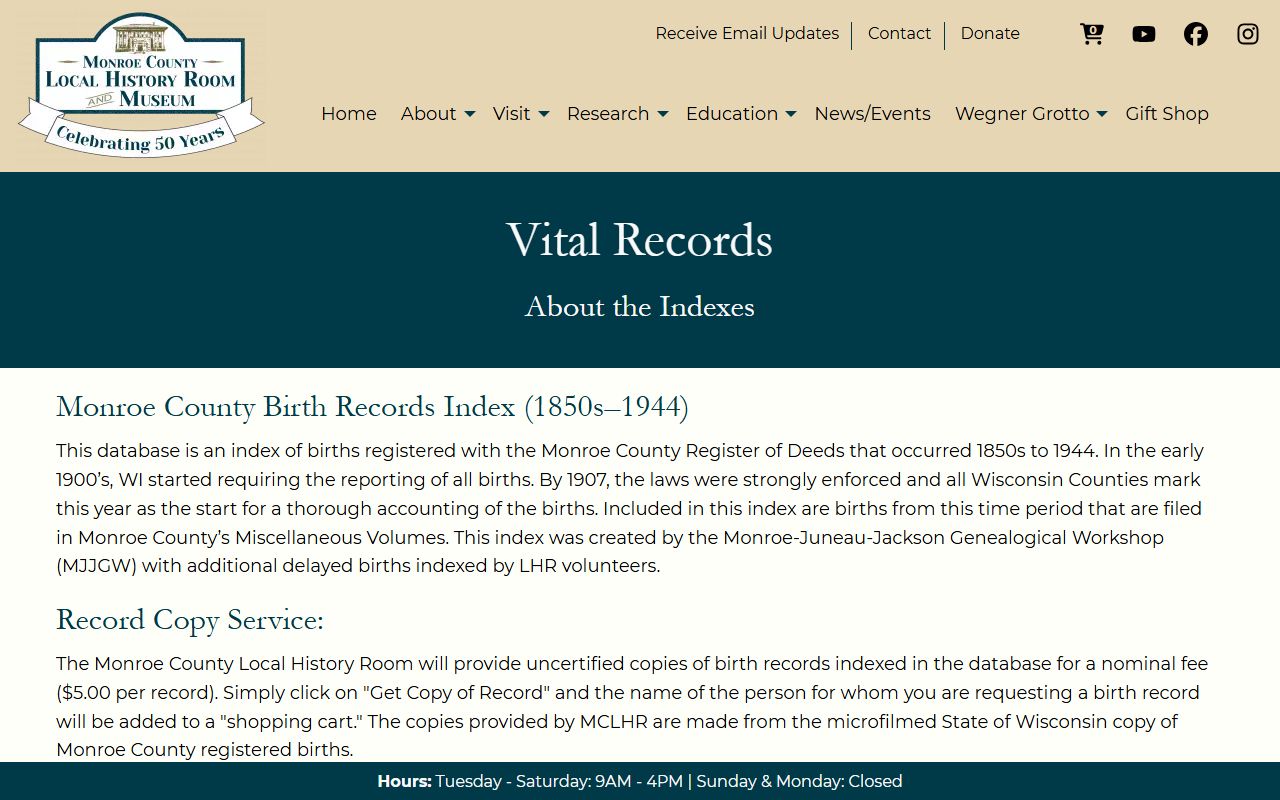
That page is the best local starting point when the obituary is tied to an older farm, township, or family line.
The statewide issuance page from Monroe County says the 2017 rule lets any Wisconsin Register of Deeds office issue many records within the state date windows, and that older records or records outside those windows belong with the county where the event occurred or the State Vital Records Office. For Monroe County obituary research, that means the local history room handles the older index work while Madison handles the modern official copy path.
Monroe County Obituary Requests
When you are asking for a Monroe County obituary record, match the request to the age of the record. If you are working with the local history room, the office can provide uncertified copies of indexed records for a nominal $5.00 per record. If you need a modern certified copy, the statewide issuance rules and the state Vital Records Office give you the official route. That split keeps the request from bouncing between offices.
The county statewide issuance page is here: Monroe County statewide issuance of vital records. It explains which records the county can issue under the statewide system.
The image below points to the Wisconsin DHS statewide vital records office, which is the practical backup for Monroe County obituary requests that need an official certificate: Wisconsin DHS Vital Records.
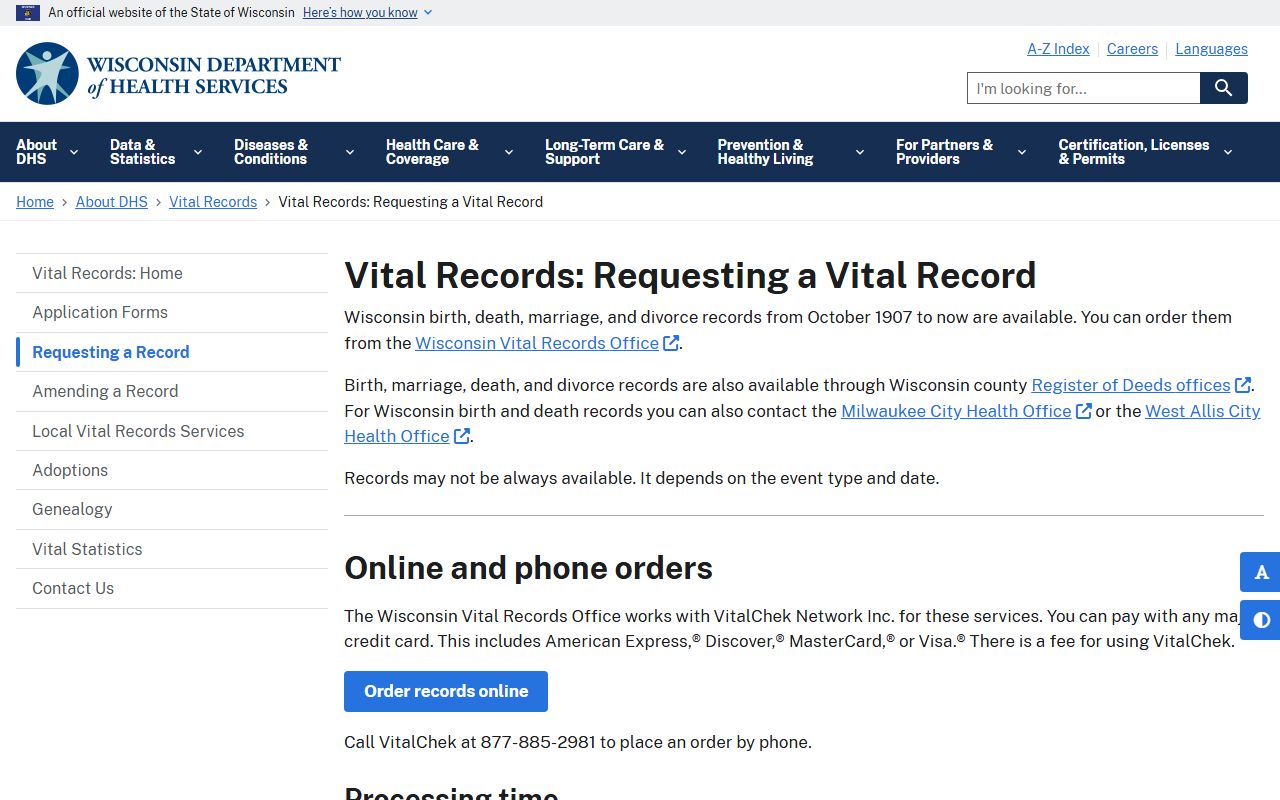
That keeps the request on the right path when the county index is not enough or when the record has to come from Madison.
What to bring or send:
- The full name from the obituary or death notice
- The approximate date of death
- The county or place of event, if known
- Photo ID for certified copy requests
- A SASE if you mail a request
The Monroe County State Law Library directory is also useful because it confirms the county vital-record forms and the county office contacts. That is a small step, but it helps keep the request official and local instead of scattered across random sites.
The directory is here: Monroe County vital records forms directory.
Monroe County Obituary Research
The Monroe County history room matters because it gives you the long view. The birth, marriage, death, and mortality indexes cover a much broader period than the modern statewide issuance windows, so they can help when a newspaper obituary points to an ancestor from the 1800s or early 1900s. The local history room also works from the microfilmed state copies of Monroe County registrations, which keeps the source rooted in the county record chain.
The history room can also provide uncertified copies of indexed records for a nominal fee, which is useful when you are gathering clues rather than ordering a certificate for official use. That keeps the search flexible. You can use the index first, then decide whether you need the state office or the county office for the next step. It is a simple way to avoid paying for the wrong copy too early.
The statewide obituary research collection is a strong companion source. The Wisconsin Historical Society says its death-record tips and About Our Death Records pages cover about 400,000 pre-1907 death records, with older records organized by county and date of registration. The Society also has 30,000 indexed obituaries from throughout the state, which is helpful if a Monroe County notice was reprinted in a regional paper or if the local line is thin.
The Wisconsin Historical Society death record page is here: Wisconsin Historical Society death records. The research tips page is here: Wisconsin Historical Society death record tips.
The image below points to the statewide obituary collection and is a useful next step after the Monroe County history index: Wisconsin Historical Society obituary collections.
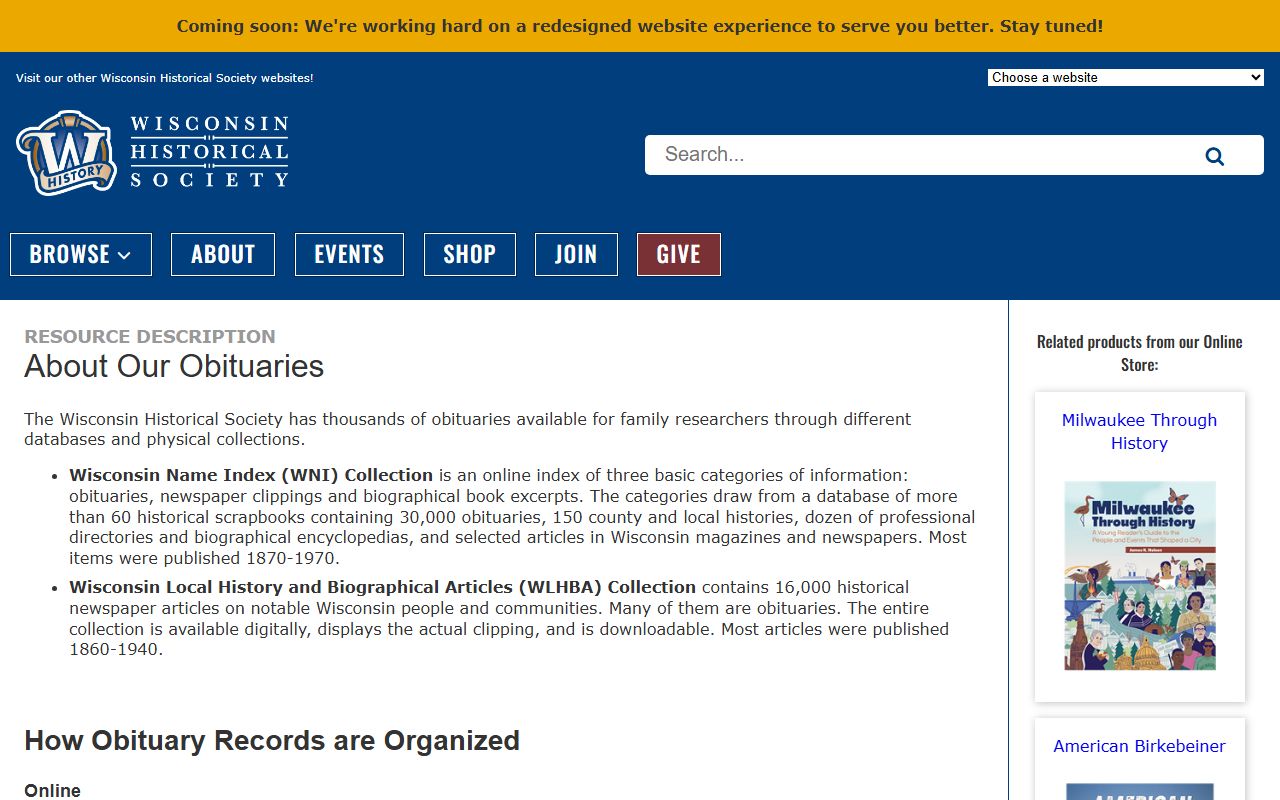
That page helps when the county index gives you a name but not the full story behind the notice.
Monroe County Death Records
Monroe County death records are best understood as a two-part search. The local history room gives you the older index run, while the statewide issuance rules tell you where modern records live. If the death falls within the statewide window, the county Register of Deeds or the Wisconsin Vital Records Office can handle the copy. If it falls outside that window, the county where the event occurred or the state office in Madison is the place to go. That keeps the request aligned with the actual record date.
The Monroe County Vital Records page says statewide issuance took effect January 3, 2017 and lists the date windows for births and deaths. Even though the page is broader than obituary work, the death-record dates matter because they tell you whether the county can issue the copy now or whether you need another office. That is the practical part of obituary research: the notice, the index, and the record have to line up.
The county statewide issuance page is here: Monroe County statewide issuance of vital records.
The Wisconsin State Law Library directory helps keep the form side clear. It lists county-created vital-record forms and confirms that Monroe Register of Deeds provides the official applications for birth, marriage, and death certificates. That is a reliable way to stay on the county track when you move from an index to a request.
The county forms directory is here: Wisconsin State Law Library vital records directory.
Monroe County Obituary Access Rules
Wisconsin law draws the line between public obituary reading and certified vital-record access. The RCFP guide explains that certified copies are limited to people with a direct and tangible interest, while uncertified copies are more broadly available. That is the key distinction in Monroe County too. A death notice may be public, but the certificate still follows Chapter 69.
Wis. Stat. § 69.18 explains how death records are created: Wis. Stat. § 69.18. Wis. Stat. § 69.21 covers certified and uncertified copies: Wis. Stat. § 69.21. Wis. Stat. § 69.22 sets the fee schedule: Wis. Stat. § 69.22. Those rules are why the request process feels strict even when the obituary itself is easy to find.
The Wisconsin open-government guide is here: Wisconsin open-government guide. It helps explain why the county can be open for research while the certified copy still needs the right request path.
Monroe County obituary research works best when you start with the local history room, then use the statewide office or county Register of Deeds only for the copy type you actually need.