
Oconto County Obituary Guide
Oconto County obituary work usually starts with a name, a rough date, and a need to prove it against an official record. The county Register of Deeds, the probate office, and the genealogy room each answer a different part of that search. Some people need a certified death record. Others need a probate file, a family line, or an old obituary notice that points to the right year. The best path depends on what you already know and how old the record is. Oconto County and the Wisconsin state collections give you a clean route from a newspaper notice to the paper trail behind it.
Oconto County Obituary Sources
The official Oconto County vital-records page is the first stop for a modern request. It sets the fee at $20 for the first copy of each record and $3 for each extra copy, and it accepts cash, check, or money order. The same page lists the identification rules too. That matters because the office wants a primary ID or two secondary forms, and it will not accept expired documents when you apply in person. Those details save a second trip and keep the obituary search tied to the right office from the start.
The county vital-records page below is the direct source for those rules: Oconto County Vitals.
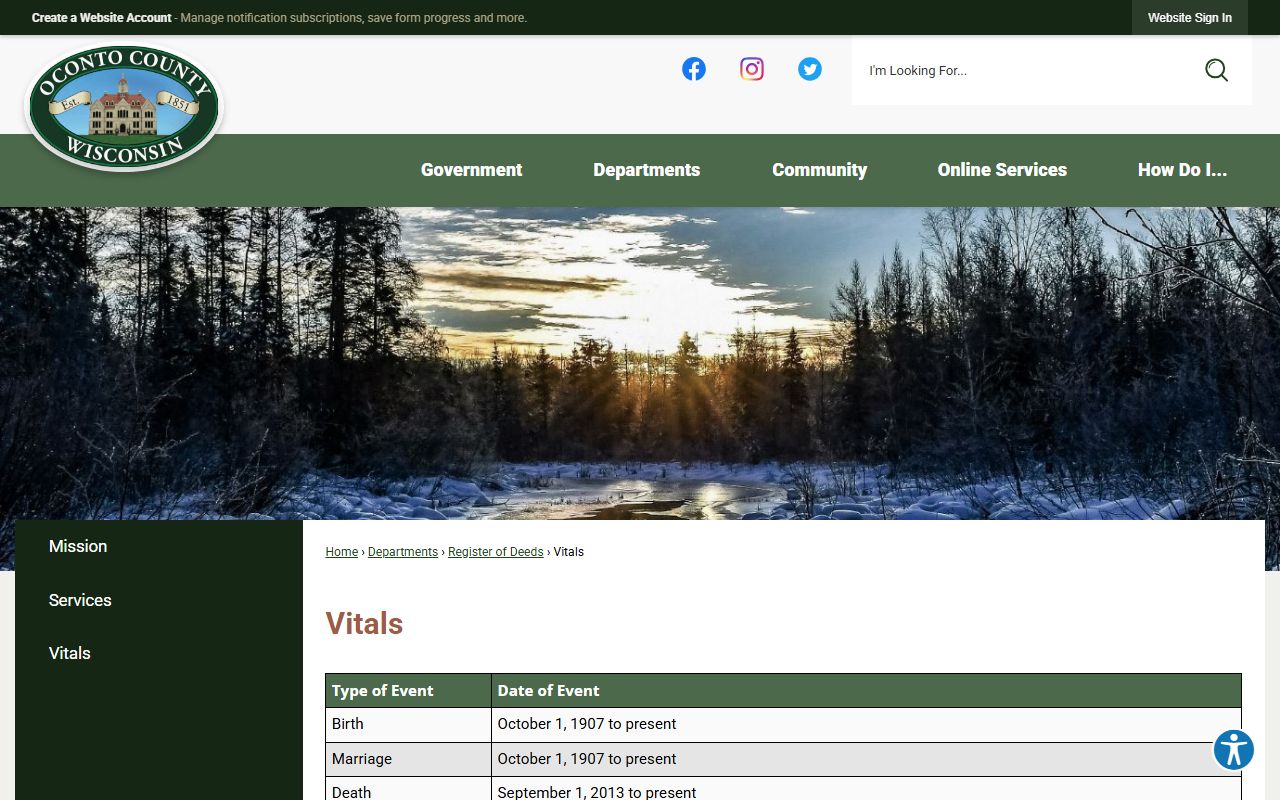
That image points to the county office that handles the official copy, not just a search result. When the death notice is recent, that office is often the cleanest way to confirm the record and the fee at the same time.
Oconto County also keeps a genealogy room that matters when the obituary points to an older family line. The office is open Monday through Friday from 8 am to 4 pm, and the room is small. Researchers are admitted first come first served, four people at a time, with two microfiche viewers available. The county warns that older birth, death, and marriage records from the 1850s through the 1870s are very incomplete, and before the 1907 vital statistics law fewer than half of vital records were filed. That is the kind of gap that sends a search from the county desk to the historical collections.
The genealogy page below is the official county guide for that deeper search: Oconto County genealogical research.
Use that source when the obituary is only the first clue and you need to see how the county file, the family name, and the older record room fit together.
The Register in Probate is another local office worth keeping in view. Oconto County says it maintains records and information on probate matters, files wills and powers of attorney for safekeeping, and keeps juvenile court records confidential. The office also handles uncontested probate proceedings and reviews guardianship, conservatorship, and trust accountings. That is useful because an obituary often leads into an estate file, and the estate file can explain heirs, dates, and property far better than a notice alone.
Oconto County Obituary Requests
For a certified death record, keep the request narrow and complete. Use the full name from the obituary, the approximate date of death, and the county if you know it. Add a copy of your ID when the office asks for one, and use the same payment type the county accepts. If you are requesting in person, bring the original identification documents the office lists. That sounds simple, but it is often the difference between a quick pull and a request that gets set aside until you resend it.
Oconto County's marriage-certificate page is helpful because it shows the county's direct-interest rules in plain language. Certified copies are limited to the bride, groom, close family, authorized agents, or people who can show a personal or property right. The page also says that in-person requests are handled while you wait when staff can process them, and mail requests should include a completed application, fee, and valid ID. Those rules are not about marriage alone. They show how the county thinks about proof, access, and certified copies across vital records.
What to include with an obituary-based request:
- Full name from the obituary or death notice
- Approximate date of death
- County or town if you know it
- Photo ID or other requested identification
- Cash, check, or money order for the fee
The county marriage-certificate page is here: Oconto County marriage certificates.
The statewide backup is the Wisconsin Department of Health Services. It handles Wisconsin death certificates and other vital-record requests by mail, by phone through VitalChek, or through VitalChek online. That is useful when the county office is closed, when a modern record has not been picked up locally, or when the request belongs at the state level because the record path is broader than one county.
The state vital-records page is here: Wisconsin DHS Vital Records.
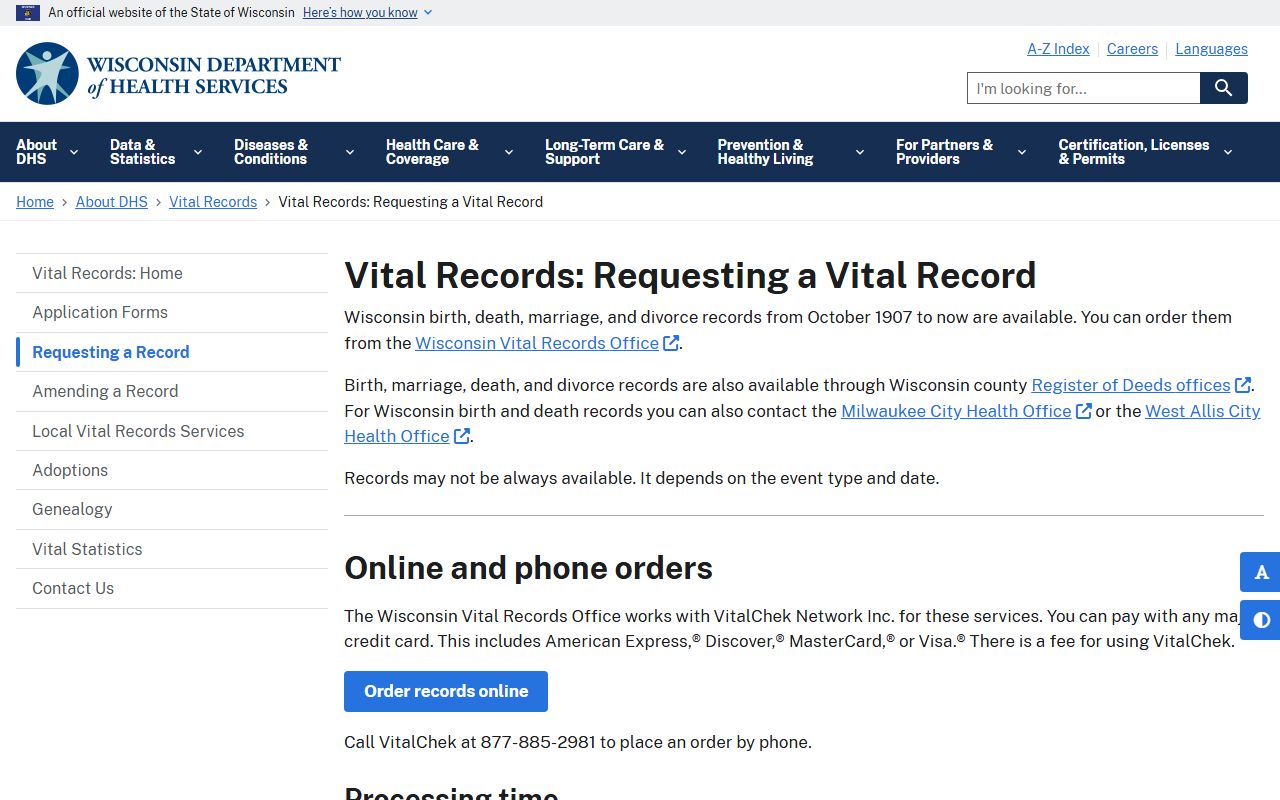
That official state route helps when the county copy is not the right endpoint, or when you need the state office to carry the request through to completion.
Oconto County Obituary Research
The Wisconsin Historical Society is the best statewide layer for older Oconto County deaths. Its obituary collections include indexed obituary material, newspaper clippings, and microfilm. Its death-record research tips also explain how to search by surname and year, and they suggest checking probate records, census mortality schedules, and obituary collections together when one source does not produce a match. That kind of layered search works well in Oconto County because some families left a notice in the paper long before a clean certificate trail appeared in the county office.
The historical obituary collection is here: Wisconsin Historical Society obituary collections.
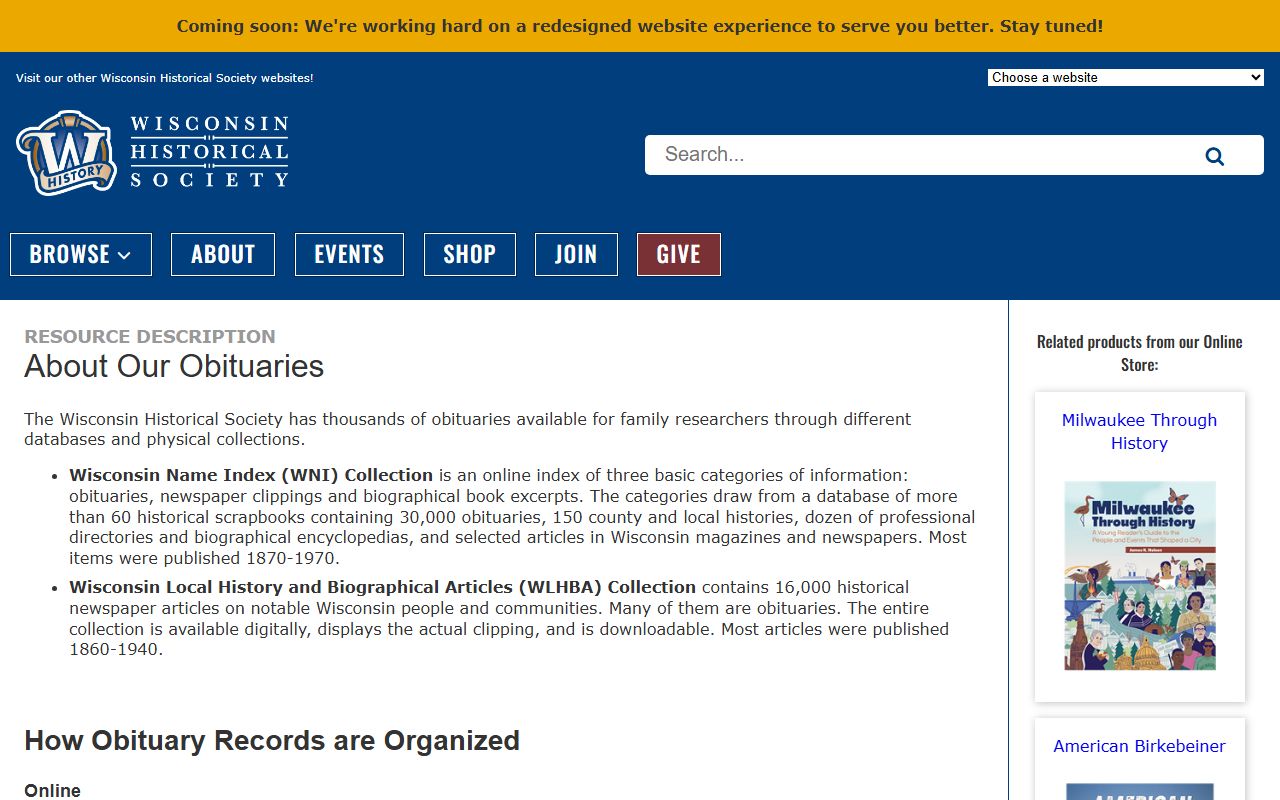
That collection is especially helpful when you know the family name but still need the newspaper trail that ties the name to the date.
Oconto County's own genealogy room gives the county side of that older search. It is open to genealogists on weekdays, but space is tight, the room has only two microfiche viewers, and researchers may be asked to leave after two hours if others are waiting. The county also notes that vital records before the 1907 law were often missed. That makes the county room a useful starting point, but not the last one. A hard-to-find death may need both the local shelves and the state collections to come together.
The state death-record tips are here: Wisconsin Historical Society death record tips.
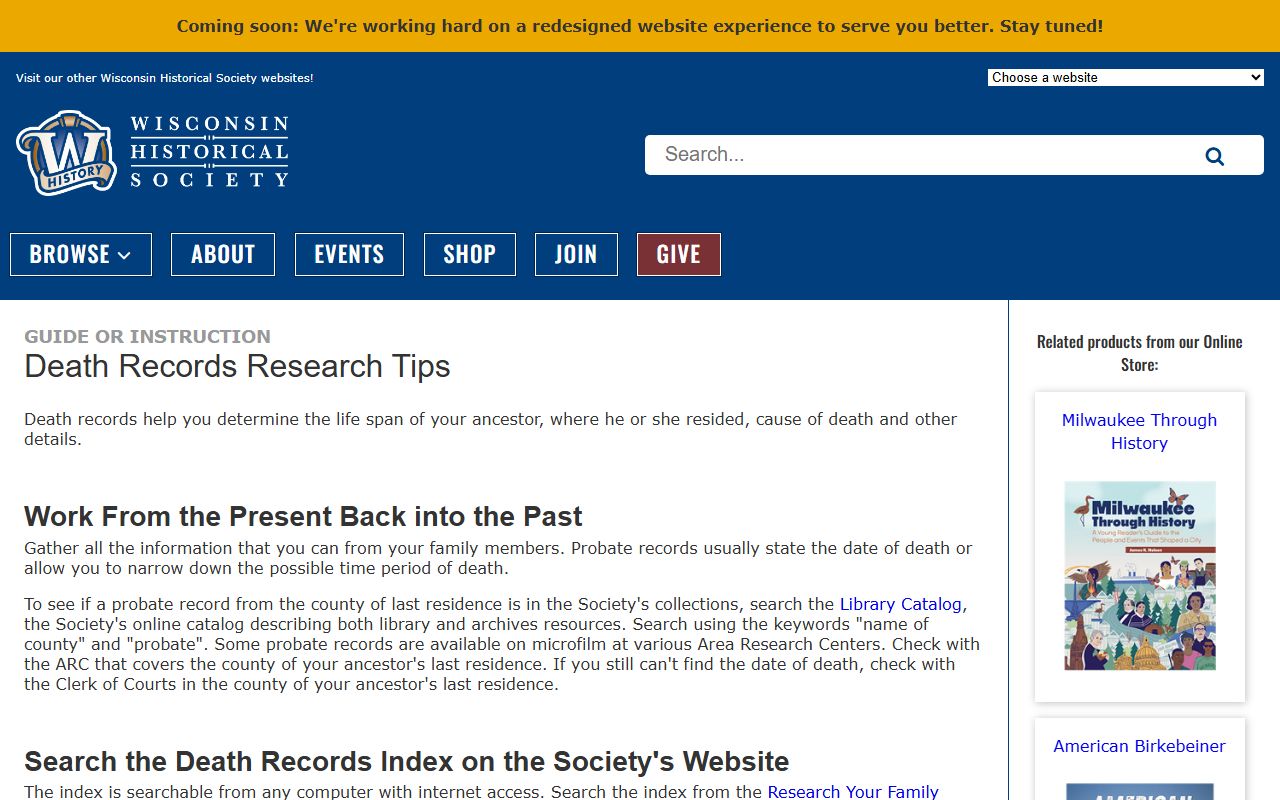
That guide is the best place to slow down and search with a year range, a possible spelling, and a probate clue when the obituary itself is thin.
When the obituary points toward an estate, the Register in Probate becomes part of the research trail. Oconto County says the office keeps wills, probate records, and related materials for safekeeping and handles uncontested probate work. That makes it a strong companion source when the death notice is public but the family file is still hidden in the court side of the record set.
Oconto County Obituary Access
Wisconsin law separates an obituary notice from a certified vital record. Wis. Stat. § 69.21 explains the difference between certified and uncertified copies, and Wis. Stat. § 69.22 covers the fee structure. That matters when you are deciding whether you need a copy for research or a record for legal use. In Oconto County, the safest move is to match the request to the reason before you send it, because the office rules are built around proof, fee payment, and the correct request type.
The statute pages are here: Wis. Stat. § 69.21 and Wis. Stat. § 69.22.
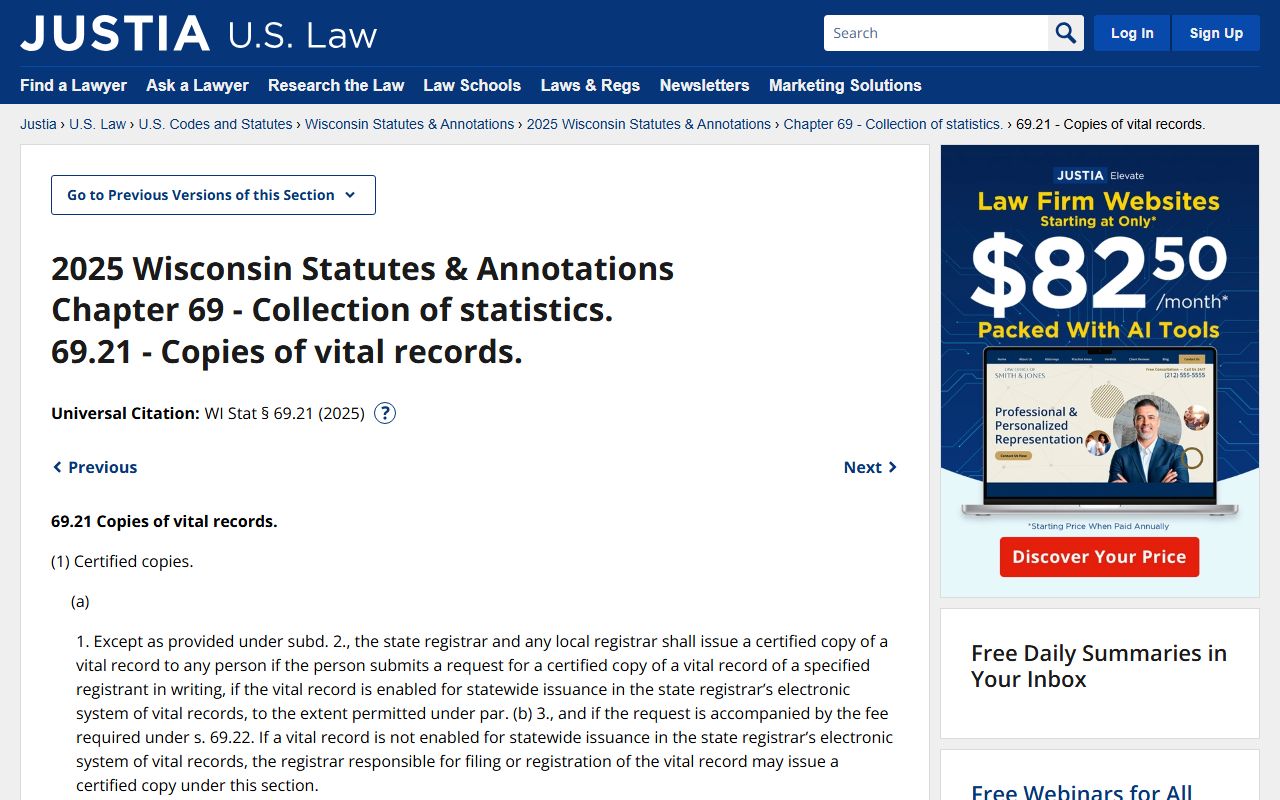
That statute page is a direct reminder that one copy can be open to research use while another copy is limited by law or by the purpose of the request.
For older Oconto County deaths, the county and state records often work best together. The county genealogy room can point you toward the right year, the state obituary collection can fill in the newspaper gap, and the probate office can explain what happened after the death. That mix is often what turns a vague obituary reference into a complete record trail.
The copy-fee statute is here: Wis. Stat. § 69.22.
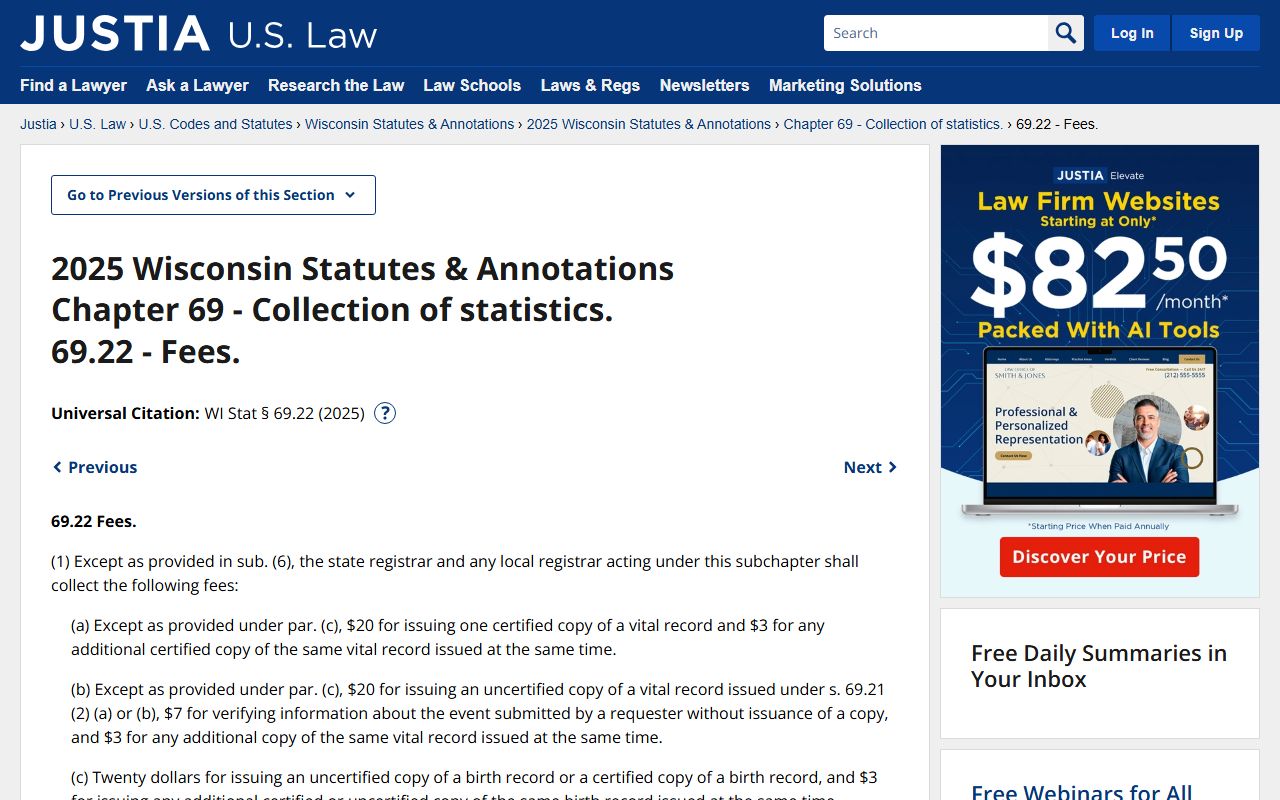
That law explains why one request is simple and another needs more documentation, a fee, and the right office path.
In practice, Oconto County obituary work is part county search, part state search, and part probate follow-up. When those pieces are lined up in the right order, the record trail gets much easier to read and much easier to prove.