
Pierce County Obituary Lookup
Pierce County obituary research starts with the Register of Deeds office and then widens to state and archive tools when the record is older or the family needs a certified copy. The county gives clear rules for death records, fees, and request steps, and the University of Wisconsin-River Falls guide shows how the older death registrations fit into the pre-1907 record set. That mix helps when a death notice is short, when the family wants a copy for probate, or when you need to know which office should answer first. The county trail is direct, but the record date still decides where the request belongs.
Pierce County Obituary Sources
The official county page is the first stop because it says the Register of Deeds office registers marriages and deaths occurring in the county and helps with certified copies, identification, and payment rules. That is enough to make it the front door for Pierce County obituary work. It also confirms that the office handles property fraud alerts and paper-record appointments, which tells you the office still manages both modern requests and older file work.
The official county page is here: Pierce County Register of Deeds.
The image below points to the county office that controls the local obituary and death-record path: Pierce County Register of Deeds.
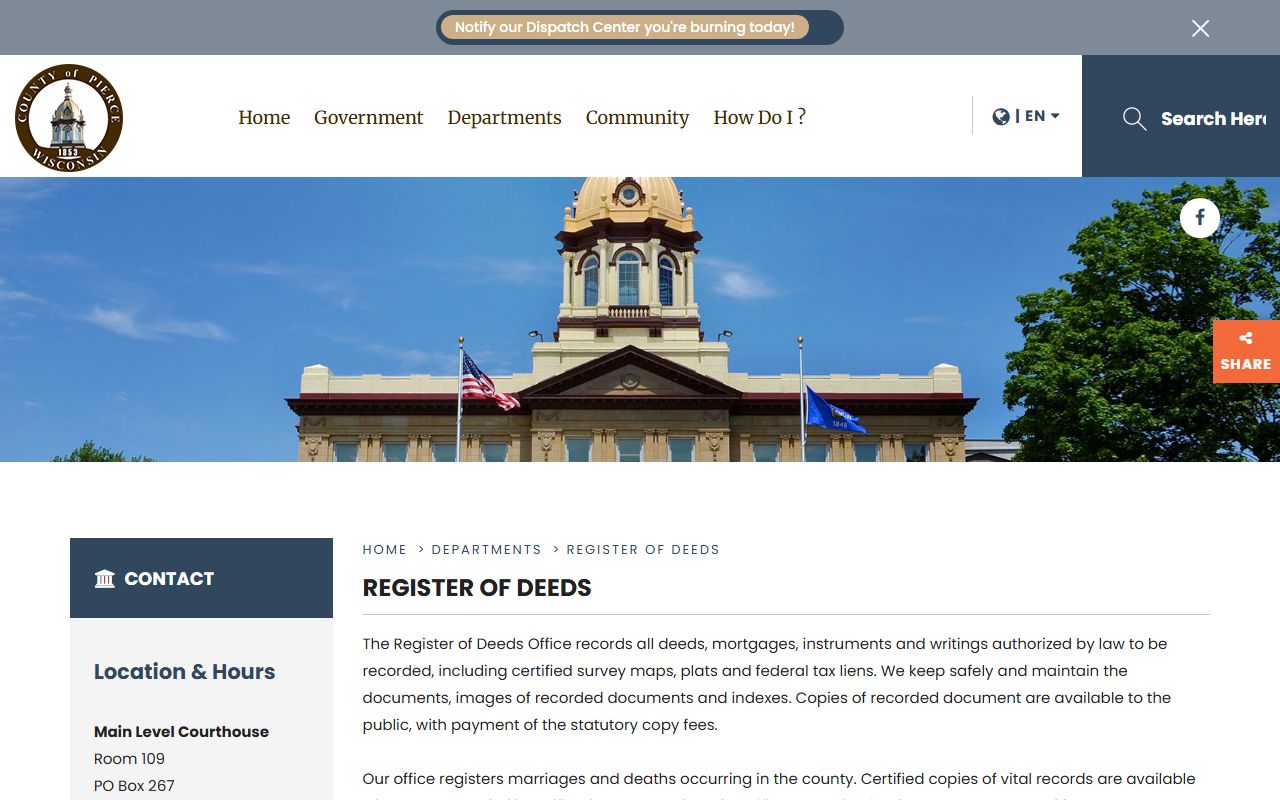
That page is the cleanest local source because it tells you where the county file lives and who handles the request.
The vital-records page adds the next layer. It spells out the death-record date split, the application steps, the identification rule, and the mailing address in Ellsworth. In plain terms, Pierce County handles deaths that happened before September 1, 2013 at the county office, while newer deaths may be issued by any Wisconsin Register of Deeds office. That makes the page useful for both local visitors and families who are searching from out of town.
The county vital-records page is here: Pierce County vital records.
The image below shows the county page that explains the request rules and the date split: Pierce County vital records.
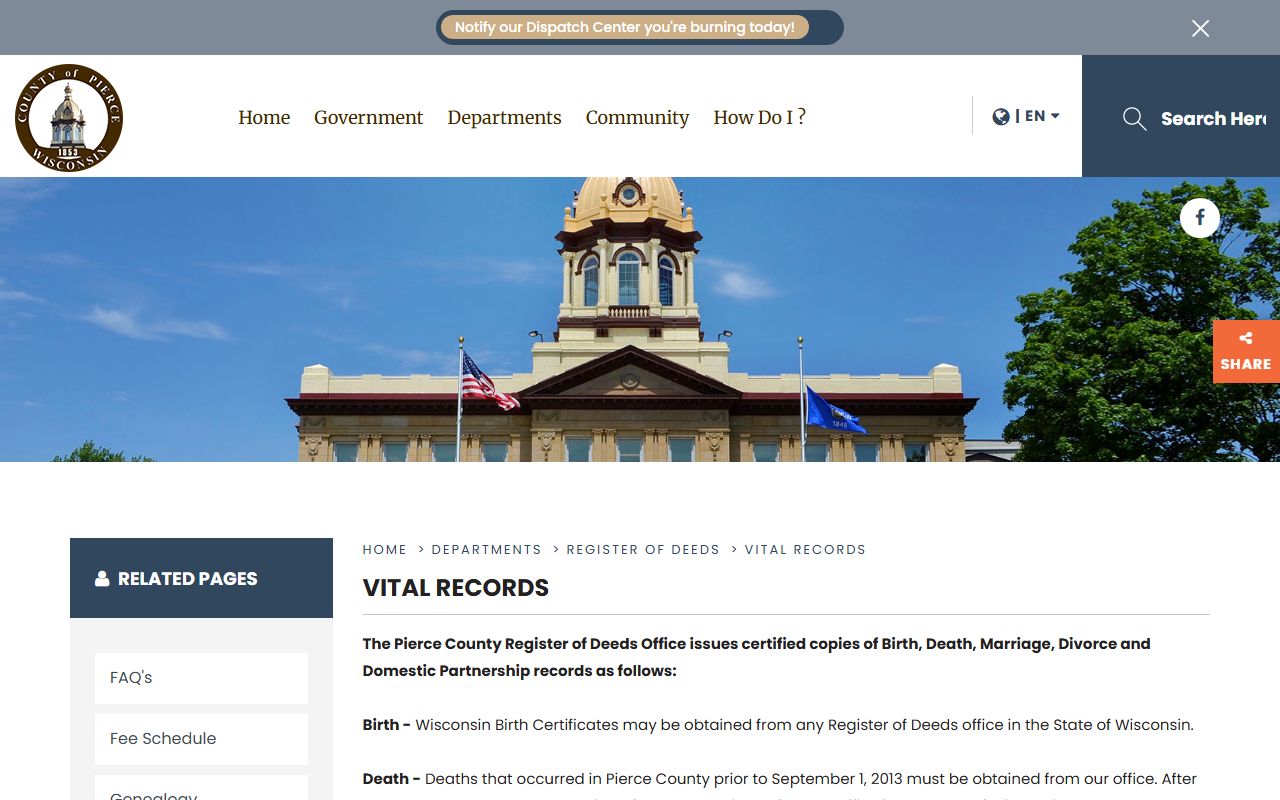
It is the page to open first when you want the form, the fee, and the address in one place.
Pierce County Obituary Requests
Pierce County asks requesters to print the appropriate application, complete every part, include $20 for the first copy and $3 for each additional copy, and add a copy of ID and a stamped return envelope. That is a simple request path, but it only works when the date and record type are matched correctly. Recent death records can be requested from any Wisconsin Register of Deeds office, while older records stay with the county office.
The county also says online ordering is available and that the office handles both paper and electronic requests. That matters when a Pierce County obituary leads to a family file, an estate deadline, or a travel problem. The office cut-off time for recording is another small detail that can keep a request from slipping to the next business day.
Bring or send these basics:
- Full name from the obituary or death notice
- Approximate date of death
- County or place of death, if known
- Photo ID for certified copies
- Self-addressed, stamped return envelope
The fee schedule is the best place to check the exact cost before you mail anything. It lists recording fees, copy fees, certified copy costs, and payment methods for both documents and vital records. That makes it useful when the obituary search has moved from a name into a real request.
The county fee schedule is here: Pierce County fee schedule.
The image below points to the county fee schedule that controls copy and recording costs: Pierce County fee schedule.
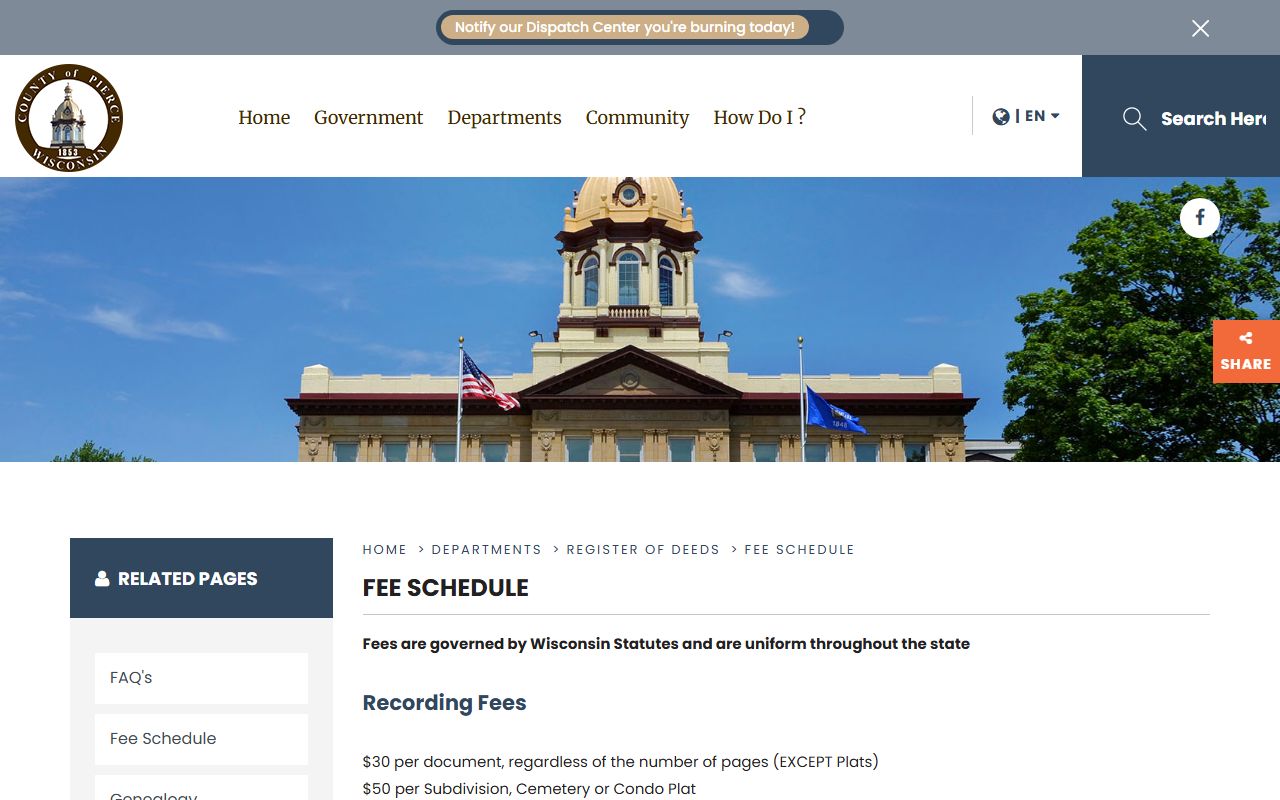
Use that page when you need the exact fee and payment rule before you send the request.
Pierce County Death Records
Pierce County death records are easiest to place when the date is known. The official county page says deaths before September 1, 2013 must be obtained from the county office, while later deaths may be obtained from any Wisconsin Register of Deeds office. That split is important for obituary work because a newspaper notice may be local, but the certificate may now be available statewide. It also means the nearest office is not always the best one.
Wisconsin DHS gives the statewide backup route. It handles Wisconsin death certificates and other vital-record requests, and it accepts requests by mail, VitalChek, or phone. The CDC gateway confirms the same basic state contact details and fee structure. Together, those two pages are the right pair when you need the official state route for a recent death record.
The Wisconsin DHS page is here: Wisconsin DHS vital records. The CDC gateway is here: CDC Wisconsin vital records guide.
Wis. Stat. § 69.22 sets the fee rule, and Wis. Stat. § 69.21 explains copies. Those sections matter because a public obituary notice is not the same thing as a certified death record, and the office will treat the two differently.
For older death work, the UWRF Area Research Center guide says the county death registrations can be used to locate Pierce County deaths between 1852 and 1907. It also explains that the Wisconsin Historical Society pre-1907 death index gives the name, date, and county you need to start the search. That is the right path when the obituary is for an ancestor or when the paper notice is only the first clue.
The UWRF guide is here: Pierce County death records guide. The county guide image below shows the microfilm route for older Pierce County obituary research: Pierce County death records guide.
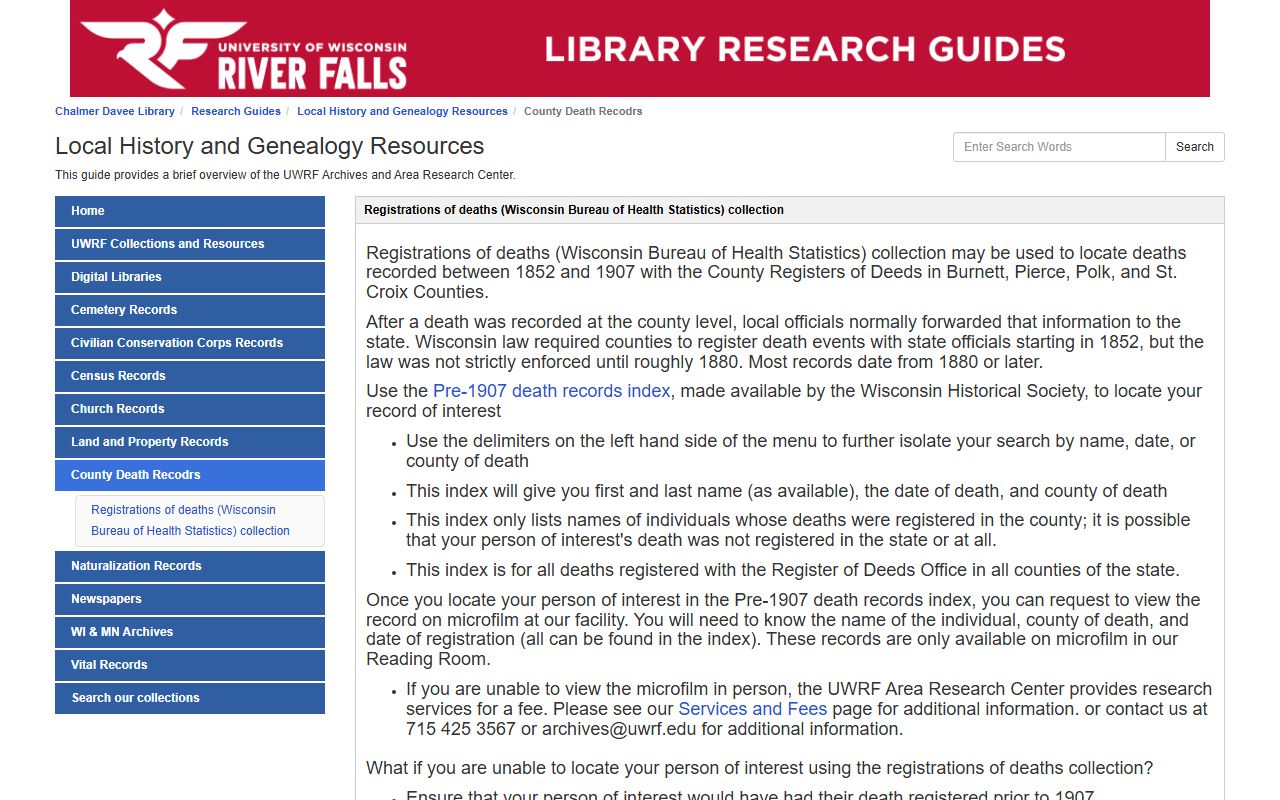
That guide is useful because it tells you how the older record set is organized and where to ask for help.
Pierce County Obituary Research
The Wisconsin Historical Society helps fill the gap between a newspaper notice and a full family record. Its obituary collections page points to indexed obituary articles, newspaper clippings, and broader family-history material. The collection is large enough to catch many names that never show up in a county office search on the first try. That is useful when a Pierce County obituary is short, common, or partly misspelled.
The obituary collections page is here: Wisconsin Historical Society obituary collections. The pre-1907 death-record page is here: Wisconsin Historical Society pre-1907 death records.
The pre-1907 death-record page matters because the Society holds roughly 400,000 state-level death records from 1852 through September 30, 1907, and the index can point you to the right microfilm reel. It also explains that counties started recording deaths in 1852, though the law was not enforced strongly until around 1880. That kind of context helps when a Pierce County obituary leads to an older death that needs a careful search.
The family history portal is another strong support tool: Wisconsin Historical Society family history portal. It covers millions of records, uses a sound-alike search, and reaches into newspaper clippings and local histories. If you need a broader clue before asking for a copy, that portal is the right next step.
The portal works best when the obituary gives a surname but not the whole story. It can show a second spelling, a different town, or another family line that helps you lock the right record before you pay for a certified copy.
Pierce County Obituary Access
The final checkpoint is Chapter 69. Wis. Stat. § 69.18 explains how death records are created and certified, while Wis. Stat. § 69.21 explains certified and uncertified copies. The Reporters Committee guide explains the direct and tangible interest rule for certified copies. For Pierce County obituary work, that means the notice may be easy to read, but the certificate behind it still depends on the requester's status and the office rules.
The open-government guide is here: Wisconsin open-government guide. It pairs with Wis. Stat. § 69.22 because the fee rule and the access rule sit next to each other in daily records work. Put simply, Pierce County gives you the local office, DHS gives you the statewide copy route, and the historical sources show you how to reach the older books.
The county office, state office, and historical collections work best together. One keeps the request local. One handles modern certificates. One reaches back into the older obituary and death-record sources that turn a name into a real family record.