
Polk County Obituary Records
Polk County obituary records usually start with a name, a date, or a small family clue, then move through the Register of Deeds, the state vital records office, and older history sources. If you are trying to find a death notice, a certified death record, or a probate trail tied to Polk County, the county gives you several clean paths. Local record dates reach back well before statewide registration, and the state system fills the gap after October 1907. That makes Polk County a place where a short obituary search can turn into a fuller family record without a lot of guesswork.
Polk County Overview
Polk County Obituary Sources
Polk County has a long paper trail for death and family records. The county was settled in 1838 and carved out of St. Croix County in 1853. Local record dates from the research are strong: marriage records begin in 1855, death records in 1865, and birth records in 1867. That matters for obituary work because a death notice may lead you to a record that sits in a county office, a courthouse file, or one of the statewide record collections. When the name is common or the date is fuzzy, that mix of sources gives you more than one way in.
The strongest official path begins with the county's ordering channel and the statewide office that supports it. The Polk County VitalChek ordering page ties certified copies to the Polk County Register of Deeds at 100 Polk County Plaza, Suite 160, Balsam Lake, while the Wisconsin Register of Deeds Association confirms that local register offices remain the practical county entry point for death-record work. That combination keeps a Polk County obituary search connected to the actual issuing office instead of a broad reference page.
The official state path is still the main backup. The CDC Wisconsin vital records guide confirms the state contact point, while the Wisconsin Vital Records Office explains that records from October 1907 to the present are available from the state office or local register of deeds offices. If you need the old side of the file, the Wisconsin Historical Society pre-1907 death records page says the Society holds about 400,000 state-level death records from 1852 through September 30, 1907.
The county office and the state office work as a pair. One office helps with the local record. The other helps when the record has moved into the statewide system. That is the basic path for Polk County obituary research, and it keeps the search tied to real record offices instead of loose web claims.
The image below uses the Wisconsin DHS vital-records page, which is the safest statewide fallback when a Polk County obituary request moves beyond the local counter: Wisconsin Vital Records Office.
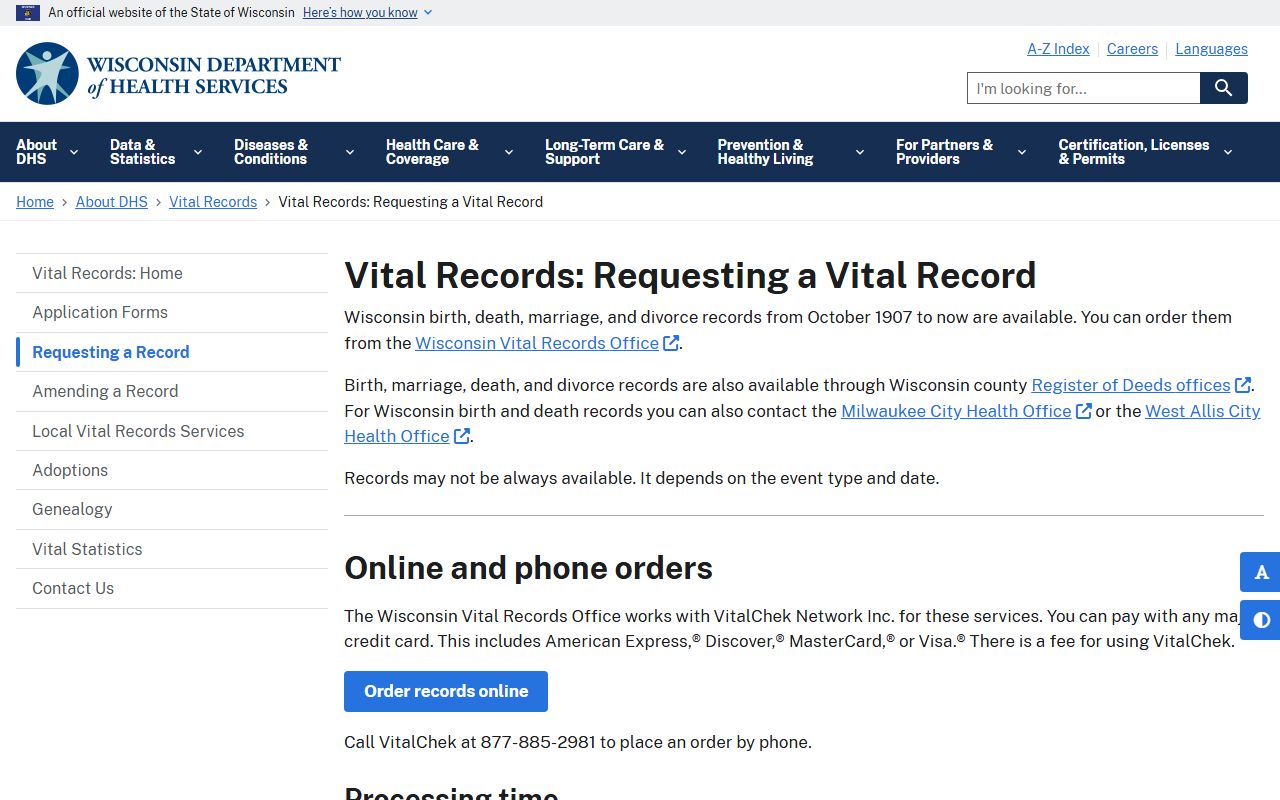
That statewide path helps you keep a Polk County obituary request in the right system before you send it.
Polk County Obituary Records Office
The Polk County Register of Deeds is the main local office for certified copies of Polk County birth, death, and marriage certificates. The research lists the office at 100 Polk County Plaza, Suite 160, Balsam Lake, WI 54810, with phone 715-485-9240, fax 715-485-9202, and hours from 8:30 a.m. to 4:30 p.m. That makes it the first stop for a death certificate request when an obituary turns into a document search. The office can help with records that occurred within Polk County, which is the cleanest route when you know the event happened locally.
Online ordering is available through the authorized Polk County VitalChek ordering page. The research notes that VitalChek is an approved online service for the Polk County Register of Deeds, and that requests can be handled securely through that route. When you need a copy for a family file, the mix of in-person, mail, and VitalChek options gives you a choice based on speed and distance. That flexibility matters when the obituary search is moving fast and you want to stay with an official channel.
The image below comes from the county's authorized online ordering page: Polk County VitalChek ordering.
Use that path when you need a certified copy without making an extra trip to Balsam Lake.
If the obituary points into court work, the search should still stay tied to county offices and Wisconsin rules. The Polk County research notes identify the Clerk of Circuit Court at Polk County Justice Center, 1005 West Main Street, Suite 300, Balsam Lake, and the Wisconsin State Law Library explains how public-record and court-record requests fit into the larger state system. That matters because a probate file, estate paper trail, or older court docket is a different request from a death certificate, even when both come out of the same obituary search.
The clerk side is often where an obituary search becomes a probate or court file search. That shift is normal. The death record tells you the event. The court file can tell you how the family and estate moved after that event.
The image below uses the Wisconsin State Law Library records page, which is a stronger statewide backup when a Polk County obituary trail moves into probate or court files: Wisconsin State Law Library records page.
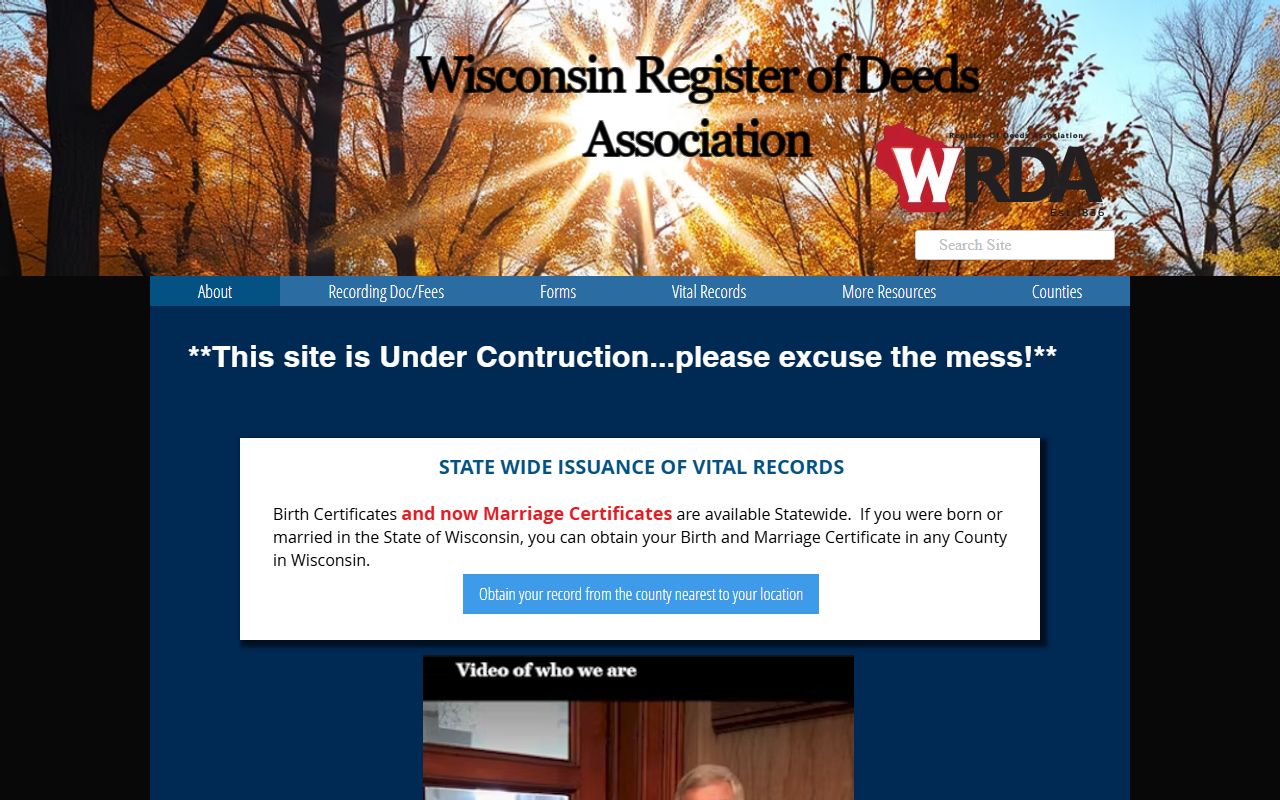
It is a cleaner checkpoint when the Polk County obituary trail reaches the courthouse instead of the register of deeds.
Polk County Obituary Copy Rules
Wisconsin law still shapes what you can get from Polk County. The direct-interest rule in Wisconsin open-government guide and Wis. Stat. § 69.20 explains that a person usually needs a direct and tangible interest to get a certified vital record. That is why a death notice is easier to find than a certified certificate. The notice is public news. The certificate is a protected record.
Wis. Stat. § 69.21 covers certified and uncertified copies, and Wis. Stat. § 69.22 sets the fee schedule. Those rules are useful in Polk County because they explain why the county office asks for a written request, an ID, or a clear purpose. They also help you decide whether you need a plain copy for genealogy, or a certified copy for a claim, estate step, or legal use. The distinction is simple once you see it, but it saves time if you know it before you order.
Wis. Stat. § 69.18 is the death-record statute, and it helps explain how the record is built. The statute lays out the fact-of-death information, the extended fact-of-death information, and the statistical-use section. That is useful for Polk County obituary work because a death record is not just a name and a date. It may also point to a burial, a certifier, or a place of final disposition. When the record is less than 50 years old, the state and county rules keep the certified copy route limited to the right people.
For the record-copy path, the Wisconsin Vital Records Office and the CDC Wisconsin guide both confirm the state contact and fee structure. That is the safest fallback when the local route is not enough or when you need to confirm whether the request should go to Balsam Lake or Madison. Polk County obituary searches tend to move faster when the request matches the right office the first time.
The image below returns to the Wisconsin DHS record-order page because that is the official fallback when the county office cannot finish a Polk County obituary request on its own: Wisconsin Vital Records Office.
That official route is the safer way to match a Polk County obituary clue to the right kind of record request.
Polk County Obituary History
Older Polk County obituary work benefits from the Wisconsin Historical Society. The Society says its pre-1907 death records collection covers about 400,000 death records from 1852 through September 30, 1907, and it notes that no single statewide index exists for post-1907 vital records. That makes the county and the state both important. One gives you the local trail. The other gives you the older statewide trail. In Polk County, that split matters because early record keeping was uneven, and not every death made it into one clean file.
The Wisconsin Historical Society research tips page explains how to search the pre-1907 index with wildcards, exact years, and variant spellings. It also says the Society's library has obituaries on microfilm, plus thousands of clippings, and that a death record can include names, burial data, physician details, and family links. That makes the Society's collection very useful when a Polk County obituary is missing from the paper, but the death itself still left a paper trace somewhere else.
The broader obituary collections are just as helpful. The Wisconsin obituary collections page describes the Wisconsin Name Index and the Wisconsin Local History and Biographical Articles collection, both of which hold obituary clippings and related pieces. The Wisconsin family history portal adds a sound-alike search and more than 3,000,000 records, which can help when a Polk County surname shifts a little between the obituary, the death record, and the family papers.
If the death notice only gives you a town or a rough year, Chronicling America can help fill the newspaper gap. The Library of Congress newspaper program searches digitized papers by state and title, so it works well for obituary clues that spread across county lines. That is often the point where a Polk County search moves from office records to print history, and both still matter.
The image below uses the Wisconsin Historical Society obituary collections page, which is the stronger source for older Polk County obituary work and pre-1907 search support: Wisconsin obituary collections.
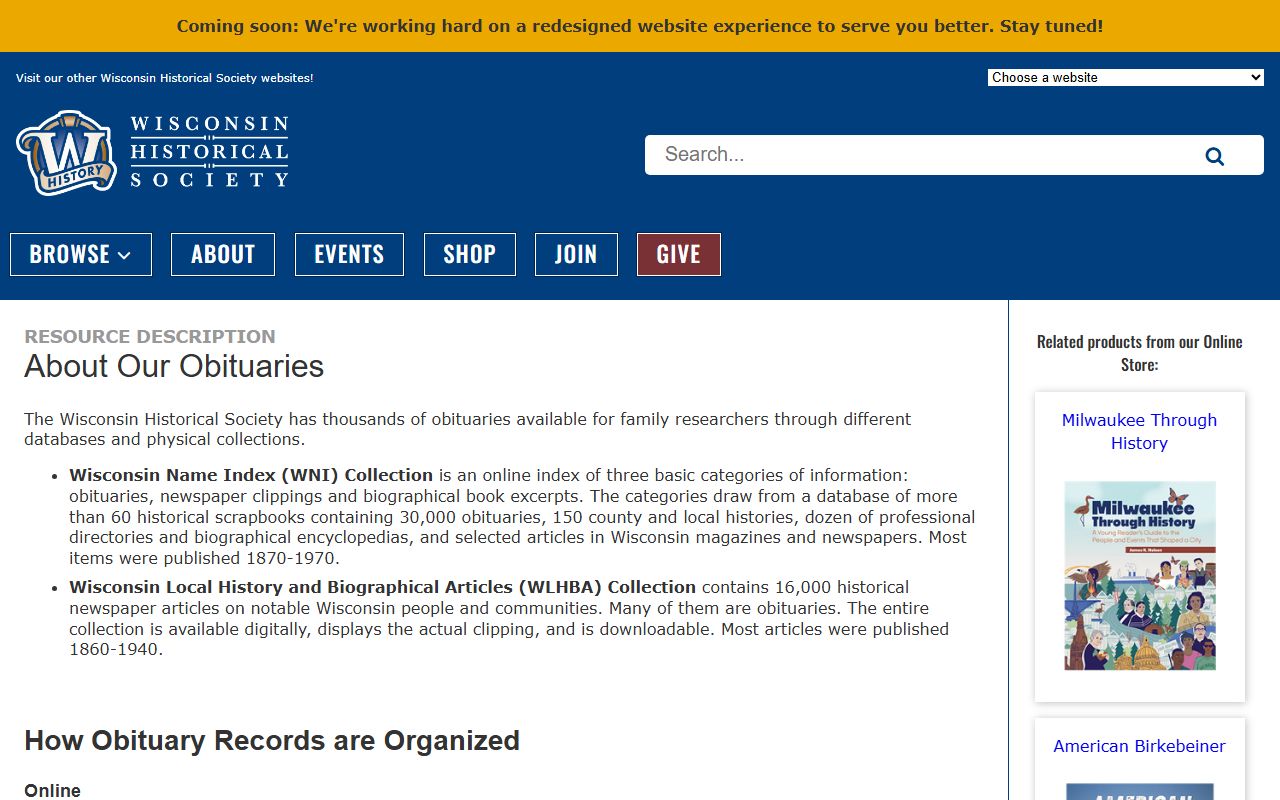
It is a better reminder that older Polk County obituary records often live in more than one official repository.
Polk County Obituary Access
Polk County obituary access is easiest when you sort the record into the right lane before you ask for it. A death notice, a death certificate, a probate file, and a county court record each serve a different job. The county and state rules protect that difference. If you want family history, you may only need an uncertified copy or a newspaper clipping. If you need proof for benefits or estate work, the certified copy route is the better fit.
The key offices for that decision are the Register of Deeds, the Wisconsin Vital Records Office, and the county court offices. Polk County's research notes that older records were not uniformly maintained before the statewide 1907 mandate, and the Wisconsin Historical Society says some records were never forwarded at all. That is why Polk County obituary searches often move in stages. Start with the local office. If the record is not there, widen to the state index, the obituary collections, and the courthouse file.
For a final backup path, the Wisconsin Historical Society genealogy portal can help you cross-check names, dates, and related family material. It gives you a sound-alike search and a large record set that reaches beyond one county. That is useful in Polk County when the obituary clue is close, but not quite exact.
Note: Polk County obituary searches work best when you know whether you need a death clue, a certified record, or a court file before you contact the office.