
Richland County Obituary Lookup
Richland County obituary research usually begins with the Register of Deeds, then moves to state records and local history sources when the first clue is only a name, a date, or a family memory. The county office keeps death records with birth and marriage files, so one search can lead to several useful record types at once. If the death was recent, the county portal and VitalChek are the fastest paths. If the death is older, the Wisconsin Historical Society, the state Vital Records Office, and county history notes can help carry the trail forward without losing the local context.
Richland County Obituary Sources
Richland County obituary research usually starts with the official county portal because the Register of Deeds office is the local repository for real estate documents and vital records, including birth, death, and marriage records. That matters when a death notice is the only clue you have. A notice can point you to the exact office that holds the certificate, and the county page shows that the office also supports online access for recorded documents. The same portal points researchers to Official Records Online, Property Fraud Alert, Notary Fraud Alert, and VitalChek, which makes it a practical first stop for both record lookup and record protection.
The county portal is here: Richland County Register of Deeds. It is the cleanest county-level path when you want to confirm where a death certificate or obituary-related record belongs before you order a copy.
The image below comes from the official Richland County portal and shows the office that keeps the county's obituary-related vital records: Richland County vital records.
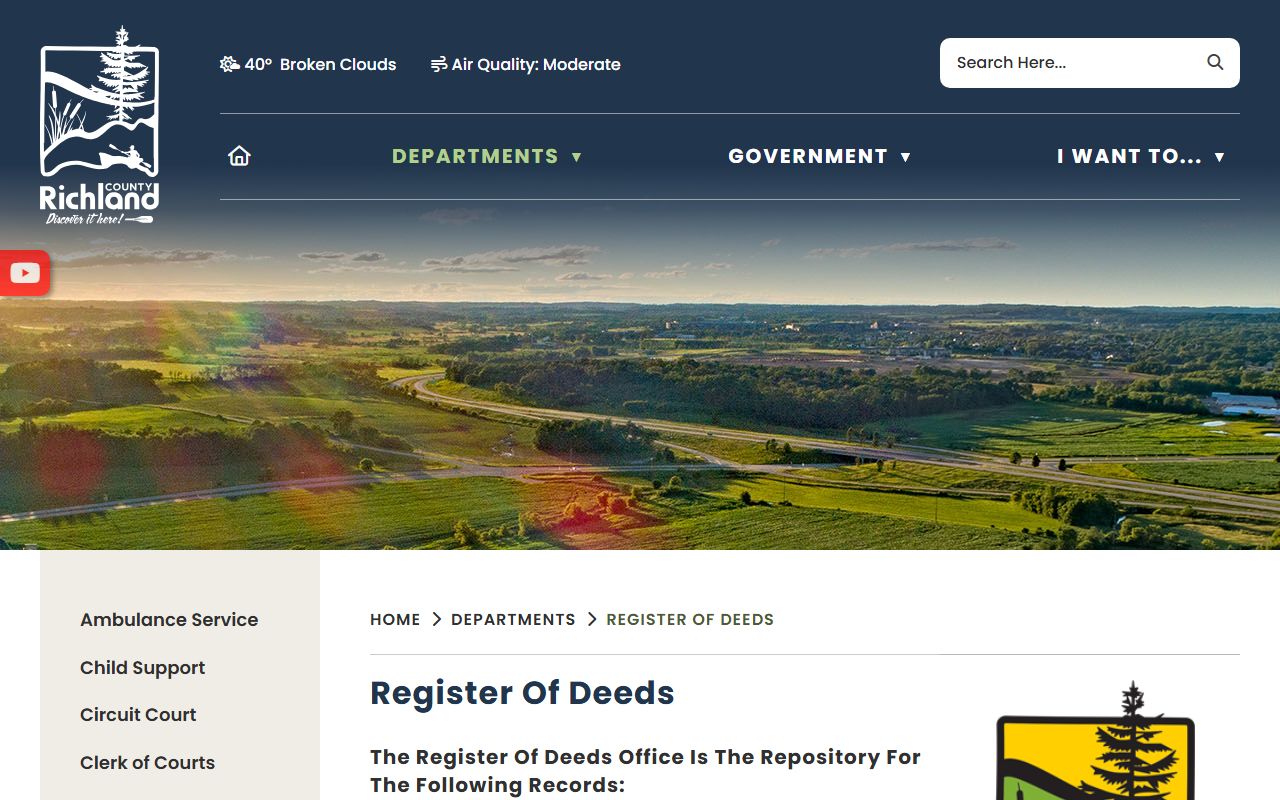
That office is the first place to check when a Richland County obituary needs to become an official county record.
Richland County also says copies of recorded real estate documents can be purchased online with instant access, which matters when an obituary leads into an estate, land, or family settlement trail. The county office uses Laredo for daily users and Tapestry EON for occasional users, so a search can move from death records into older document history without switching to a different kind of office. That mix of services makes the county portal useful even when the obituary itself is only the beginning of the search.
Richland County Obituary Copies
When a family needs an official copy, the Richland County VitalChek page is the authorized online path. It says the Richland County Register of Deeds issues certified birth, death, and marriage certificates, and it gives the office address at 181 W. Seminary Street in Richland Center. That local address is helpful when an obituary search turns into a request for proof, because the record stays tied to the county office that actually issues it.
The authorized online ordering page is here: Richland County VitalChek ordering. Use it when you want a county certificate without making a walk-in trip to the office.
The image below comes from Richland County's authorized ordering page: Richland County VitalChek ordering.

That route is practical when the death notice is ready for a certified record, not just a search result.
Wisconsin DHS says birth, death, and marriage records from October 1907 to the present are available from the Wisconsin Vital Records Office, and requests can also be made through VitalChek or by mail to Madison. The CDC Wisconsin guide confirms the Madison address and the standard $20 copy fee. In a Richland County obituary search, that means the county office is not your only door. The state office can still handle the request if the date or location makes a county-only search harder.
Wis. Stat. § 69.21 explains certified and uncertified vital-record copies, and Wis. Stat. § 69.22 sets the $20 first-copy fee and $3 additional-copy fee used across Wisconsin. The RCFP Wisconsin open-government guide explains the direct-and-tangible-interest rule for certified copies, so a public obituary does not automatically mean the certificate is open to everyone. That is the difference between finding a death notice and obtaining the document behind it.
Richland County Obituary Research
Older Richland County obituary research gets stronger when you shift from the county office to the historical collections. The Wisconsin Historical Society obituary collections page says the library keeps obituary articles, scrapbook material, and microfilm. Its research tips page explains wildcard searches, exact-year searches, and how to use index information to locate a full record. That helps when a surname shifts spelling or when a family memory gives you only a rough date.
The Society's family history portal is another strong tool because it lets you search more than 3,000,000 records, including birth, death, and marriage indexes, newspaper clippings, photographs, and other visual materials. The portal also uses a phonetic name search, so a name that sounds right can still surface even if the spelling is off. For obituary work, that can turn a dead end into a usable lead fast.
Richland County's own research notes add useful age and jurisdiction clues. They place local death records in the late nineteenth century, marriage records in 1850, and probate records as early as 1839. They also note that Richland County was attached to Iowa County for county and judicial purposes from 1842 to 1850, which matters when an older obituary points to a record that does not appear where you first expect it. In practice, that means Richland County obituary work sometimes needs both the county office and a broader historical search.
The image below uses the official Richland County Register of Deeds portal, which is the better local reference for record functions and secure request paths: Richland County Register of Deeds.
That county page is the better local anchor when a Richland County obituary search needs a real office path instead of a secondary guide.
When a printed death notice is the only starting point, Chronicling America can help fill the gap. The Library of Congress newspaper database gives you full-text searches and digitized pages from historical newspapers, which is useful if the Richland County obituary was printed in a regional paper rather than a county office file. Combined with the Wisconsin Historical Society collections, that gives you a broader search net without drifting away from the county.
Richland County Obituary Access
Richland County obituary access still follows Wisconsin's vital-record rules, so the legal side matters even when the search feels simple. Wis. Stat. § 69.18 governs death records and how they are filed, while Wis. Stat. § 69.20 limits full disclosure of certified copies to a person with a direct and tangible interest. That is why a death notice can be easy to find, but the certificate can still require the right request path. The record and the notice are related, but they are not the same thing.
Wis. Stat. § 59.43 delegates register-of-deeds duties to the county level, which is why the Richland County office remains the practical first stop for recent deaths. If the record is older, the Wisconsin Historical Society can still help with pre-1907 material, and Wis. Stat. § 69.21 allows uncertified copies for some requests. That gives Richland County obituary researchers more than one route when a family trail is incomplete, especially if the event predates statewide certificate rules.
The Wisconsin State Law Library records page and the Wisconsin Register of Deeds Association both support the same practical conclusion: the county register of deeds is the right local contact when the request is about a death record, not a land file or a court case. If an obituary leads into probate, the county probate office or court record trail may still matter, but the certificate request itself usually begins with the Register of Deeds or the state Vital Records Office. The CDC guide confirms the state contact details and keeps the statewide path easy to verify.
The statewide backup is here: Wisconsin DHS Vital Records. The CDC Wisconsin page is here too: CDC Wisconsin vital records guide. Those two pages help when a Richland County obituary search needs state processing, older record support, or a quick check on fees and mailing details.
The Wisconsin Historical Society death-record page adds one more useful point. It says the society holds about 400,000 pre-1907 death records, searchable by index, and that it issues uncertified copies from its collection. For older Richland County obituary work, that makes the Society a real backup, not just a history link. It is the place where an obituary clue can become a document trail when the county file is too thin or too old to be straightforward.